
superglue: AI for enterprise integrations

Rate this Tool
Average Score
Total Votes
Select your score (1-10):
Detail Information
What
superglue is an AI-based enterprise integration platform designed to connect, govern, and migrate enterprise systems. It is positioned for organizations dealing with legacy infrastructure, undocumented dependencies, brittle scripts, and integration backlogs that slow down transformation and AI initiatives.
The product’s workflow centers on ingesting integration code and internal documentation, mapping systems and dependencies, and helping teams build or convert integrations into API-based workflows. It also emphasizes preserving operational know-how, managing access, and supporting ongoing maintenance through agents for integration, repair, governance, and optimization.
Features
- Infrastructure understanding and mapping: Ingests integration code and internal documentation to map systems and dependencies, giving teams clearer visibility into how enterprise infrastructure is connected.
- AI-assisted integration building: Lets users build integrations in plain English, which can reduce the effort required to create automation and connect systems.
- Legacy migration support: Converts SQL scripts, FTP pipelines, and custom glue code into API integrations, with the site claiming reduced migration effort for modernization projects.
- Sync Map: Shows which systems are connected and why, which is useful for troubleshooting, governance, and change planning.
- Auto Repair: Aims to fix integrations when they break, helping reduce maintenance burden and operational disruption.
- Knowledge graph and access control: Captures institutional know-how and manages permissions to systems, supporting continuity and more controlled access across integration environments.
Helpful Tips
- Validate support for your exact system landscape: The site says it supports all APIs and lists REST, GraphQL, SQL, file/FTP, XML, and SOAP, but complex enterprise environments still benefit from confirming edge-case protocol and authentication requirements early.
- Use it first on legacy-heavy workflows: The clearest value appears in environments with undocumented scripts, fragile custom integrations, and knowledge concentrated in a few specialists.
- Assess governance needs alongside automation goals: Products like this are often most valuable when integration delivery, system visibility, permissions, and maintenance are addressed together rather than as separate initiatives.
- Review deployment model requirements: Self-hosting and gated-environment setup are highlighted, so teams with strict infrastructure controls should examine deployment architecture, data boundaries, and operational ownership in detail.
- Treat ROI claims as directional until proven in your environment: The page includes speed and maintenance improvement claims, but actual outcomes will depend on system complexity, migration scope, and internal process maturity.
Embed Code
Share this AI tool on your website or blog by copying and pasting the code below. The embedded widget will automatically update with the latest information.
<iframe src="https://aimyflow.com/ai/superglue-ai/embed" width="100%" height="400" frameborder="0"></iframe>
Explore Similar Tools

W.AI - Global AI Supercomputer
W.AI is a decentralized AI supercomputer that lets people with GPU-equipped devices contribute idle compute power to AI tasks, mainly for device owners and infrastructure participants who want to support distributed AI networks. For AI infrastructure operators and technical teams, it can expand available compute capacity through a distributed model while using sandboxed execution and privacy-focused architecture.
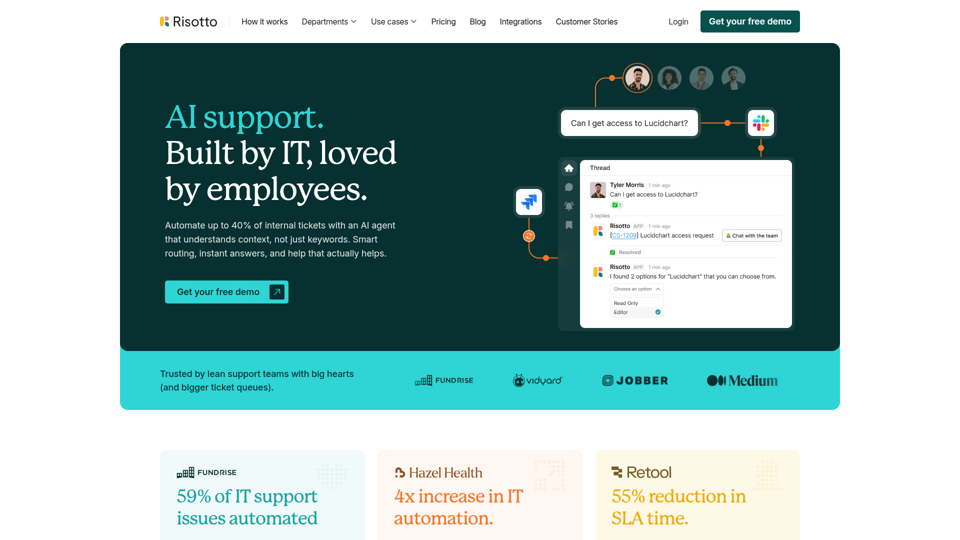
Risotto | IT help desk with AI ticketing automation
Risotto is an AI help desk and ticketing automation platform that helps IT teams automate internal support, access requests, and cross-department workflows in tools like Slack. For IT managers, help desk teams, and systems administrators, it can reduce repetitive tier-1 work by using context-aware automation, self-updating knowledge, and automated routing to speed resolution and approvals.
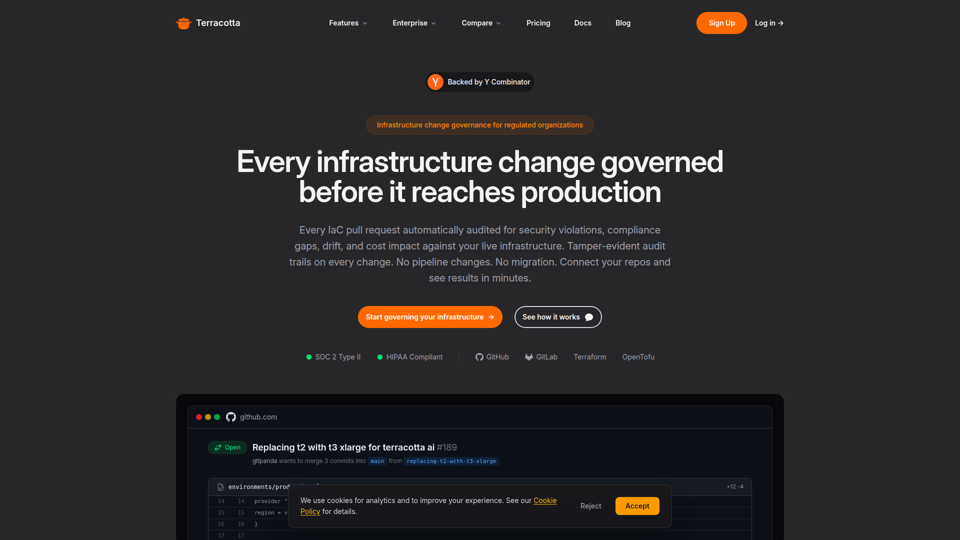
Terracotta AI | Infrastructure Change Governance
Terracotta AI is an infrastructure change governance tool that audits Terraform, Kubernetes, and Terragrunt pull requests for security, compliance, drift, and cost before merge, mainly for regulated organizations and platform engineering teams. For platform, security, and compliance teams, it adds AI-assisted PR review and audit trails that can reduce manual infrastructure review work and improve pre-production change control.
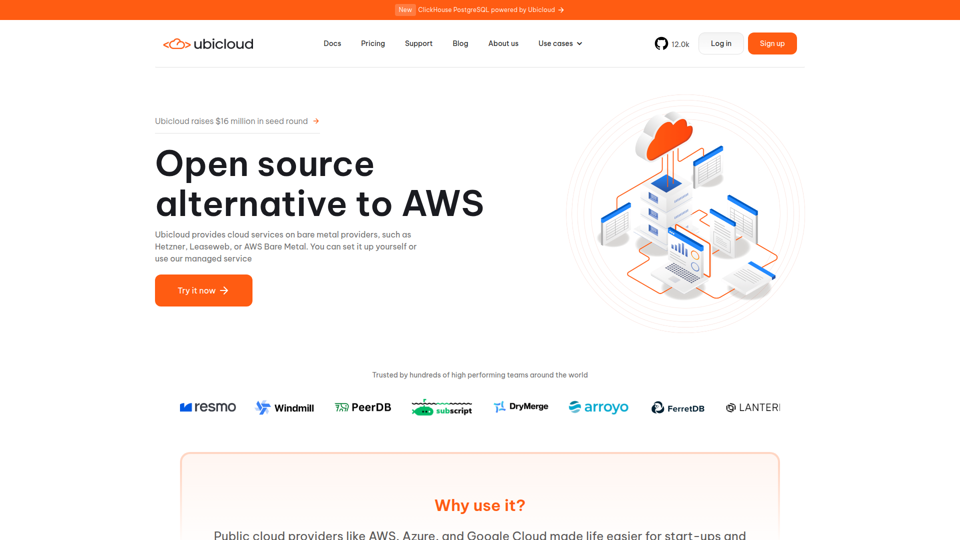
Ubicloud - Open source alternative to AWS
Ubicloud is an open source cloud platform and AWS alternative that helps teams run elastic compute, block storage, networking, managed PostgreSQL, and GitHub Actions runners on bare metal providers, mainly for engineering and infrastructure teams that want self-hosted or managed cloud services. For DevOps, platform, and database engineers, it can support more portable, automated infrastructure and CI workflows while reducing dependence on closed public cloud platforms.
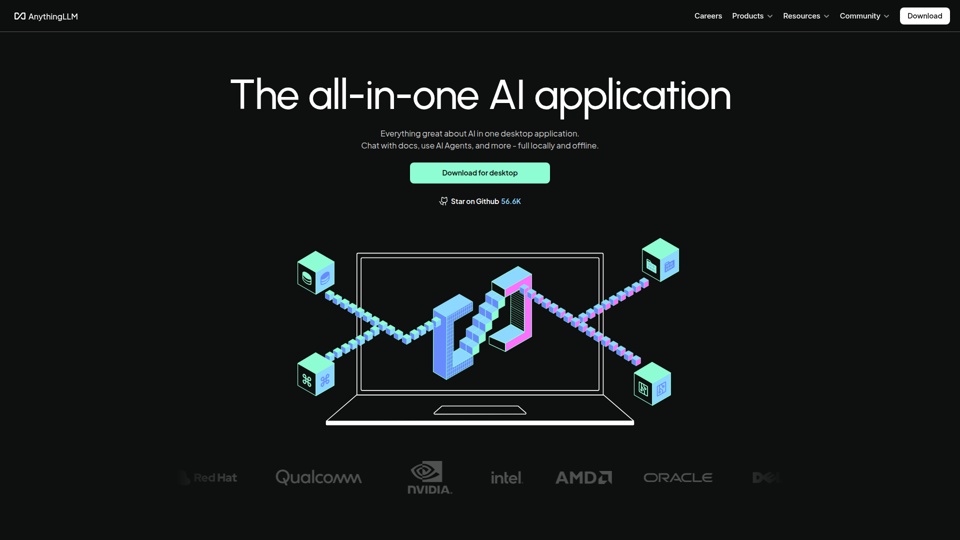
AnythingLLM | The all-in-one AI application for everyone
AnythingLLM is an all-in-one AI application that lets users chat with documents, run AI agents, and use local or cloud LLMs with privacy-focused, low-setup workflows, mainly for individuals and teams that want desktop, self-hosted, or cloud AI tools. For knowledge workers, developers, and IT teams, its local-first design and built-in API can make document-based analysis, internal automation, and controlled AI deployment easier in everyday work.
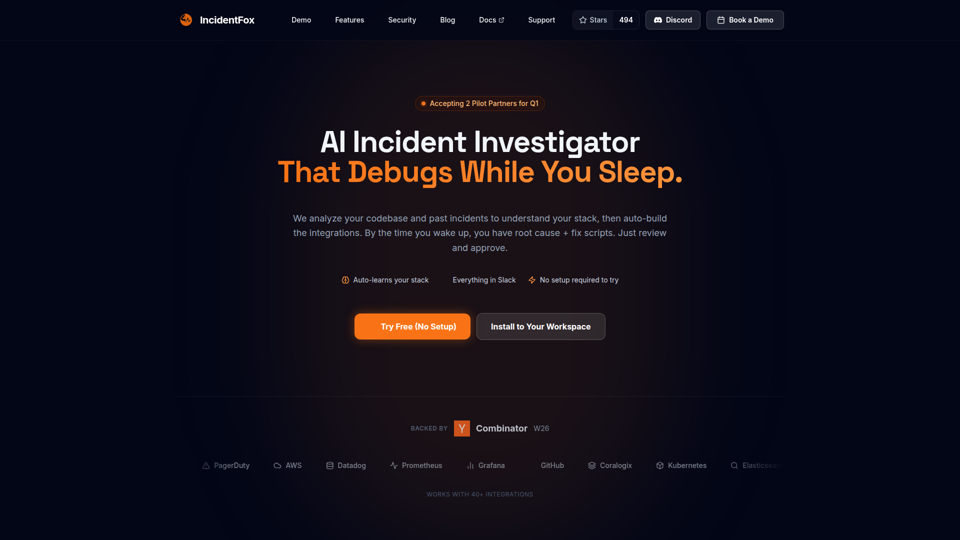
IncidentFox - The AI SRE for Teams
IncidentFox is an AI SRE tool that investigates production incidents in Slack, analyzes codebases and past incidents, and proposes or executes approved fixes for engineering, SRE, and platform teams. For on-call and reliability work, it can reduce manual triage by correlating alerts, logs, metrics, and deployment history into root-cause findings and auditable remediation steps.
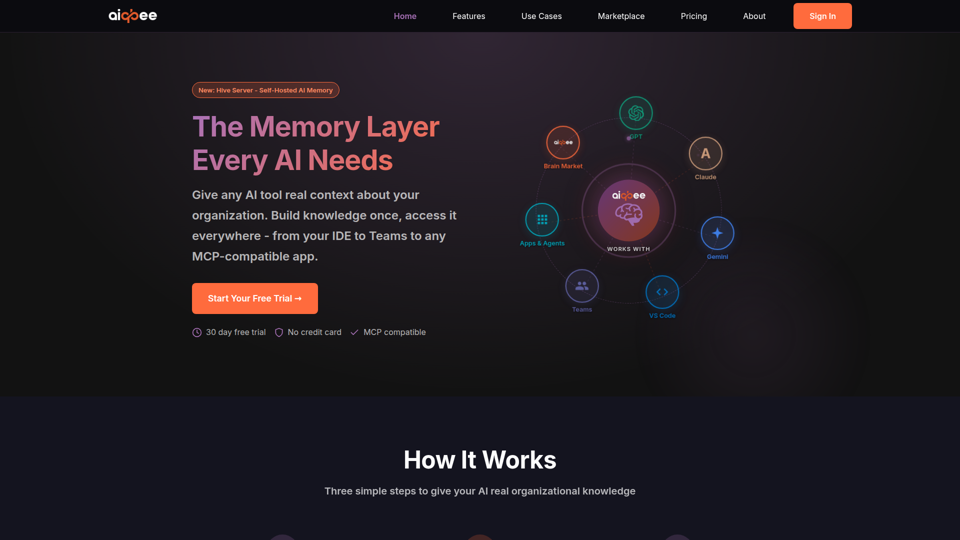
Aiqbee - Universal AI Memory Platform | Enterprise Knowledge for Any LLM
Aiqbee is an enterprise AI memory platform that gives any LLM or AI tool persistent organizational context by centralizing company knowledge, connecting it to tools like Teams and IDEs, and adding governance controls, mainly for businesses managing AI use across teams. For IT, operations, support, and development functions, it can reduce repeated prompting and improve consistency by making shared knowledge available across approved AI workflows.
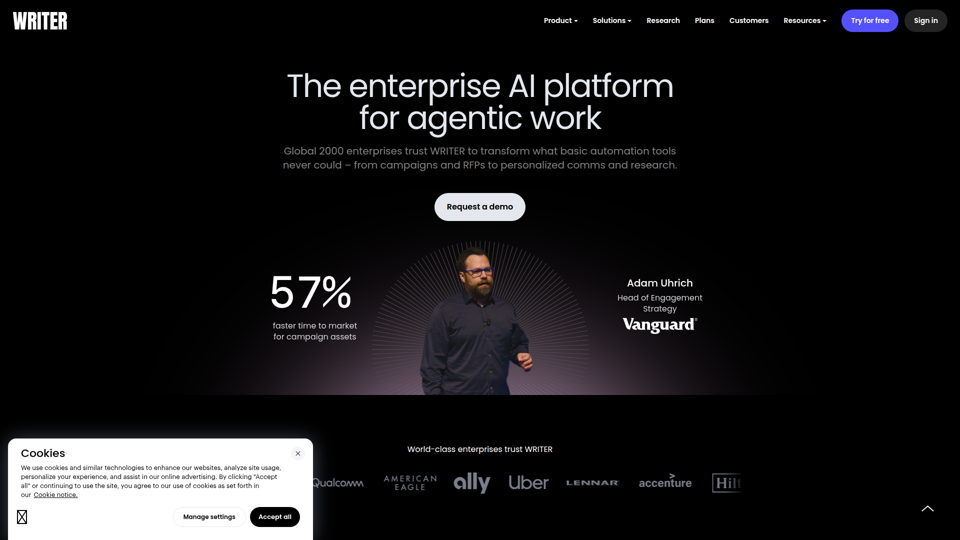
WRITER - The enterprise AI platform for agentic work
WRITER is an enterprise AI platform for agentic work that helps Global 2000 companies build, activate, and supervise AI agents for tasks like campaigns, RFPs, personalized communications, and research, with a focus on IT governance and security. For marketing, sales, support, and IT teams, it can improve productivity by combining shared knowledge, workflow automation, and oversight in one system.