
Sematic – The open-source ML orchestrator loved by ML teams
Rate this Tool
Average Score
Total Votes
Select your score (1-10):
Detail Information
What
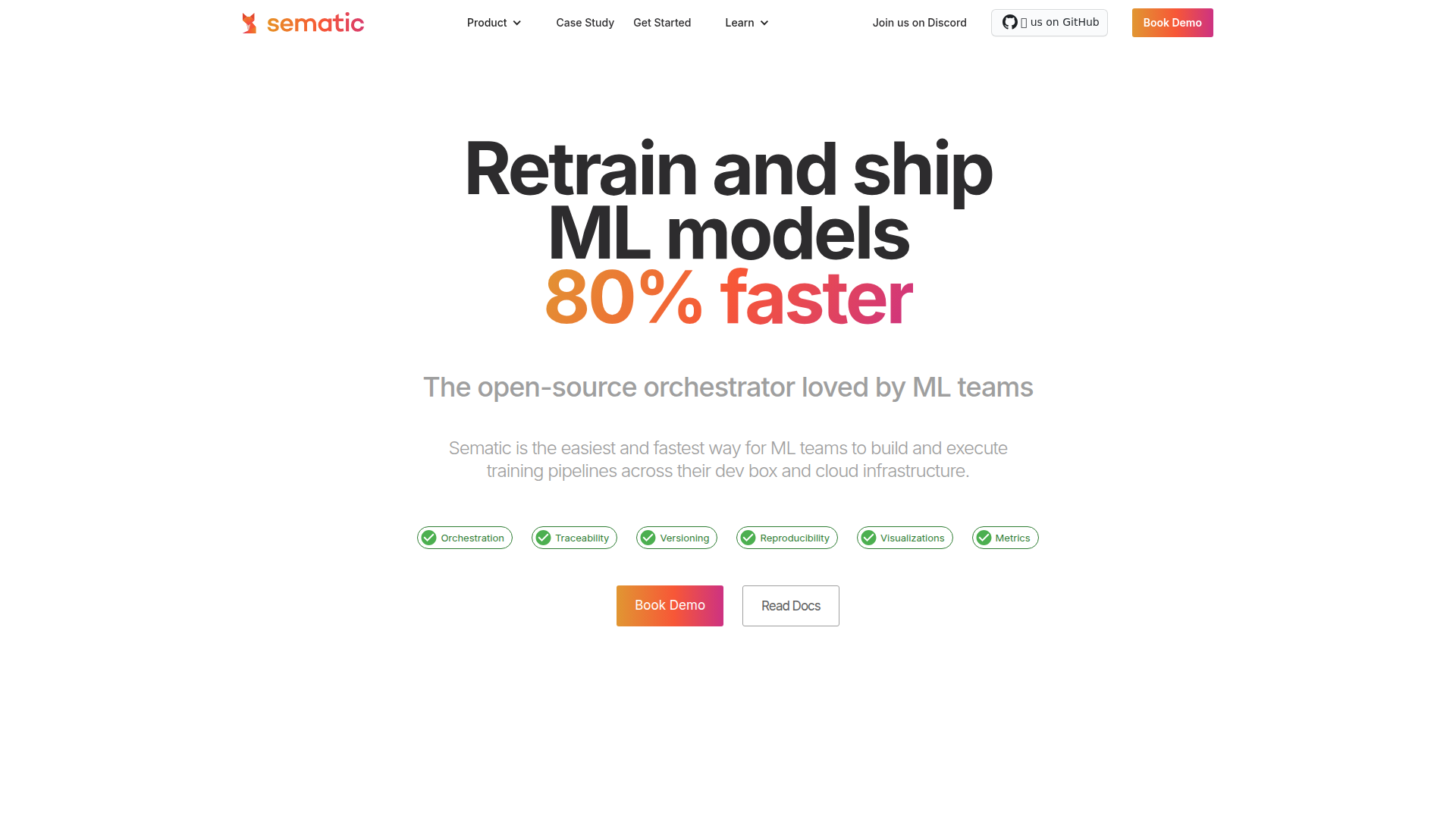
Sematic is an open-source machine learning orchestrator for ML teams that need to build, run, and manage training pipelines across local development environments and cloud infrastructure. It is positioned as a Python-first continuous machine learning platform focused on orchestration, traceability, versioning, reproducibility, visualizations, and metrics.
The core workflow is to define end-to-end ML pipelines in Python, test them on a laptop or dev box, and then run the same pipelines on a Kubernetes cluster when more scale is needed. Sematic appears to serve machine learning engineers, data scientists, and infrastructure or platform engineers who want pipeline automation without relying on YAML-heavy workflow tools or specialized orchestration DSLs.
Features
- Python-first pipeline definition — Pipelines are defined with Python functions, which helps teams reuse existing code and avoid separate workflow languages or templating systems.
- Dynamic DAG support — The platform supports looping, conditional branching, nesting, and other complex DAG patterns, making it suitable for non-trivial ML workflows.
- Local-to-cluster execution — Teams can start on a local machine and then submit the same pipeline logic to a Kubernetes cluster, reducing friction between experimentation and scaled execution.
- Artifact and step tracking — Inputs and outputs for each step are persisted and shown in the dashboard, improving traceability for models, dataframes, configurations, images, metrics, and plots.
- Reproducibility and reruns — Pipelines can be rerun from scratch or from an intermediate point, with caching and fault-tolerance features that support more reliable iteration.
- Extensible integration model — Sematic states that it sits in the middle of the ML stack and offers a plug-in model for adding support for additional tools and services.
Helpful Tips
- Assess fit for Python-centered teams — Sematic is most compelling when ML workflows already live in Python and teams want minimal translation from research code to orchestrated pipelines.
- Validate Kubernetes readiness early — The page states scale-up to Kubernetes, so buyers should confirm their cluster setup, environment packaging needs, and operational ownership before wider rollout.
- Use traceability as an adoption driver — Teams with recurring issues around reproducibility, debugging, or auditability are likely to benefit most from Sematic’s tracked inputs, outputs, and visual pipeline state.
- Review integration depth carefully — The site mentions broad stack integration and a plug-in model, but specific native integrations are not detailed on this page, so implementation teams should verify required connectors.
- Pilot on retraining workflows first — Sematic appears especially well suited for recurring training, evaluation, and retraining pipelines where automation and rerun control provide immediate operational value.
OpenClaw Skills
Within the OpenClaw ecosystem, Sematic could likely serve as an execution backbone for ML workflow agents that trigger, monitor, and summarize training pipelines. A practical skill could let an OpenClaw agent launch a Sematic pipeline, inspect run state, collect metrics and artifacts from the dashboard or API if exposed, and produce structured status updates for ML engineers or platform teams. The page does not confirm a native OpenClaw integration, so this is a likely orchestration pattern rather than a stated product capability.
This combination could be especially useful in MLOps, applied research, and data platform environments. OpenClaw skills could be built for retraining orchestration, experiment triage, failure analysis, reproducibility checks, and handoffs between data scientists and infrastructure teams. In practice, that could shift teams from manually supervising pipeline runs toward agent-assisted operational workflows, where Sematic handles execution and lineage while OpenClaw agents coordinate decisions, notifications, and documentation around those runs.
Embed Code
Share this AI tool on your website or blog by copying and pasting the code below. The embedded widget will automatically update with the latest information.
<iframe src="https://aimyflow.com/ai/sematic-dev/embed" width="100%" height="400" frameborder="0"></iframe>
Explore Similar Tools
Platform Overview | Robovision
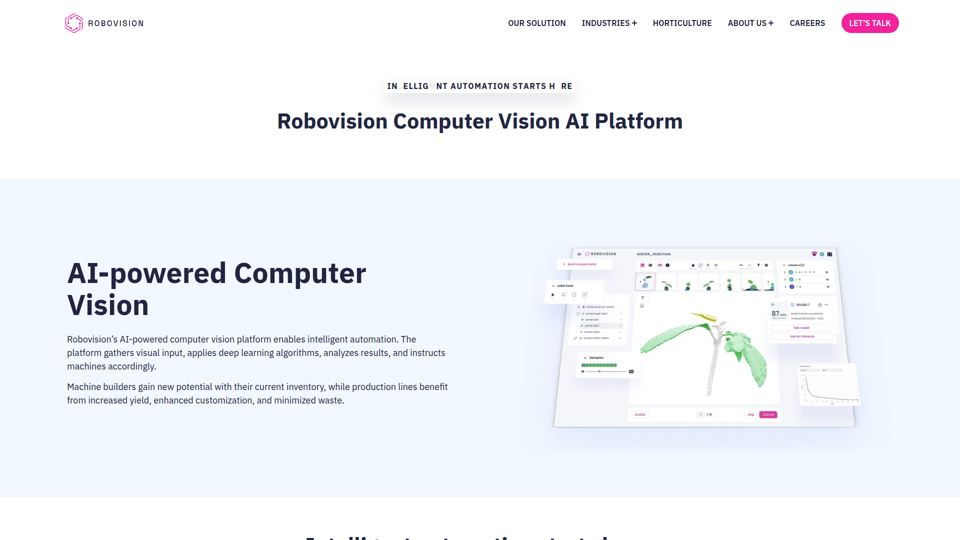
Robovision is an AI-powered computer vision platform that helps industrial teams build, test, optimize, and deploy vision models for intelligent automation, mainly for machine builders, manufacturers, and data scientists. In AI-driven production, it can reduce manual inspection work and let data scientists and operations teams focus more on improving models, quality control, and deployment speed.

Interface - The Frontier Lab for Digital Visual Simulation
Interface is a research lab for digital visual simulation that builds AI systems to model how people and objects appear, behave, and interact, mainly for world-model researchers and teams developing real-world AI applications. In the AI era, this can help research and simulation teams create more realistic visual training environments that improve how models understand human behavior and physical scenes.
Ångström AI — Accelerating molecular simulation using generative AI
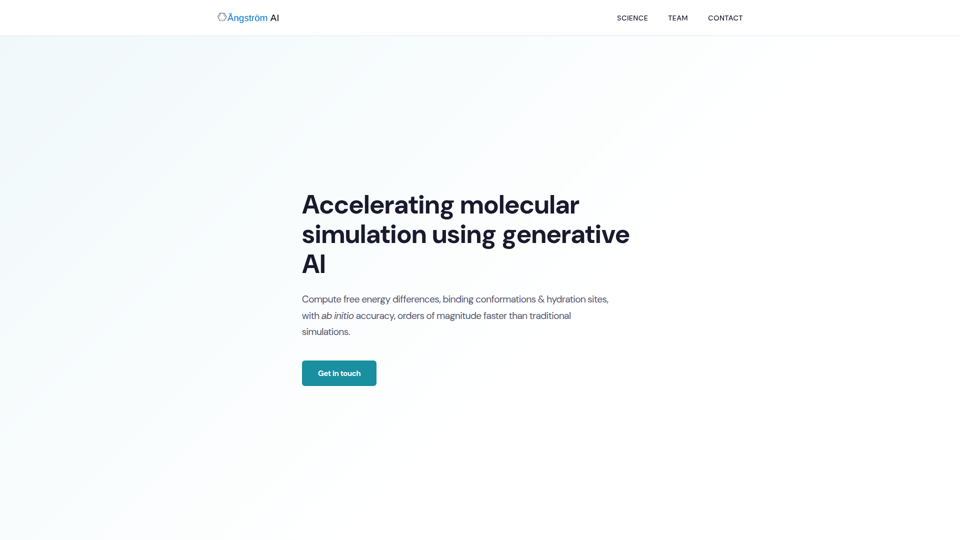
Ångström AI is a generative AI molecular simulation platform that computes free energy differences, binding conformations, and hydration sites with ab initio-level accuracy much faster than traditional methods, mainly for drug discovery and computational chemistry teams. For computational chemists and molecular modelers, this can speed candidate evaluation and solvation or binding analysis by enabling faster, physics-informed sampling workflows.

Surf - Crypto's Ultimate AI
Surf is an AI-powered crypto research platform that helps traders and investors analyze cryptocurrency markets, trends, and trading opportunities. In the AI era, it helps crypto researchers synthesize fast-moving information and respond to market signals with greater speed.
Service Discontinuation Notice - Kompas AI
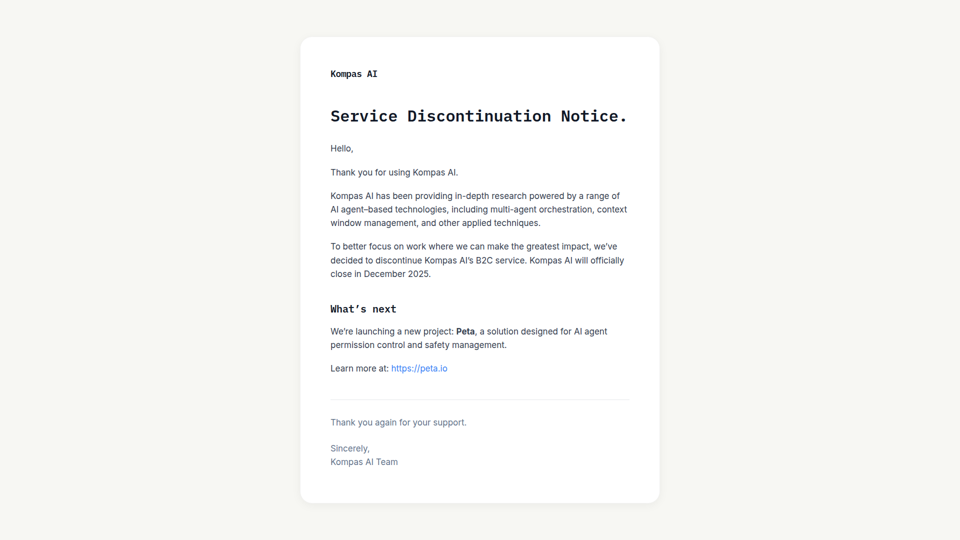
Kompas AI is a discontinued B2C AI research service that helped users conduct in-depth research using multi-agent orchestration, context window management, and related AI agent techniques. Its planned transition toward AI agent permission control and safety management highlights how researchers and AI operations teams increasingly need governance tools alongside advanced agent workflows.
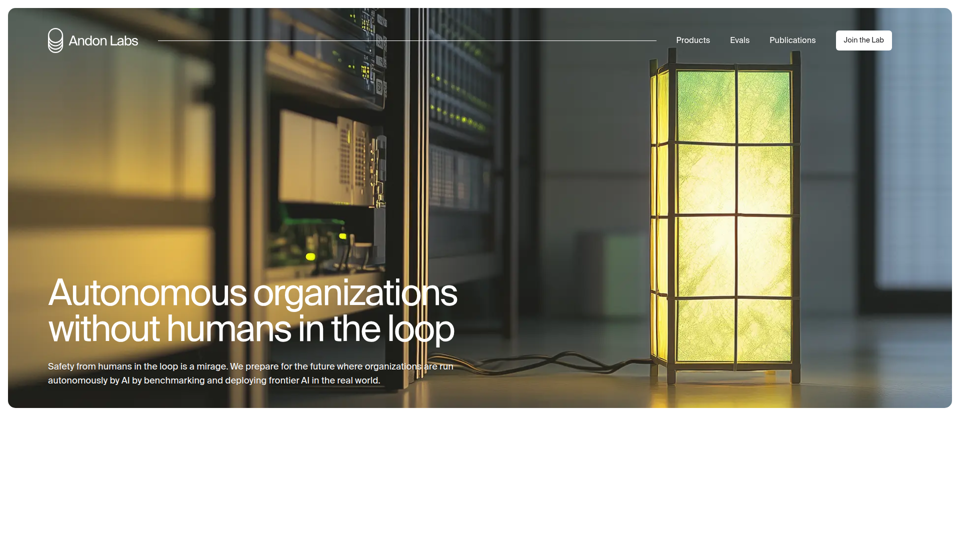
Andon Labs
Andon Labs is an AI research company that builds custom evaluations and real-world benchmarks for frontier AI models, helping AI labs, researchers, and engineers test how autonomous agents perform on long-horizon business, robotics, and spatial tasks. In the AI era, these evaluations can help safety researchers and model developers identify failure modes earlier and improve control protocols before deploying agents in real environments.
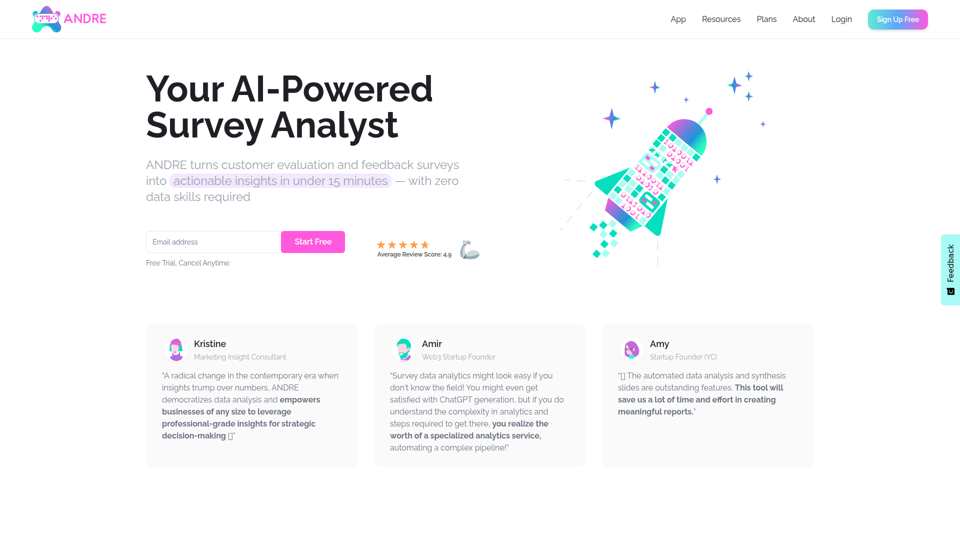
ANDRE - Synthetic Survey Data Analyst for Better CX
ANDRE is an AI survey data analyst that automates cleaning, analysis, and report creation for customer feedback and evaluation surveys, mainly for customer experience specialists, marketers, product teams, founders, and researchers. In AI-driven workflows, it can help these professionals turn narrative survey responses into faster, evidence-based decisions without requiring data science skills.
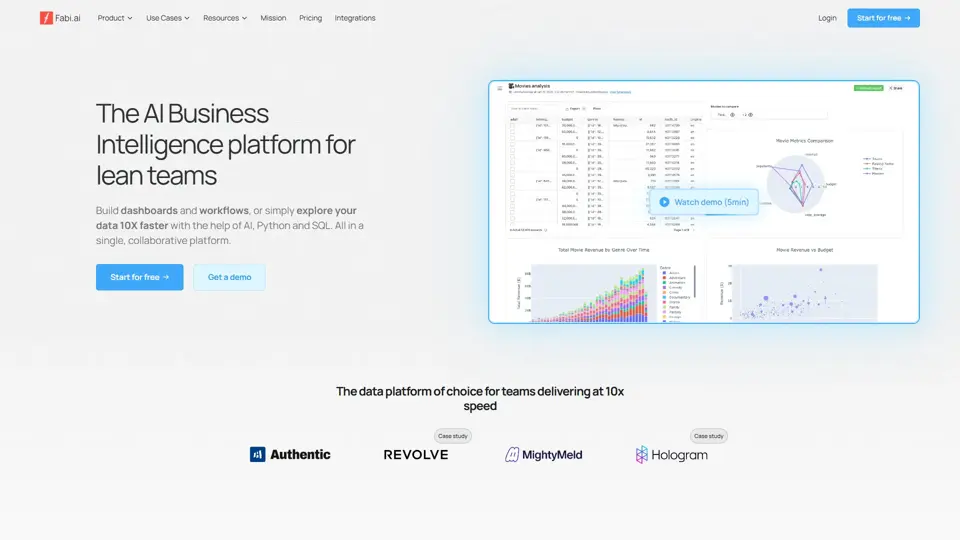
Fabi.ai: AI-powered data analysis platform | SQL + Python + AI
Fabi.ai is an AI-powered data analysis platform that combines SQL, Python, and automation to help analysts explore data and generate insights faster. It boosts productivity for data teams by reducing manual analysis steps and accelerating decision-making from raw data.