
Rierino | The Low-Code Platform for Digital Innovation
Rate this Tool
Average Score
Total Votes
Select your score (1-10):
Detail Information
What
Rierino is a low-code platform for building enterprise digital systems across orchestration, backend logic, data, automation, and commerce. The site positions it as a digital core for organizations that need composable commerce, microservices, APIs, workflow automation, content management, product information management, and embedded AI capabilities in one platform.
It appears aimed at enterprise teams including developers, solution architects, data scientists, marketing, product, operations, and leadership. The core workflow centers on designing and deploying business applications, APIs, event-driven processes, digital experiences, and AI-assisted automations with a low-code approach that still supports custom logic, integrations, and scalable deployment models.
Features
- Low-code microservices and API development — Supports building enterprise applications, services, integrations, and low-latency APIs with tools intended to speed delivery while retaining backend control.
- Composable commerce capabilities — Provides building blocks for B2C, B2B, and marketplace commerce, including flexible product and content management for multi-model digital business.
- Embedded AI agents and automation — Includes native agent execution, an AI agent builder, and AI-assisted development workflows for automating processes and accelerating implementation.
- Event-driven logic and real-time processing — Enables complex event processing, triggers, and streaming-style business logic to support responsive workflows and real-time decisions.
- Content, product, and personalization tooling — Covers CMS, PIM, and personalization use cases to help teams manage content and product data across channels and tailor experiences.
- Broad integration and deployment support — Connects with existing applications, databases, and file systems, with stated support for REST, OData, SOAP, and GraphQL, plus deployment across public cloud, private cloud, or on-premises.
Helpful Tips
- Validate depth by use case, not category breadth — Rierino spans commerce, CMS, PIM, BPM, APIs, and AI, so buyers should confirm which modules are mature enough for their specific transformation priorities.
- Assess governance for low-code development early — The platform emphasizes developer-oriented low-code and embedded AI, so teams should define standards for versioning, testing, and approval workflows before scaling adoption.
- Map integration complexity upfront — Since the value proposition depends heavily on orchestration and ecosystem connectivity, implementation planning should focus on legacy systems, data quality, and event architecture.
- Separate confirmed capabilities from broad positioning claims — The site presents a wide enterprise scope; for high-stakes deployments, it would be prudent to verify role-based workflows, security controls, and operational administration details directly.
- Use role-based rollout strategies — Because the platform serves technical and business teams, adoption is likely to work best when each team starts with a narrow workflow such as internal apps, PIM synchronization, or API modernization.
OpenClaw Skills
Rierino could likely fit well with the OpenClaw ecosystem as an orchestration and execution layer for enterprise-grade agents, especially where workflows span APIs, content, product data, and operational processes. Based on the site, likely OpenClaw skills could include catalog enrichment agents, workflow monitoring agents, API composition agents, content operations assistants, and internal process automation agents that trigger actions inside Rierino-managed services.
A likely combined workflow would have OpenClaw agents interpret business intent, generate structured tasks, and hand them into Rierino for governed execution across microservices, event flows, content systems, and commerce logic. In industries such as retail, marketplaces, manufacturing, and public sector operations, that pairing could shift teams from manual coordination toward more autonomous digital operations, though this should be treated as a likely implementation pattern rather than a confirmed native OpenClaw integration.
Embed Code
Share this AI tool on your website or blog by copying and pasting the code below. The embedded widget will automatically update with the latest information.
<iframe src="https://aimyflow.com/ai/rierino-com/embed" width="100%" height="400" frameborder="0"></iframe>
Explore Similar Tools

Governed Data Access for AI Agents | Secure MCP Tools
Pylar is a governed data access platform that helps users give AI agents secure access to structured data through controlled SQL views and MCP tools, mainly for data and engineering teams. It lets developers operationalize AI safely by balancing agent capability with governance and access control.
The Context Company | Understand User Behavior In Your AI Agents
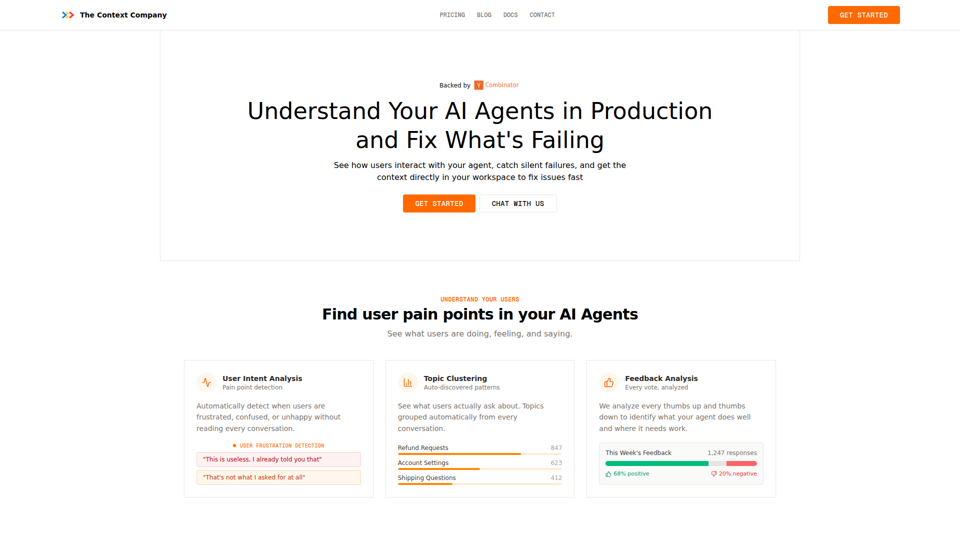
The Context Company is an observability and user behavior analysis tool for AI agents that helps teams monitor production conversations, detect frustration and silent failures, cluster topics, and review feedback, mainly for developers and product teams shipping AI agents. In AI workflows, it can help engineering, support, and product functions prioritize fixes faster by surfacing hidden failure patterns and real user pain points directly from agent runs.

AI App Builder | Vibe Code Apps & Websites with AI, Fast
Lovable is an AI app builder that helps users create apps, websites, and digital products by describing ideas in chat, refining prototypes, and deploying them quickly, mainly for founders, product managers, designers, and marketers. In AI-driven product work, it can help these teams turn early concepts, screenshots, and feedback into working prototypes faster, reducing handoff delays between planning, design, and launch.
Intryc - Elevate your Customer Experience
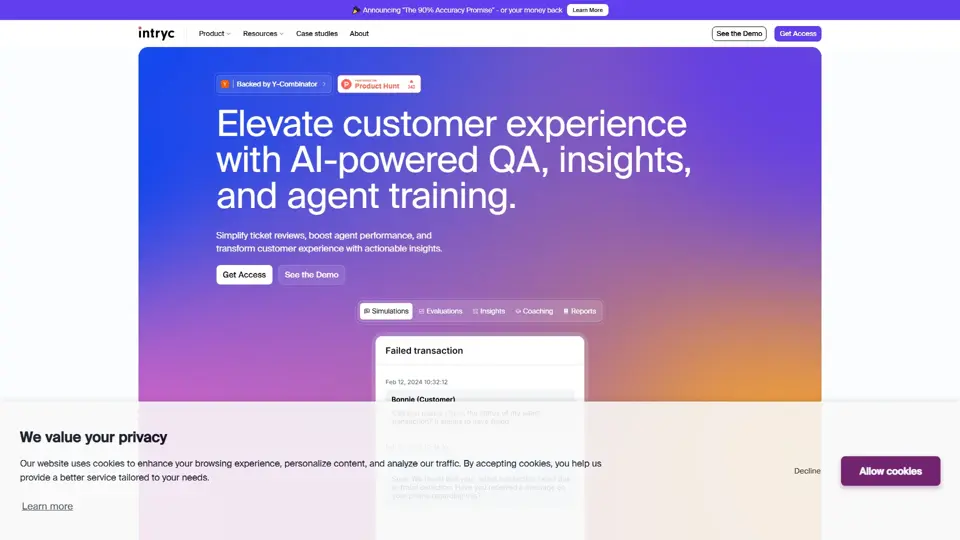
Intryc is a customer experience platform that helps teams review support tickets, improve agent performance, and uncover actionable service insights, mainly for support and CX leaders. It gives QA and support managers a faster way to coach teams and raise service quality at scale.
VibeFlow - AI Full-Stack App Builder with Visual Backends
VibeFlow is an AI full-stack app builder that helps users create backend automations, data pipelines, dashboards, forms, and customer-facing apps through prompts and visual workflows, mainly for developers, founders, operations teams, and non-technical teams. In AI-assisted product and operations work, its editable visual backends can help teams validate, adjust, and maintain application logic more reliably than opaque code generation alone.
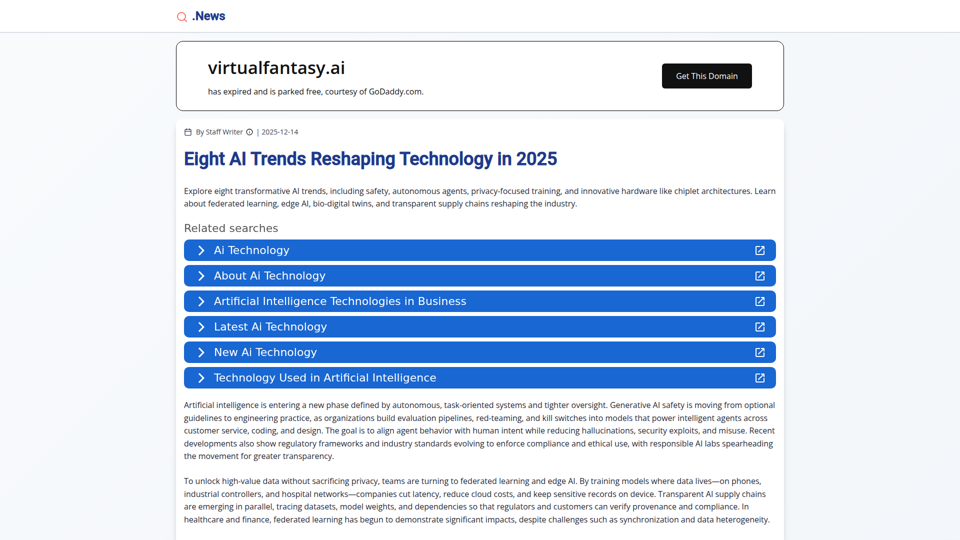
Eight AI Trends Reshaping Technology in 2025 | .News
This page is a news article outlining eight AI trends for 2025, helping technology professionals and business decision-makers understand developments such as AI safety, autonomous agents, federated learning, edge AI, and new hardware architectures. For product leaders, engineers, and compliance teams, this kind of trend overview can guide planning around safer deployment, privacy-preserving AI, and more efficient industry-specific systems.
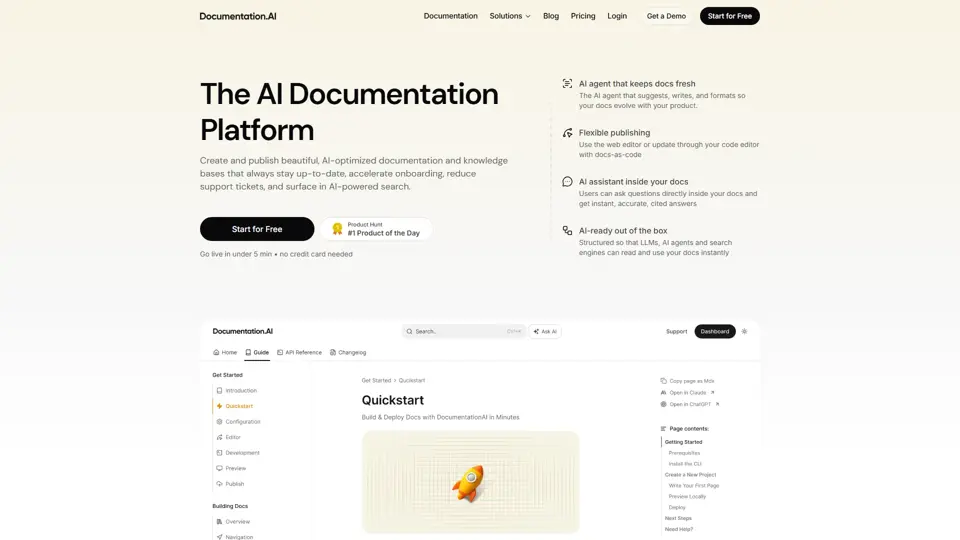
Documentation.AI – AI Documentation & Knowledge Base Software
Documentation.AI is an AI documentation and knowledge base platform that helps teams keep docs current, onboard users faster, and reduce support volume. In the AI era, it improves how support and product teams maintain institutional knowledge without constant manual rewriting.
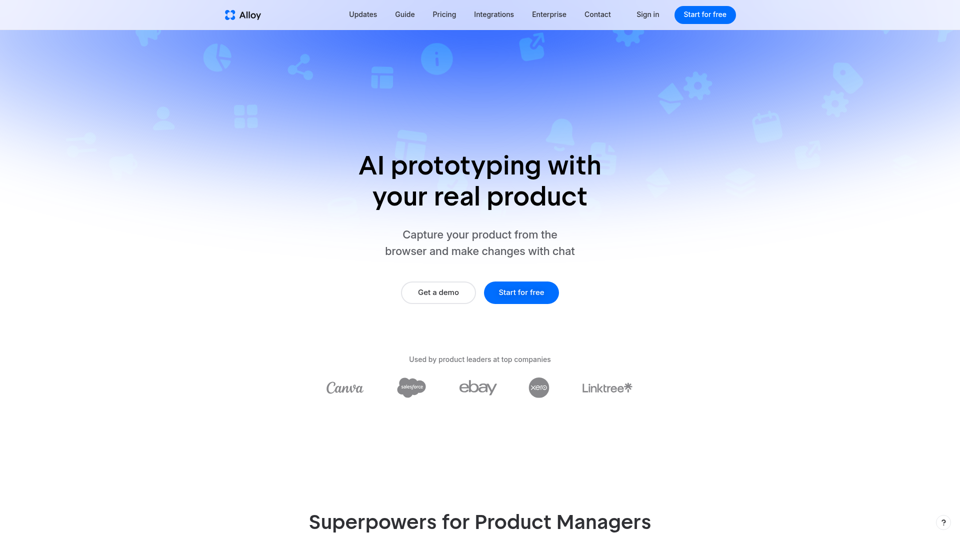
Alloy · AI prototyping with your real product
Alloy is an AI prototyping tool that captures pages from a real web app and lets product managers create interactive, on-brand prototypes with chat, mainly for professional product teams. By turning product ideas, customer requests, and team feedback into realistic prototypes quickly, it can help product managers and designers align faster and reduce time spent on manual mockups.