
refactor
Rate this Tool
Average Score
Total Votes
Select your score (1-10):
Detail Information
What
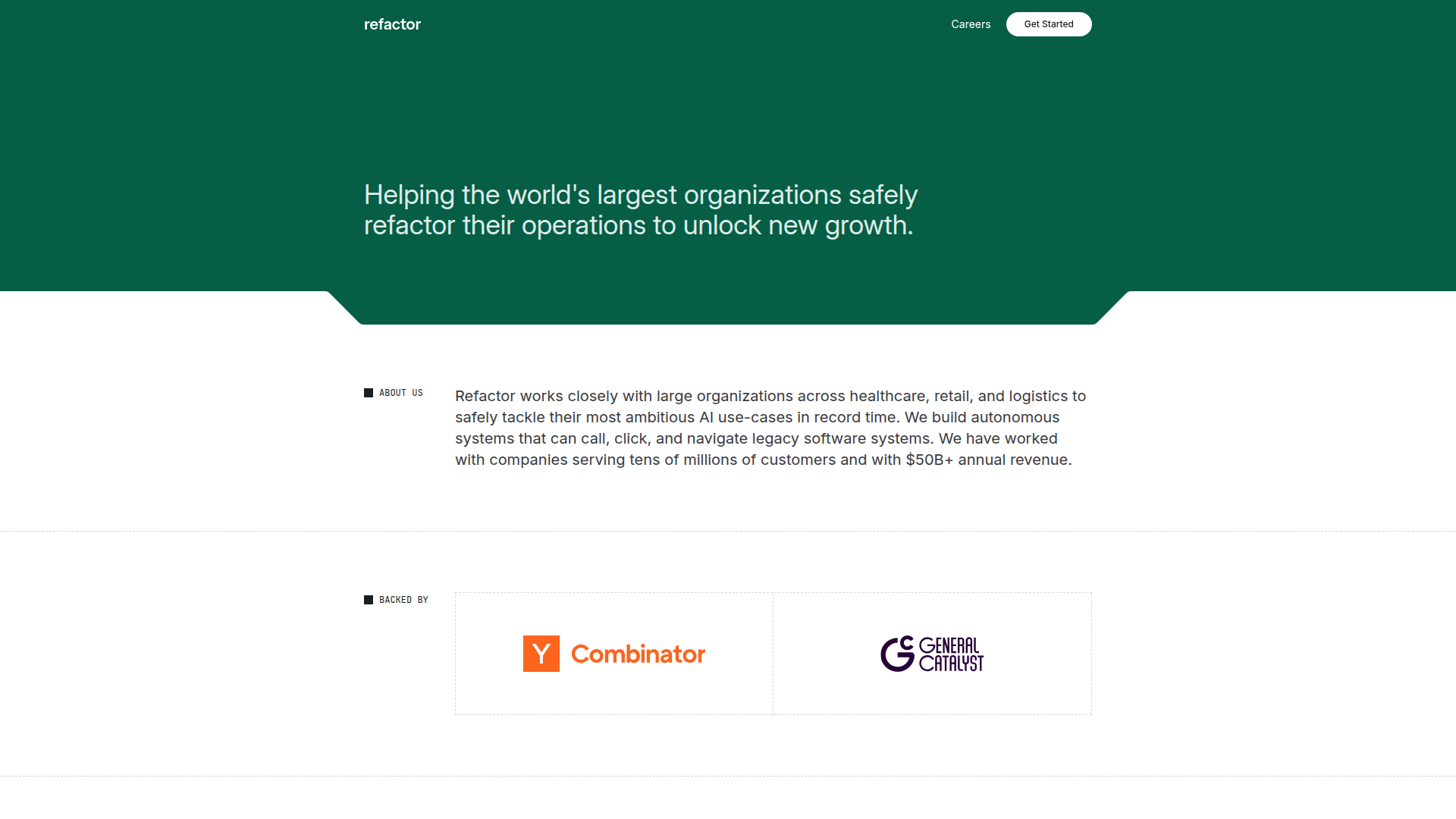
Refactor is an AI automation company focused on helping large organizations modernize operational workflows without relying on full replacement of legacy systems. Based on the page, it builds autonomous agents that can call, click, and navigate existing software and portals, with a stated focus on complex enterprise use cases in healthcare, retail, and logistics.
The product appears positioned as a high-touch, enterprise AI solution for operational automation rather than a self-serve software tool. Its core workflow centers on deploying AI agents to handle repetitive, time-intensive tasks such as product data onboarding, customer guidance, denial research, and payer communications, with an emphasis on speed, scale, and working across fragmented systems.
Features
- Autonomous interaction with legacy systems — AI agents can call, click, and navigate older software environments, which helps enterprises automate workflows without fully replacing existing systems.
- Retail catalog onboarding automation — Agents extract product data from spreadsheets, PDFs, and unstructured text, normalize attributes, enrich missing specifications, and reduce manual vendor follow-up.
- Conversational e-commerce assistance — A multilingual shopping assistant supports product discovery, comparison, recommendations, and real-time guidance through chat or voice.
- Proactive commercial account outreach — AI agents analyze purchasing history and account interactions to initiate personalized text or phone conversations for account growth opportunities.
- Healthcare denial management workflows — Agents ingest data from payer portals, ERA/835 files, EHR systems in read-only FHIR contexts, and payer policies to research denials and support next-step actions with an audit trail.
- AI phone operations for revenue cycle management — Phone agents handle eligibility checks, prior authorization inquiries, claim follow-up, medical record confirmation, billing questions, and patient collections, including long calls with transfers and branching workflows.
Helpful Tips
- Validate domain depth early — For enterprise AI agents in retail or healthcare, the practical differentiator is usually workflow accuracy and exception handling, not just basic automation.
- Map source-system variability before rollout — Products that rely on portals, documents, and legacy software should be evaluated against the real formats, edge cases, and process exceptions in your environment.
- Prioritize auditability for regulated or revenue-critical work — In healthcare and other sensitive operations, clear records of what the agent reviewed and did are essential for operational trust and internal governance.
- Start with narrow, measurable workflows — Use cases such as denial research, catalog onboarding, or eligibility calls are easier to benchmark with time, quality, and throughput improvements.
- Clarify service model and deployment approach — The website suggests a solution-oriented enterprise engagement, so buyers may need to confirm implementation scope, integration boundaries, and ongoing support expectations.
OpenClaw Skills
Within the OpenClaw ecosystem, Refactor could likely serve as a strong execution layer for industry-specific operational agents. Likely use cases include OpenClaw skills that triage work queues, classify exceptions, summarize case context, and then hand off actions to Refactor-style agents that complete calls, portal navigation, or document-driven workflows. This would be especially relevant in healthcare revenue cycle operations and retail back-office process automation.
A combined workflow could reshape how operations teams work by separating decision support from task execution. For example, an OpenClaw agent could identify denials by priority, explain probable causes, and generate action plans, while Refactor-like automation carries out payer follow-up and documentation steps. In retail, OpenClaw could monitor vendor submissions, detect data gaps, and trigger product onboarding workflows. These are inferred ecosystem use cases, not confirmed native integrations from the page.
Embed Code
Share this AI tool on your website or blog by copying and pasting the code below. The embedded widget will automatically update with the latest information.
<iframe src="https://aimyflow.com/ai/refactor-co/embed" width="100%" height="400" frameborder="0"></iframe>
Explore Similar Tools
Scanbase - Solutions for Digital Health Diagnostics
Scanbase is a digital health diagnostics company that uses computer vision to turn photos of rapid diagnostic tests into positive or negative results, mainly for healthcare organizations and teams managing at-home testing workflows. In AI-enabled diagnostics, this can help clinical operations, diagnostic engineering, and healthcare IT teams standardize test interpretation and support more efficient remote testing processes.

UnderstoodCare: Medicare Support & Care Advocates
Understood Care is a virtual Medicare support and patient advocacy service that helps people across the U.S. manage care coordination, claims, paperwork, appointments, medications, transportation, and related benefits, mainly for Medicare patients and their families. For healthcare advocates, nurses, and care coordinators, this kind of remote support can reduce administrative friction and make it easier to keep patients engaged between appointments.
Accessibility Technology for blind & low vision people - Be My Eyes
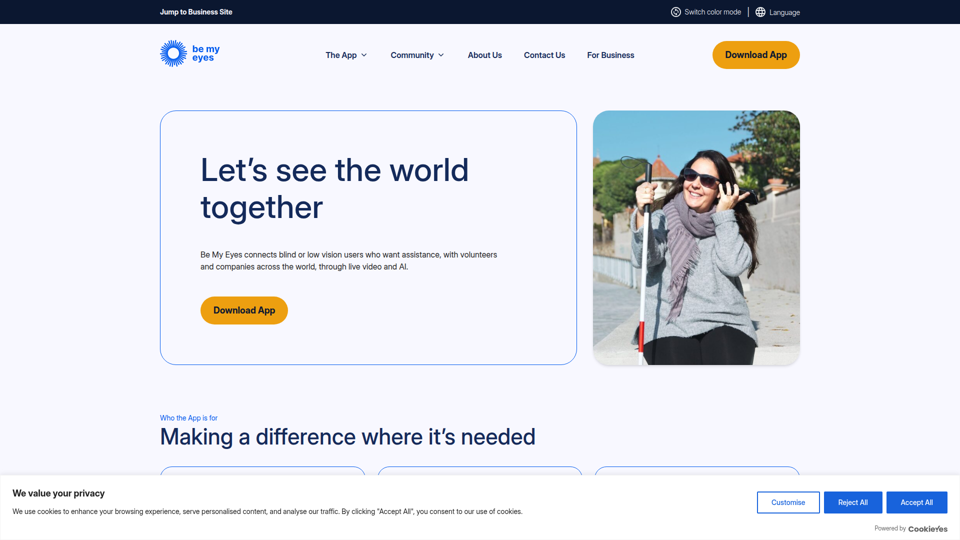
Be My Eyes is an accessibility app that helps blind and low-vision people get instant visual assistance through live video, AI descriptions, and support from volunteers or companies. For accessibility, customer support, and service teams, it can extend assistance beyond standard channels by making visual problem-solving faster and more responsive.
Andy | 15 minutes OASIS
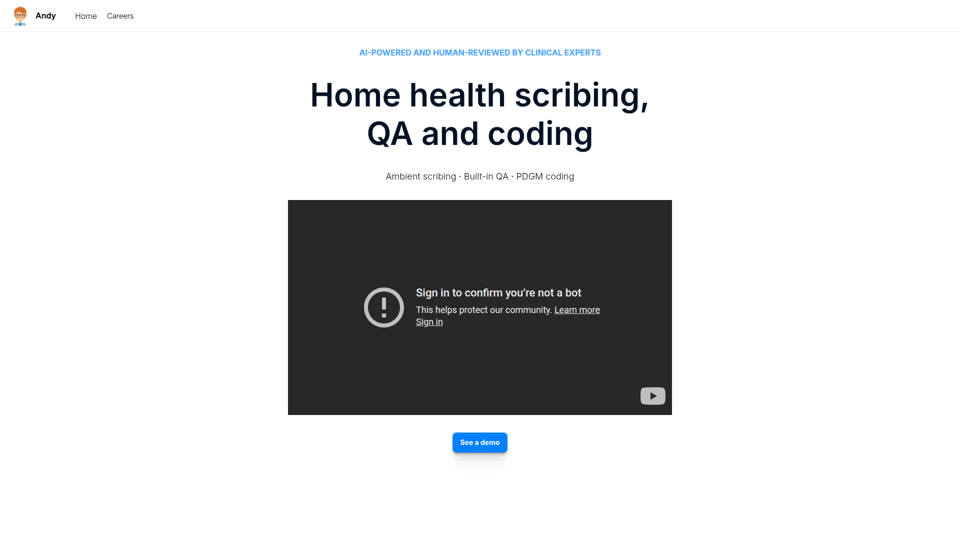
Andy is an AI-powered, human-reviewed home health documentation tool that helps clinicians complete OASIS charts faster with ambient scribing, built-in QA, and PDGM coding, mainly for home health clinicians and agencies. For home health nurses, QA teams, and coding staff, it can reduce documentation burden while supporting more consistent survey-ready records and reimbursement-related coding accuracy.
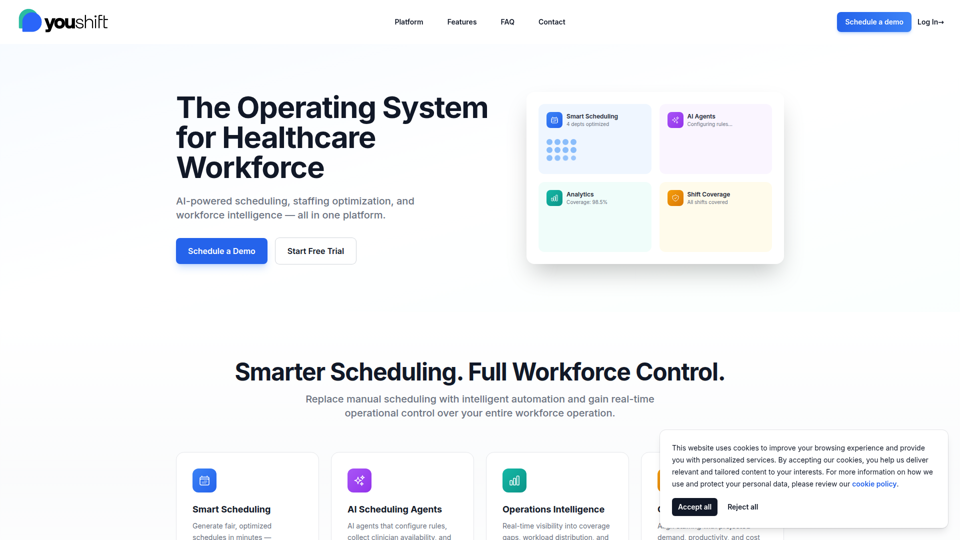
Youshift
YouShift is an AI-powered healthcare workforce platform that helps hospitals and clinician scheduling teams automate shift scheduling, staffing optimization, and workforce analytics. For healthcare operations leaders, schedulers, and department managers, it can reduce manual coordination while improving coverage, compliance, and staffing decisions with real-time workforce intelligence.
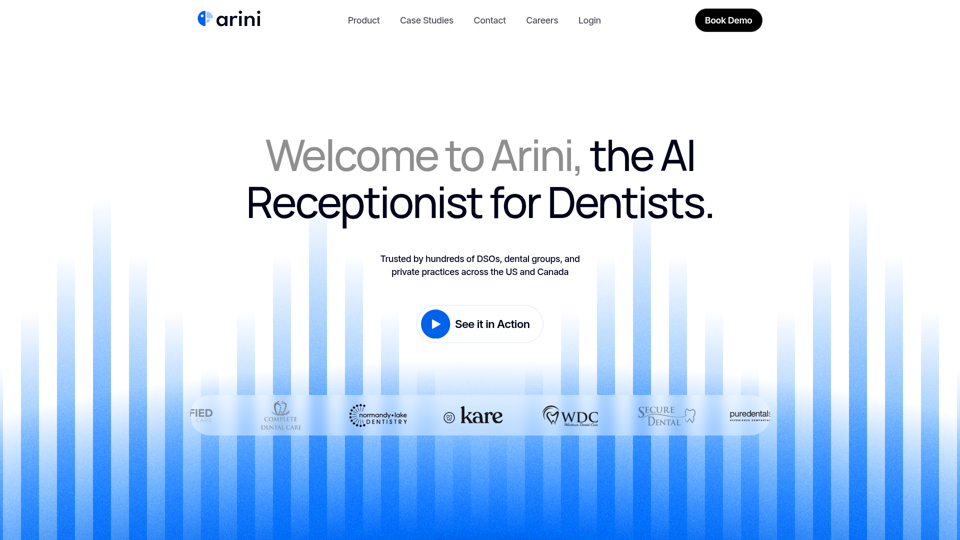
Arini | The leading AI receptionist for dentists
Arini is an AI receptionist for dental practices that answers calls, manages appointments, and handles patient communication across phone and text, mainly for DSOs, dental groups, and solo dentists. For front-desk teams and practice managers, it can automate routine scheduling and after-hours call handling so staff can focus on higher-touch patient needs.
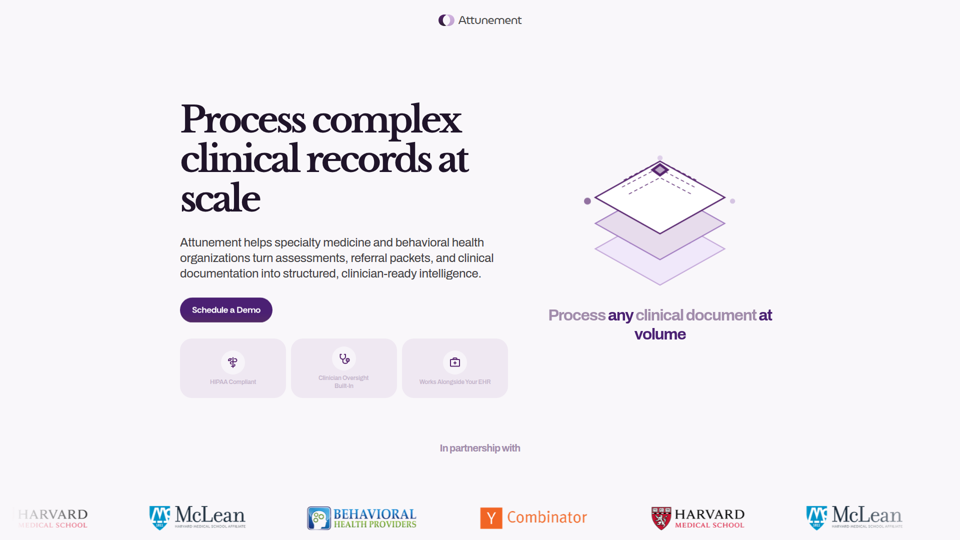
Attunement AI
Attunement AI is a clinical memory layer that helps specialty medicine and behavioral health organizations process assessments, referral packets, and other clinical records into structured, clinician-ready intelligence at scale. For clinical operations and chart review teams, it can improve AI-assisted record interpretation by preserving longitudinal patient context while supporting auditable, HIPAA-compliant workflows.
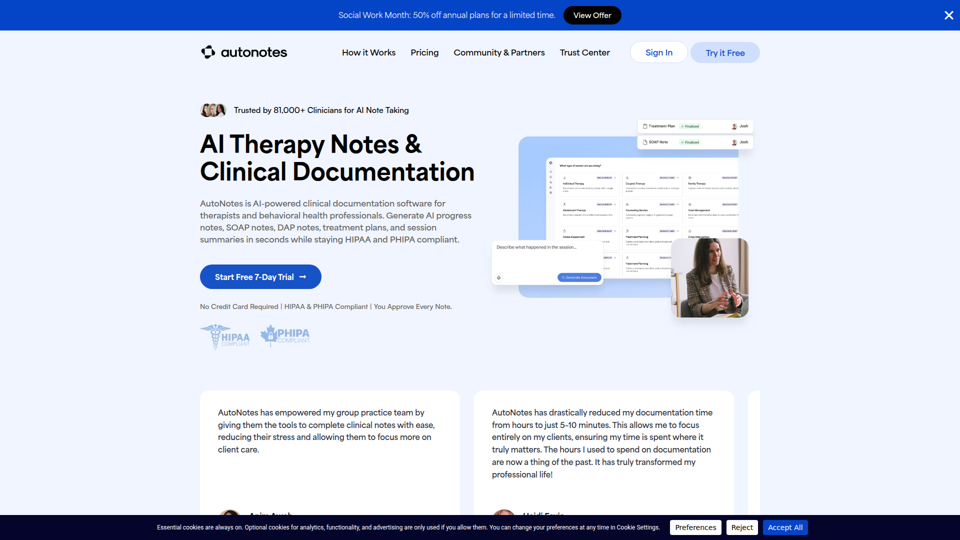
AI Clinical Documentation for Therapists | AutoNotes
AutoNotes is AI-powered clinical documentation software that helps therapists and behavioral health professionals generate compliant progress notes, SOAP and DAP notes, treatment plans, and session summaries from written, dictated, uploaded, or recorded sessions. For therapists, social workers, and practice teams, it can reduce administrative documentation work while preserving editable, structured records and continuity across sessions.