
RabbitHoles AI - Infinite Canvas for AI Chat
Rate this Tool
Average Score
Total Votes
Select your score (1-10):
Detail Information
What
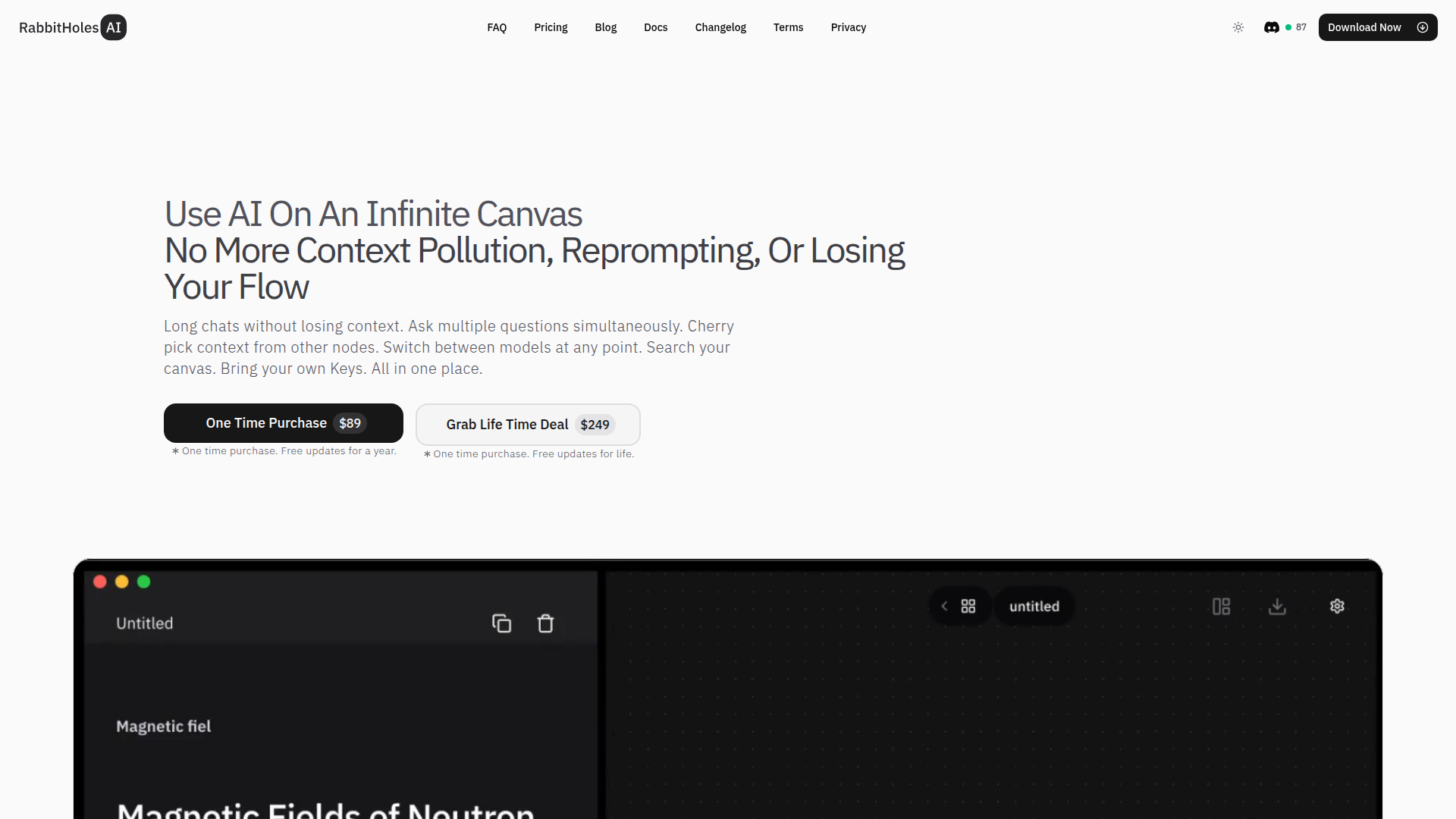
RabbitHoles AI is a desktop AI chat application built around an infinite canvas interface. Instead of keeping work in a single linear thread, it organizes conversations as nodes with branches, letting users explore multiple questions, directions, and source connections in parallel.
The product appears positioned for power users such as researchers, students, knowledge workers, and multidisciplinary thinkers who need long-context workspaces, multi-model comparison, and structured exploration. Its core workflow combines node-based chats, source attachment, model switching, and local chat storage to reduce context loss and make complex AI-assisted research or drafting easier to manage.
Features
- Infinite canvas with node-based chats: Each chat starts as a node and can branch into multiple paths, which helps users separate lines of thinking without losing the larger context.
- Multi-model use and model switching: Users can switch between models or use multiple models at once, which is useful for comparing outputs or matching tasks to different model strengths.
- Advanced model controls: The app exposes settings such as system prompt, temperature, and top_p, giving experienced users more control over output behavior where the selected model supports it.
- Source attachment for files and websites: Users can add files, websites, images, and other materials to the canvas and connect them to chats, supporting grounded work from reference material.
- Local conversation storage: Chats are stored on the user’s device, which may appeal to users who want their working history kept locally rather than primarily in a hosted chat interface.
- Export and provider flexibility: Conversations can be exported as JSON or Markdown, and the app supports custom providers, Ollama, and bring-your-own API keys for broader model access.
Helpful Tips
- Assess fit by workflow complexity: This kind of canvas-based AI tool is most valuable when work involves branching research, iterative drafting, or parallel comparison across topics and models.
- Plan a node structure early: Teams or individual users will get more consistent results if they define how nodes represent research, drafts, summaries, or source-backed outputs before heavy use.
- Verify source-grounded claims carefully: While source attachment can improve relevance, users should still validate important outputs because the page does not fully specify retrieval behavior or evidence controls across all models.
- Budget for API management: Because the product uses bring-your-own API keys, buyers should account for separate model access costs, provider setup, and internal governance over key usage.
- Check desktop and device needs upfront: The page describes a desktop app and mentions use on two devices, so deployment planning should include endpoint management and user device policies.
OpenClaw Skills
RabbitHoles AI could likely work well inside an OpenClaw environment as the human-facing workspace for complex idea exploration, while OpenClaw skills and agents handle repeatable downstream actions. Likely use cases include turning selected nodes into structured briefs, extracting tasks from research branches, generating versioned summaries, or routing finalized node content into documentation and knowledge workflows. The page does not state a native OpenClaw integration, so this should be treated as a workflow inference rather than a confirmed capability.
In a broader OpenClaw ecosystem, teams could build agents that watch exported Markdown or JSON from RabbitHoles AI, classify branches by topic, detect gaps in evidence, and trigger follow-up research or drafting routines. For researchers, educators, analysts, or creative teams, that combination could shift work from isolated prompting toward a more operational system: RabbitHoles AI for spatial thinking and model interaction, and OpenClaw for orchestration, reuse, and process automation around the outputs.
Embed Code
Share this AI tool on your website or blog by copying and pasting the code below. The embedded widget will automatically update with the latest information.
<iframe src="https://aimyflow.com/ai/rabbitholes-ai/embed" width="100%" height="400" frameborder="0"></iframe>
Explore Similar Tools
15Minutes | Book Summaries & Analysis PDF – Over 5000 Books
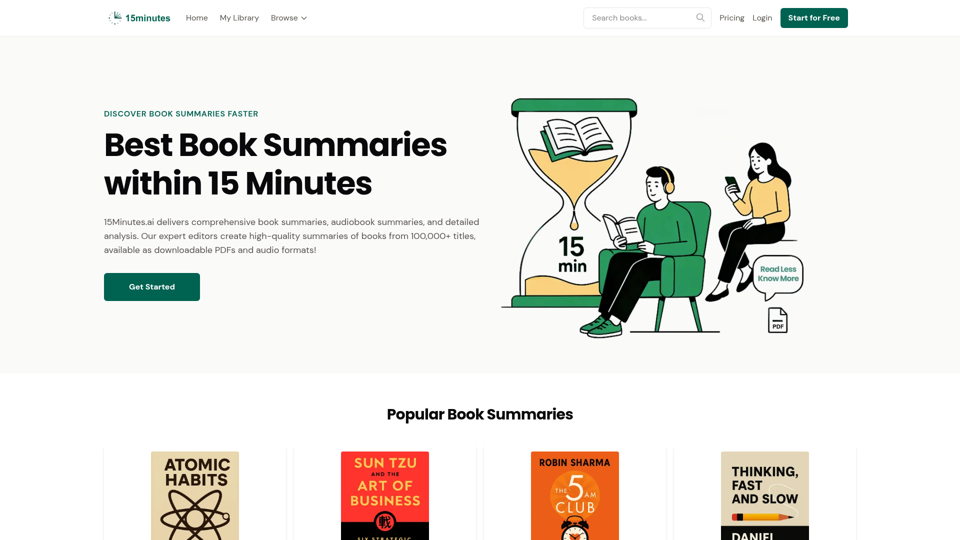
15Minutes is a book summary and analysis platform with over 5,000 titles that helps readers quickly understand books through 15-minute reads, PDFs, audiobooks, and chapter synopses, mainly for students, professionals, and general readers. In AI-shaped workflows, it can help knowledge workers, educators, and researchers review more sources faster before deciding what to read in full.
Vaero
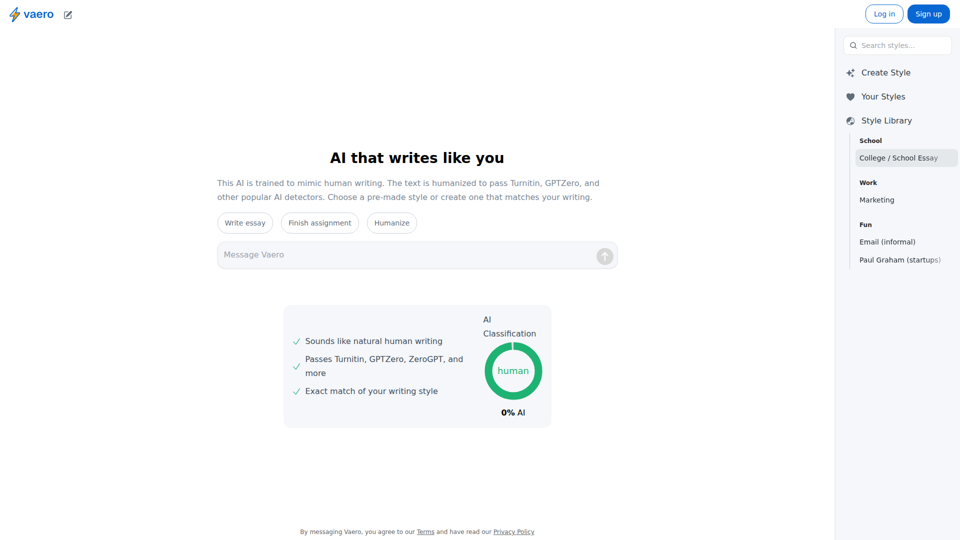
Vaero is an AI writing tool that helps users generate and humanize text to match their personal writing style, mainly for students working on school and college essays or assignments. For education-focused writing tasks, it can help students and academic support professionals produce more natural-sounding drafts that align closely with an individual’s usual voice.
InstantMind: AI Mind Map Generator & Summarizer - MindMap AI
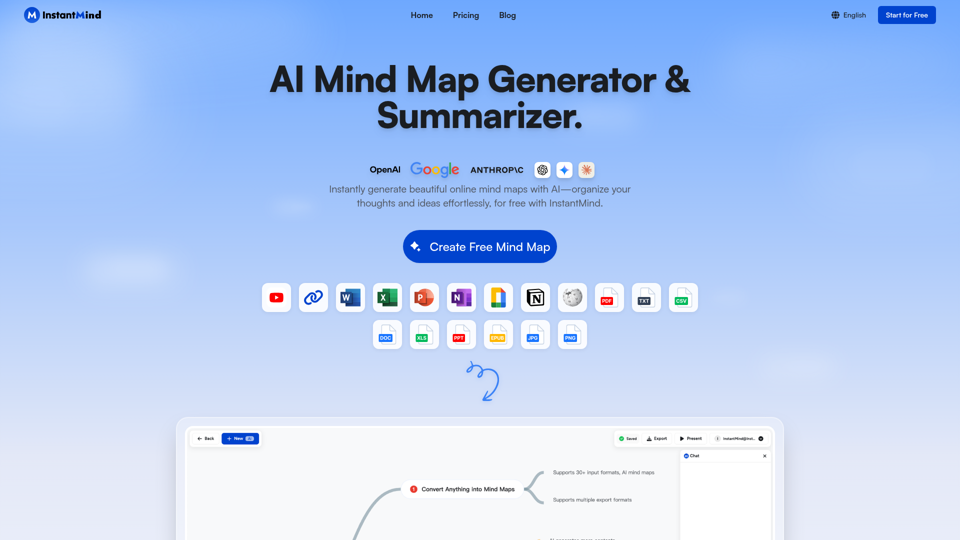
InstantMind is an AI mind map generator and summarizer that turns text, documents, images, web pages, and YouTube videos into visual mind maps, outlines, and content summaries for students, researchers, and other knowledge workers. In AI-driven research, study, and planning workflows, it can help these users extract key points faster, explore source material through contextual chat, and present complex information more clearly.
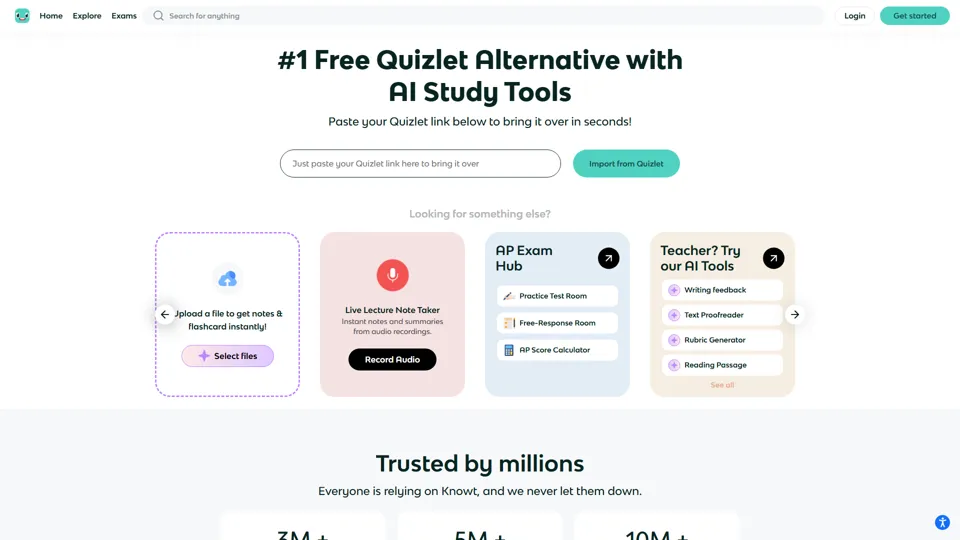
#1 Free Quizlet Alternative | Knowt
Knowt is a study platform and Quizlet alternative that helps students and teachers create, import, and practice flashcards with multiple study modes. It supports modern learning workflows by making study content easier to reuse, review, and scale across classes.
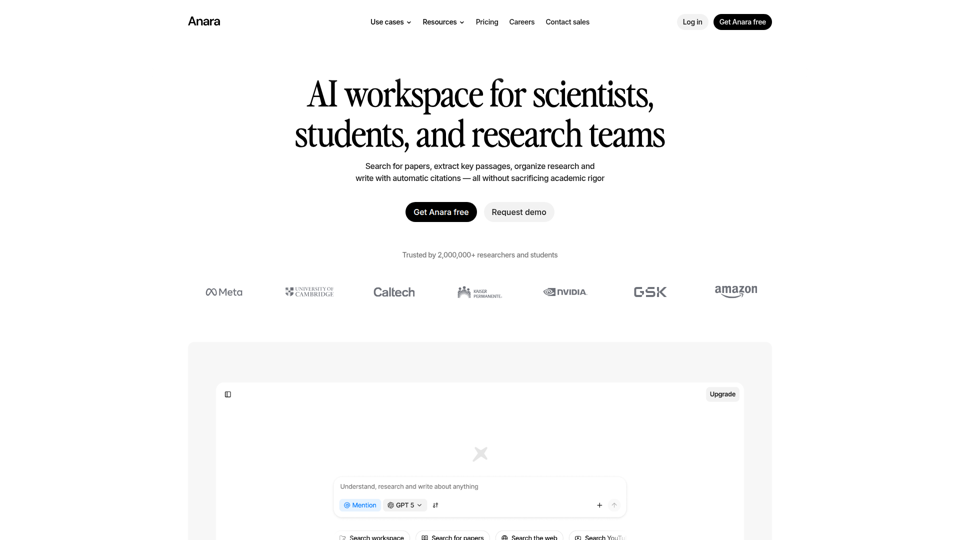
Anara | AI you can trust
Anara is an AI research workspace that helps scientists, students, and research teams search academic literature, analyze uploaded files, organize sources, and write with automatic citations and source verification. For researchers, academics, and clinical or technical teams, it can speed literature reviews and drafting while keeping answers grounded in original documents and academic databases.
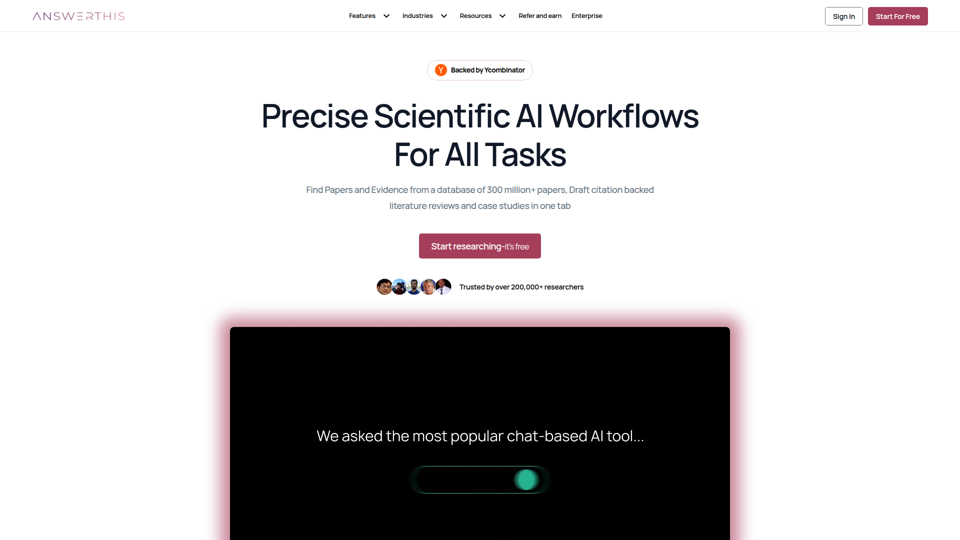
AnswerThis
AnswerThis is an AI research assistant that helps researchers, academics, students, and medical professionals find evidence, draft citation-backed literature reviews and case studies, organize papers, and write with sources using a large scientific paper database. In AI-assisted research workflows, it can help scholars and evidence-focused professionals speed up literature discovery, source verification, and draft preparation while keeping citations tied to the underlying papers.
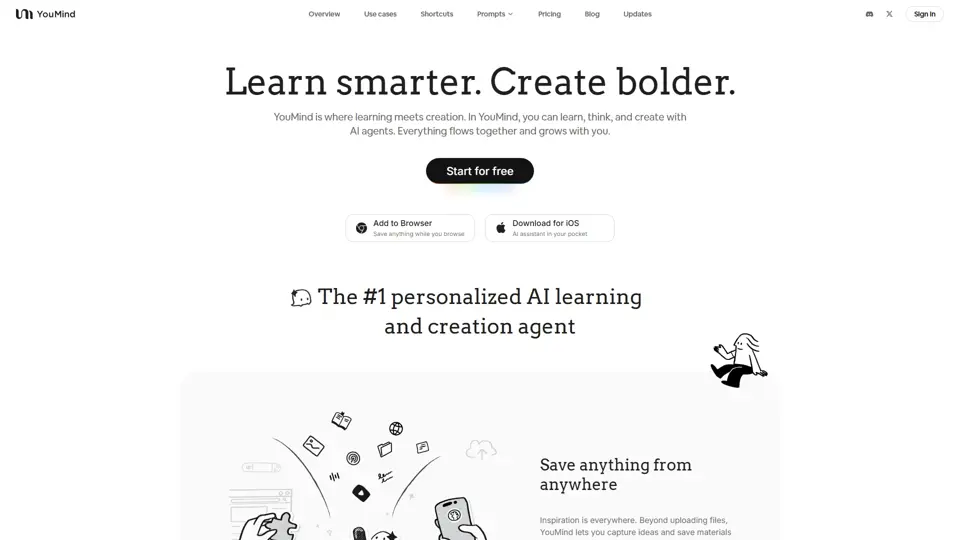
YouMind - AI Creation Agent
YouMind is an AI creation agent that helps users turn diverse source materials into new creative outputs, making it useful for creators, researchers, and knowledge-driven professionals. In the AI era, it accelerates synthesis work so creative roles can move from gathering inputs to producing drafts more quickly.
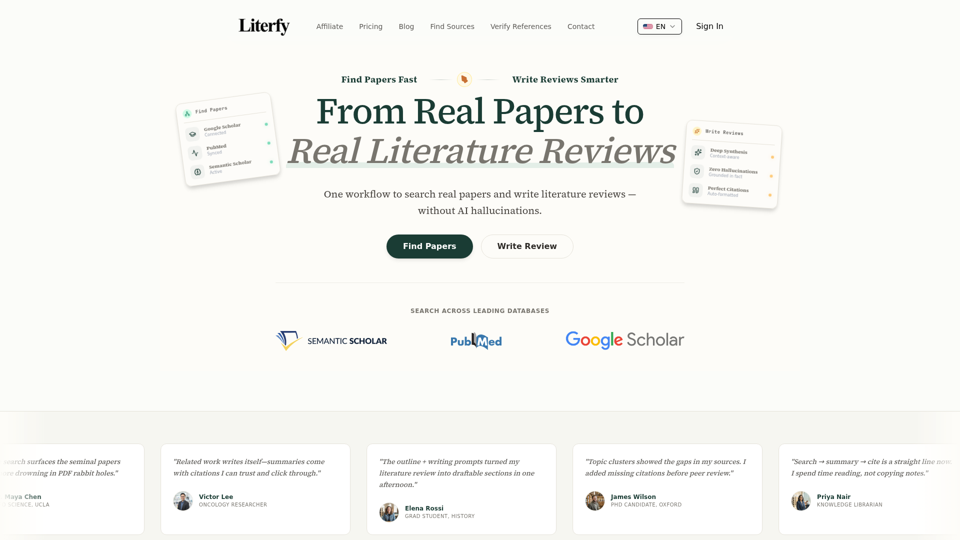
Literfy.ai | AI Literature Review Generator
Literfy.ai is an AI literature review generator that helps researchers, graduate students, and academic analysts search papers across major databases, organize sources, and draft citation-linked literature reviews from real papers. In AI-assisted research workflows, it can help scholars and librarians reduce manual searching, outlining, and citation formatting while keeping review writing grounded in verifiable sources.