
Paperguide: The AI Research Assistant
Rate this Tool
Average Score
Total Votes
Select your score (1-10):
Detail Information
What
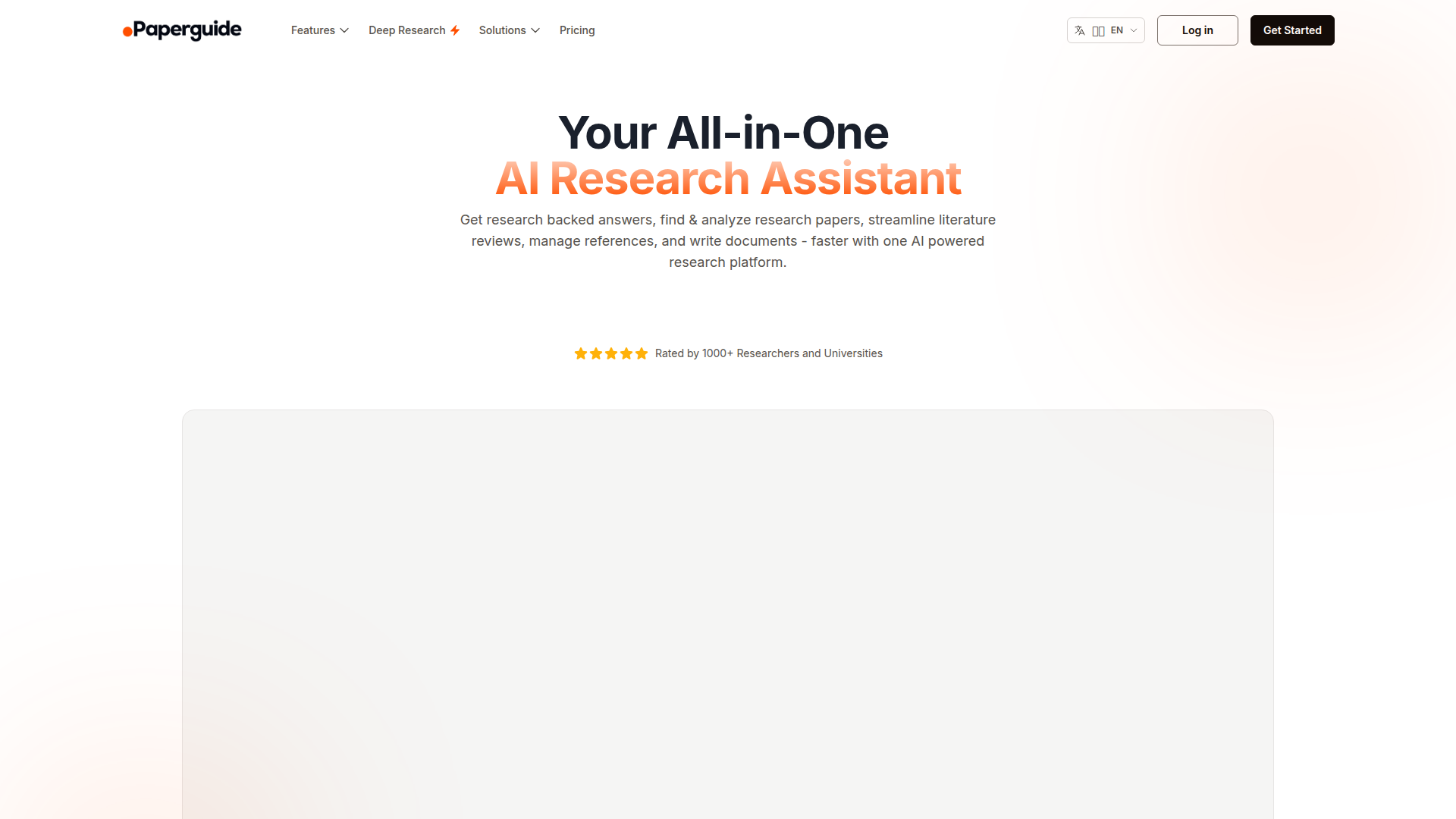
Paperguide is an AI research assistant that combines paper search, literature analysis, academic writing, deep research reporting, and reference management in one platform. It is aimed at students, faculty, researchers, clinicians, scientists, consultants, and other professionals who need to work with scholarly literature and produce citation-backed documents.
The product appears positioned as an all-in-one alternative to using separate tools for discovery, review, writing, and citation organization. Its core workflow is to help users search a large paper database, extract and compare findings across sources, verify evidence in original text, manage references, and draft research documents with citations.
Features
- AI search for research-backed answers — Understands question-style queries, searches a large scholarly database, and returns synthesized answers with citations to relevant papers.
- Literature review analysis and data extraction — Extracts structured information from multiple papers, including tabular and graphical content, to support faster comparison and review.
- Deep research report generation — Automates paper discovery, screening, extraction, and analysis to produce structured reports on trends, contradictions, and consensus.
- AI academic writing with citations — Generates and refines drafts using referenced source material while attaching citations to AI-generated content.
- Reference management and import tools — Supports importing references from formats such as Zotero, BibTeX, RIS, DOI, and URLs for organization and sharing.
- Paper chat and verification support — Lets users ask questions about PDFs or papers and inspect supporting source text for easier validation of answers.
Helpful Tips
- Validate extraction quality on high-stakes work — For systematic reviews, clinical protocols, or regulated research, manually verify key claims against the cited source text rather than relying only on summaries.
- Assess database coverage for your field — The product states broad paper coverage, but buyers should confirm whether its source coverage fits their exact discipline, journal set, and full-text needs.
- Use it to compress early-stage review work — Tools like question-based search, paper comparison, and report generation are likely most valuable during scoping, evidence mapping, and first-pass synthesis.
- Review collaboration needs carefully — Shared libraries and permissions are useful, but teams should check whether the collaboration model is sufficient for their review workflow and approval process.
- Treat writing assistance as a drafting layer — Citation-backed drafting can speed up production, but final argument quality, interpretation, and methodological accuracy still require subject-matter oversight.
OpenClaw Skills
Paperguide could fit well within the OpenClaw ecosystem as a research operations layer for knowledge-heavy workflows. Likely OpenClaw skills could include an agent that turns a research question into a structured search brief, another that reviews Paperguide outputs for evidence gaps, and a synthesis agent that converts extracted findings into internal memos, protocol drafts, market landscapes, or policy summaries. If Paperguide data and outputs are accessible programmatically, these workflows could support repeatable literature monitoring and document generation.
For target users such as academic teams, clinical researchers, drug discovery groups, or health economics analysts, the combination could shift work from manual collection toward supervised AI orchestration. A likely use case would be an OpenClaw workflow that schedules recurring topic scans, flags new contradictory evidence, routes papers to domain reviewers, and compiles citation-backed briefing documents for decision makers. The practical effect would be faster evidence handling and more consistent research operations, though any native integration would need to be confirmed separately.
Embed Code
Share this AI tool on your website or blog by copying and pasting the code below. The embedded widget will automatically update with the latest information.
<iframe src="https://aimyflow.com/ai/paperguide-ai/embed" width="100%" height="400" frameborder="0"></iframe>
Explore Similar Tools
15Minutes | Book Summaries & Analysis PDF – Over 5000 Books
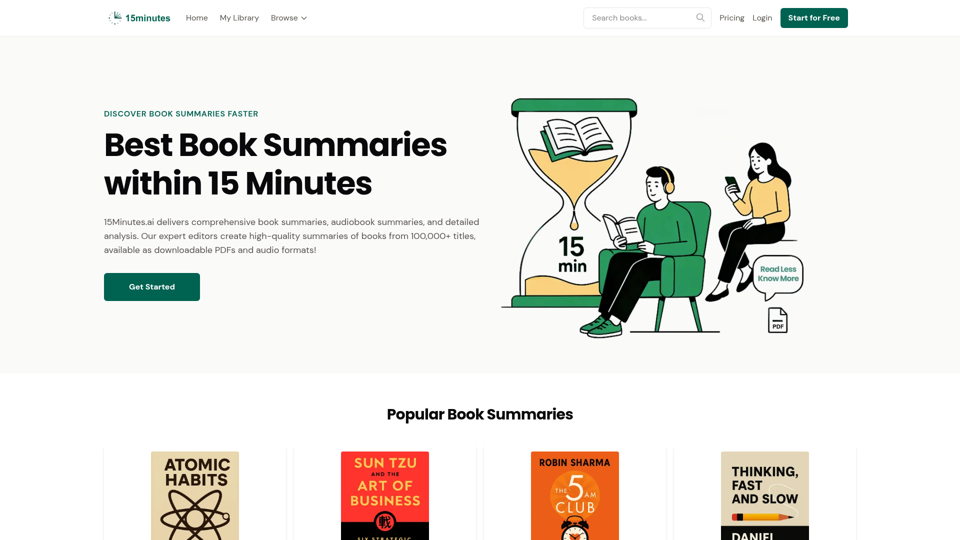
15Minutes is a book summary and analysis platform with over 5,000 titles that helps readers quickly understand books through 15-minute reads, PDFs, audiobooks, and chapter synopses, mainly for students, professionals, and general readers. In AI-shaped workflows, it can help knowledge workers, educators, and researchers review more sources faster before deciding what to read in full.
Vaero
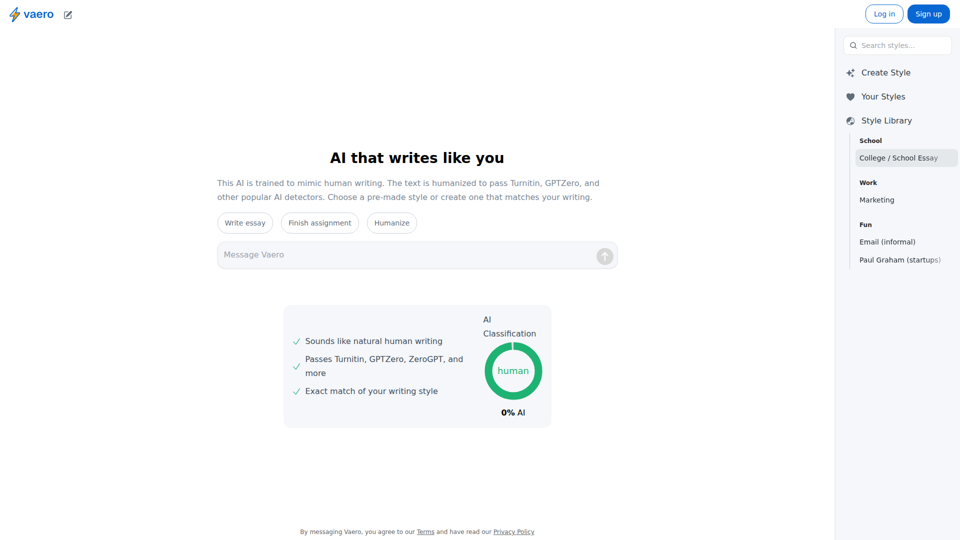
Vaero is an AI writing tool that helps users generate and humanize text to match their personal writing style, mainly for students working on school and college essays or assignments. For education-focused writing tasks, it can help students and academic support professionals produce more natural-sounding drafts that align closely with an individual’s usual voice.
InstantMind: AI Mind Map Generator & Summarizer - MindMap AI
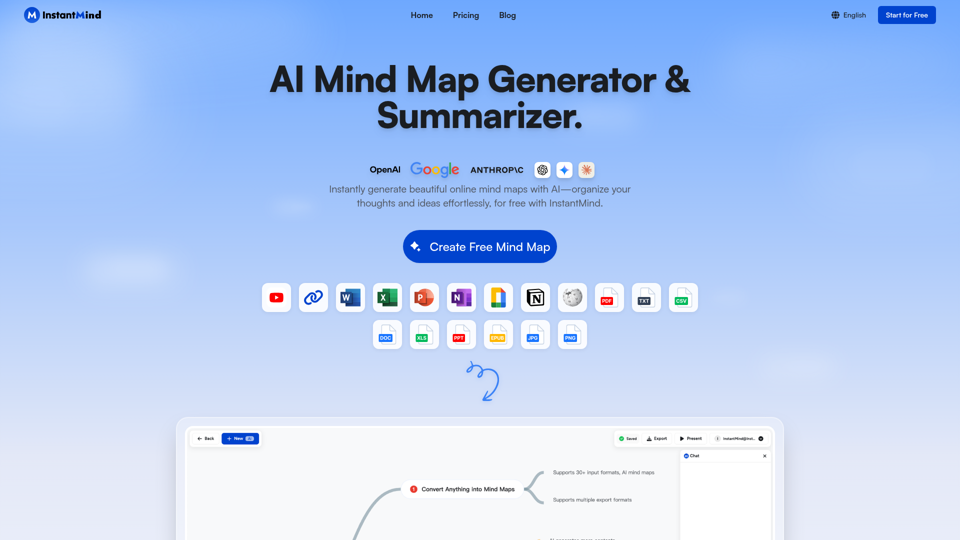
InstantMind is an AI mind map generator and summarizer that turns text, documents, images, web pages, and YouTube videos into visual mind maps, outlines, and content summaries for students, researchers, and other knowledge workers. In AI-driven research, study, and planning workflows, it can help these users extract key points faster, explore source material through contextual chat, and present complex information more clearly.
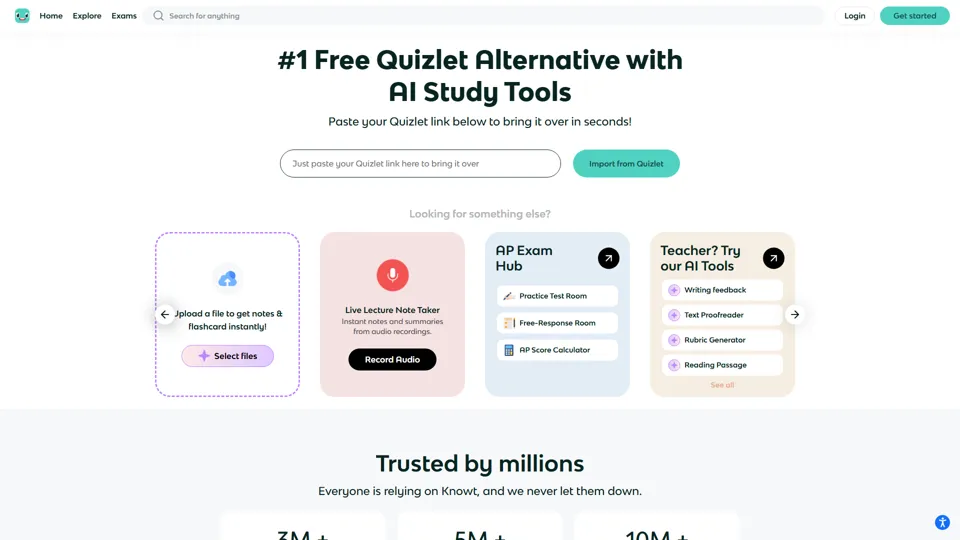
#1 Free Quizlet Alternative | Knowt
Knowt is a study platform and Quizlet alternative that helps students and teachers create, import, and practice flashcards with multiple study modes. It supports modern learning workflows by making study content easier to reuse, review, and scale across classes.
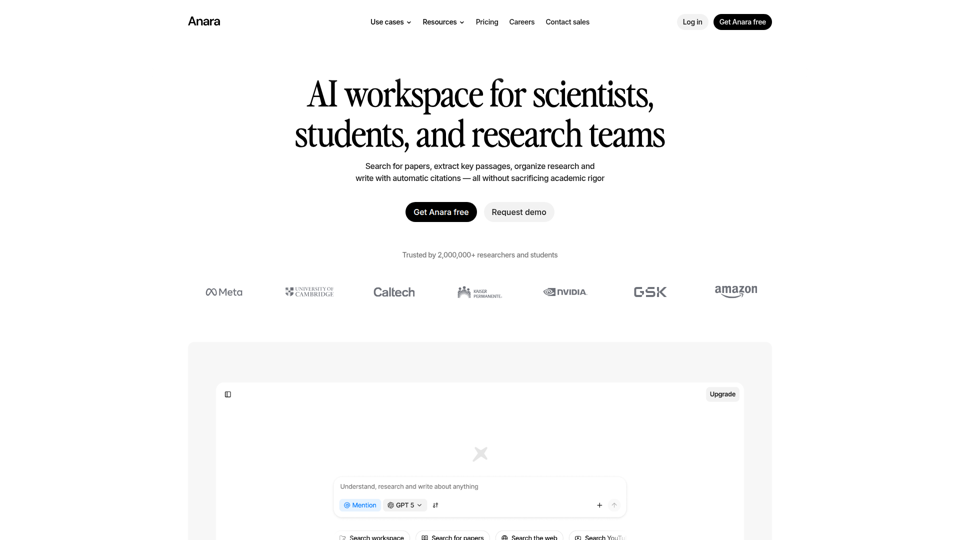
Anara | AI you can trust
Anara is an AI research workspace that helps scientists, students, and research teams search academic literature, analyze uploaded files, organize sources, and write with automatic citations and source verification. For researchers, academics, and clinical or technical teams, it can speed literature reviews and drafting while keeping answers grounded in original documents and academic databases.
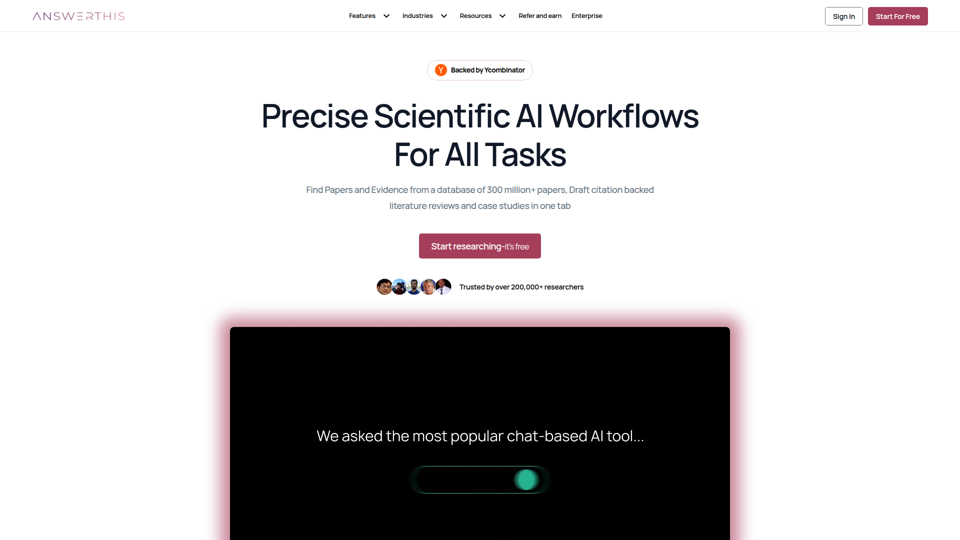
AnswerThis
AnswerThis is an AI research assistant that helps researchers, academics, students, and medical professionals find evidence, draft citation-backed literature reviews and case studies, organize papers, and write with sources using a large scientific paper database. In AI-assisted research workflows, it can help scholars and evidence-focused professionals speed up literature discovery, source verification, and draft preparation while keeping citations tied to the underlying papers.
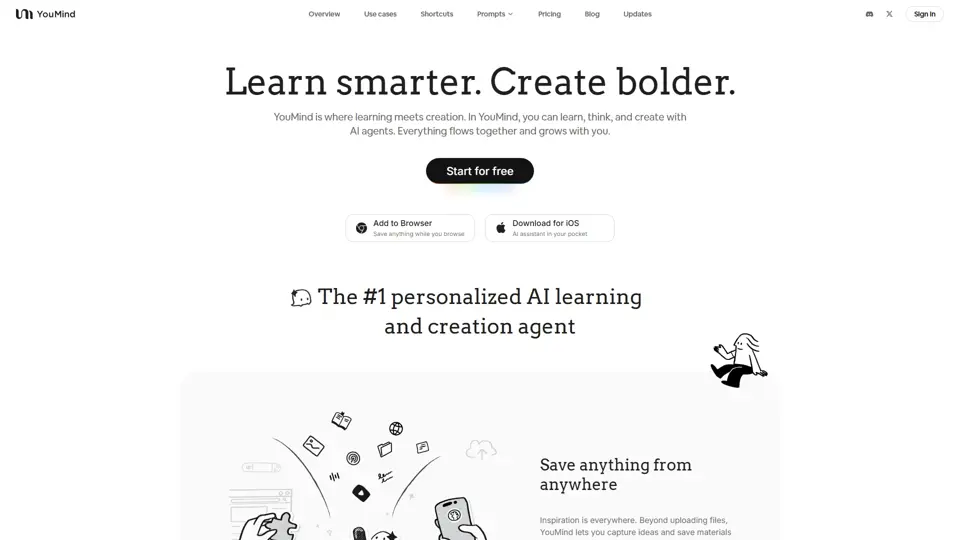
YouMind - AI Creation Agent
YouMind is an AI creation agent that helps users turn diverse source materials into new creative outputs, making it useful for creators, researchers, and knowledge-driven professionals. In the AI era, it accelerates synthesis work so creative roles can move from gathering inputs to producing drafts more quickly.
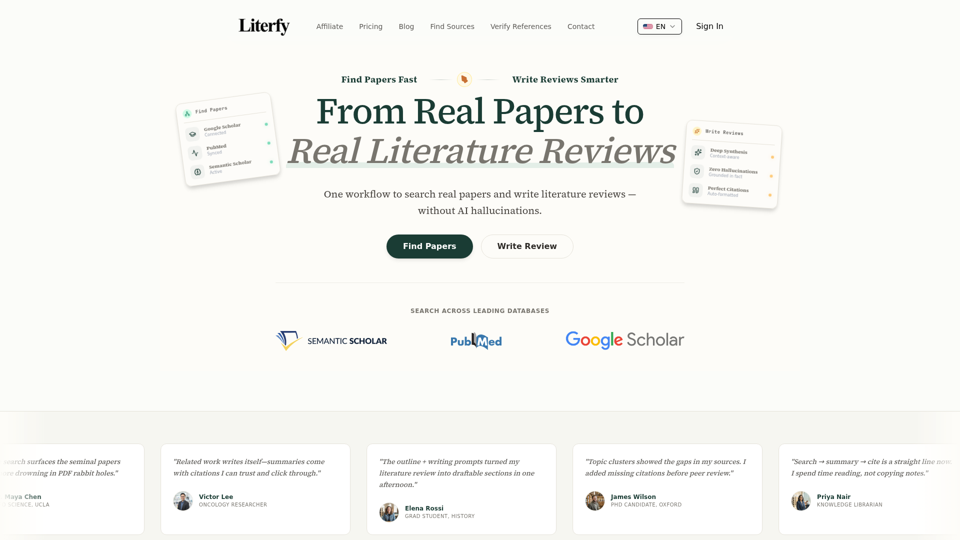
Literfy.ai | AI Literature Review Generator
Literfy.ai is an AI literature review generator that helps researchers, graduate students, and academic analysts search papers across major databases, organize sources, and draft citation-linked literature reviews from real papers. In AI-assisted research workflows, it can help scholars and librarians reduce manual searching, outlining, and citation formatting while keeping review writing grounded in verifiable sources.