
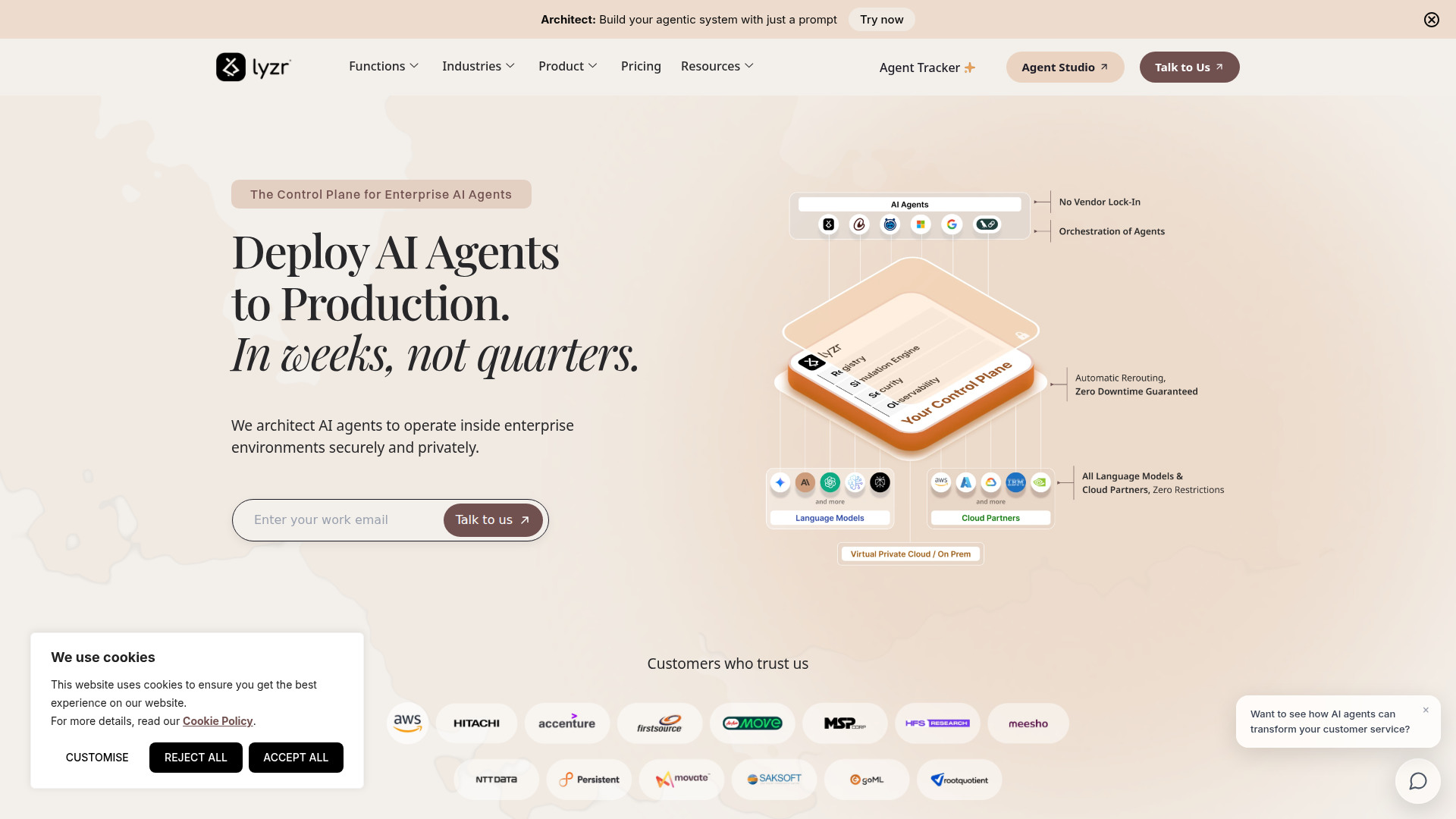
Deploy AI Agents to Production. In weeks, not quarters.
Rate this Tool
Average Score
Total Votes
Select your score (1-10):
Detail Information
What
Lyzr presents itself as a control plane for enterprise AI agents. The platform is positioned to help organizations build, deploy, and operate AI agents in production environments more quickly, with an emphasis on secure and private operation inside enterprise settings.
The product appears aimed at enterprise teams across functions such as customer support, procurement, HR, marketing, sales, banking, and insurance. Its workflow centers on designing agentic systems, grounding them in enterprise knowledge, orchestrating models and tools, and deploying either custom or prebuilt agents for specific business processes.
Features
- Architect for prompt-based agent design — Lets teams build an agentic system "with just a prompt," which suggests a faster path from concept to initial workflow design.
- Production-ready agent blueprints — Offers 100+ prebuilt agents for enterprise use cases, helping teams start with defined workflows instead of building every agent from scratch.
- Function- and industry-specific agents — Supports use cases across support, procurement, HR, marketing, sales, banking, and insurance, making the platform easier to map to business operations.
- Knowledge Base and Knowledge Graph — Connect enterprise data and linked information so agents can work with more context and likely improve reasoning quality.
- Hallucination Manager — Focuses on keeping responses accurate and grounded in trusted data, which is important for enterprise reliability.
- Responsible AI and orchestration capabilities — Includes compliance, safety, audit trails, and multi-model/tool orchestration, which suggests support for governed, multi-step agent workflows.
Helpful Tips
- Validate the deployment model early — The site states agents can be deployed safely in your cloud and operate privately, so buyers should confirm architecture, hosting boundaries, and access controls for their environment.
- Start with a bounded business workflow — Use a narrow process such as onboarding, triage, contract review, or claims intake before expanding into broader cross-functional automation.
- Assess grounding and governance together — Features like Knowledge Base, Knowledge Graph, Hallucination Manager, and Responsible AI should be evaluated as a combined control stack rather than in isolation.
- Compare blueprints with customization needs — Prebuilt agents can accelerate rollout, but teams should check how much workflow logic, data mapping, and policy tuning is needed for their exact process.
- Treat "weeks, not quarters" as positioning, not a guaranteed timeline — The page emphasizes speed, but actual deployment timing will depend on integration scope, approvals, and operational readiness.
OpenClaw Skills
Within the OpenClaw ecosystem, Lyzr could likely serve as the execution layer for enterprise agent workflows, while OpenClaw skills handle surrounding tasks such as lead qualification, process monitoring, knowledge curation, exception routing, or cross-system coordination. A practical setup might use OpenClaw agents to trigger and supervise Lyzr-powered workflows for customer support, procurement reviews, HR operations, or banking and insurance intake processes.
A likely use case is building OpenClaw skills that monitor agent outputs, enrich enterprise knowledge sources, classify edge cases, and escalate sensitive decisions to humans. If connected this way, the combination could help operations teams move from isolated AI assistants to managed, auditable agent systems embedded in real workstreams. Native integration is not stated on the page, so this should be treated as an implementation concept rather than a confirmed product capability.
Embed Code
Share this AI tool on your website or blog by copying and pasting the code below. The embedded widget will automatically update with the latest information.
<iframe src="https://aimyflow.com/ai/lyzr-ai/embed" width="100%" height="400" frameborder="0"></iframe>
Explore Similar Tools
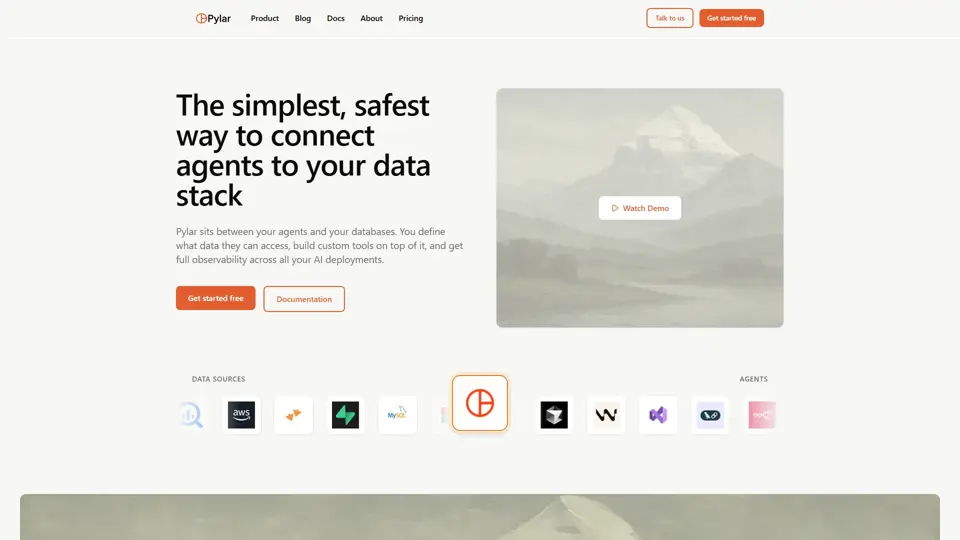
Governed Data Access for AI Agents | Secure MCP Tools
Pylar is a governed data access platform that helps users give AI agents secure access to structured data through controlled SQL views and MCP tools, mainly for data and engineering teams. It lets developers operationalize AI safely by balancing agent capability with governance and access control.
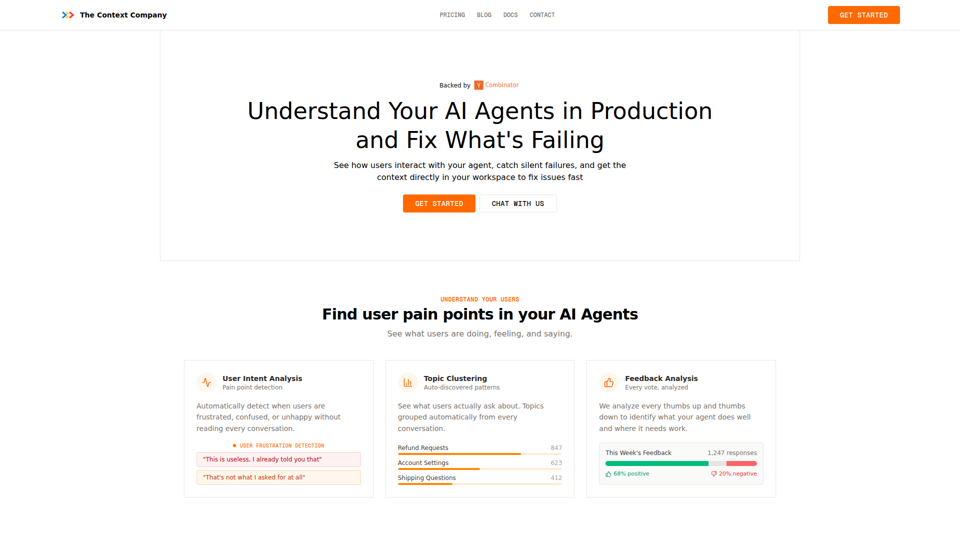
The Context Company | Understand User Behavior In Your AI Agents
The Context Company is an observability and user behavior analysis tool for AI agents that helps teams monitor production conversations, detect frustration and silent failures, cluster topics, and review feedback, mainly for developers and product teams shipping AI agents. In AI workflows, it can help engineering, support, and product functions prioritize fixes faster by surfacing hidden failure patterns and real user pain points directly from agent runs.
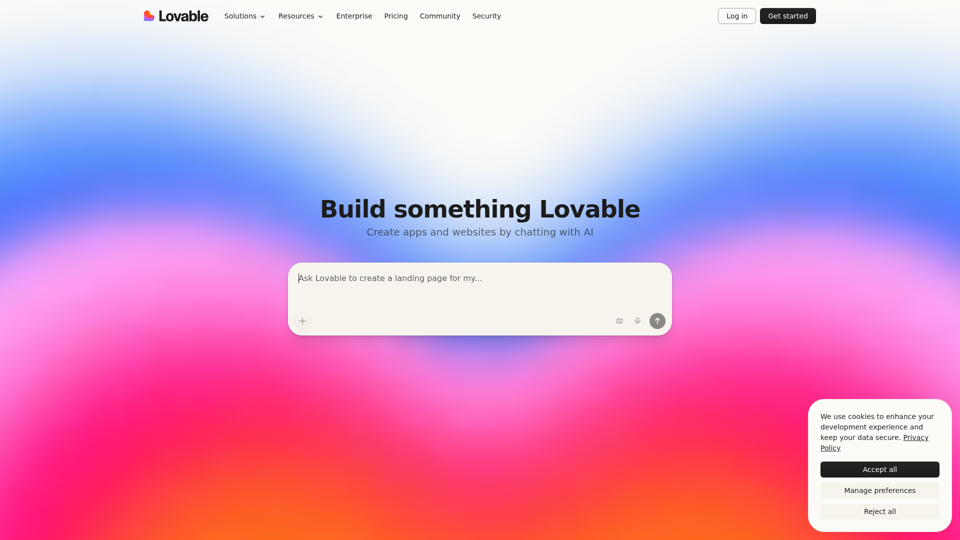
AI App Builder | Vibe Code Apps & Websites with AI, Fast
Lovable is an AI app builder that helps users create apps, websites, and digital products by describing ideas in chat, refining prototypes, and deploying them quickly, mainly for founders, product managers, designers, and marketers. In AI-driven product work, it can help these teams turn early concepts, screenshots, and feedback into working prototypes faster, reducing handoff delays between planning, design, and launch.
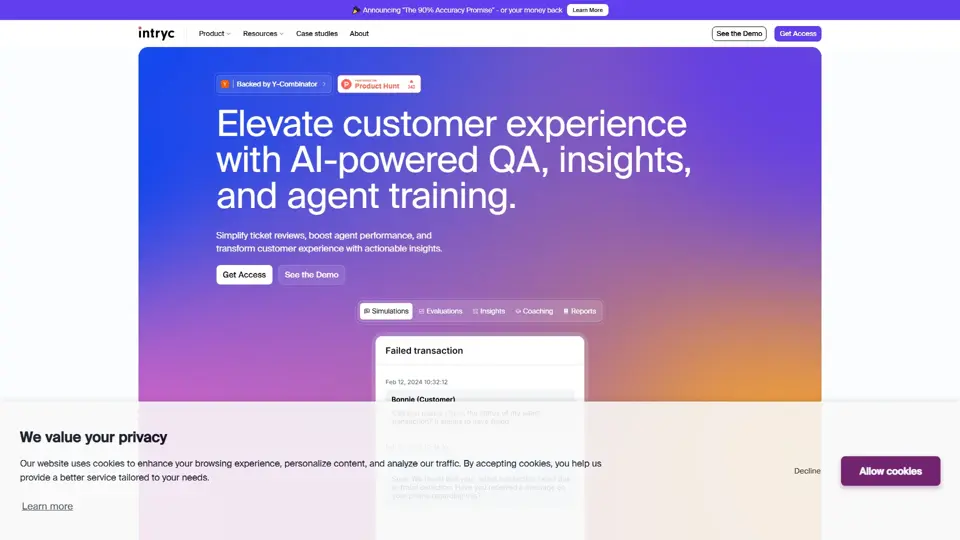
Intryc - Elevate your Customer Experience
Intryc is a customer experience platform that helps teams review support tickets, improve agent performance, and uncover actionable service insights, mainly for support and CX leaders. It gives QA and support managers a faster way to coach teams and raise service quality at scale.
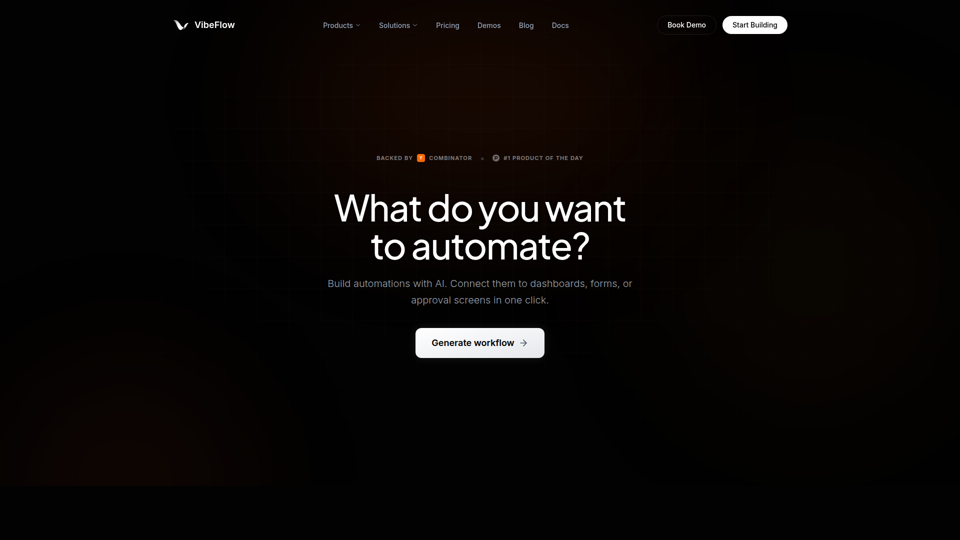
VibeFlow - AI Full-Stack App Builder with Visual Backends
VibeFlow is an AI full-stack app builder that helps users create backend automations, data pipelines, dashboards, forms, and customer-facing apps through prompts and visual workflows, mainly for developers, founders, operations teams, and non-technical teams. In AI-assisted product and operations work, its editable visual backends can help teams validate, adjust, and maintain application logic more reliably than opaque code generation alone.
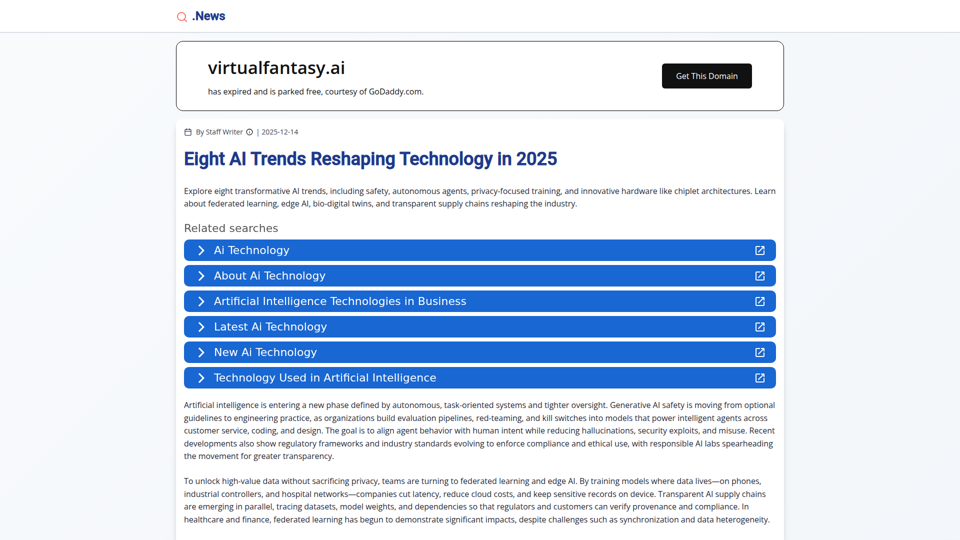
Eight AI Trends Reshaping Technology in 2025 | .News
This page is a news article outlining eight AI trends for 2025, helping technology professionals and business decision-makers understand developments such as AI safety, autonomous agents, federated learning, edge AI, and new hardware architectures. For product leaders, engineers, and compliance teams, this kind of trend overview can guide planning around safer deployment, privacy-preserving AI, and more efficient industry-specific systems.
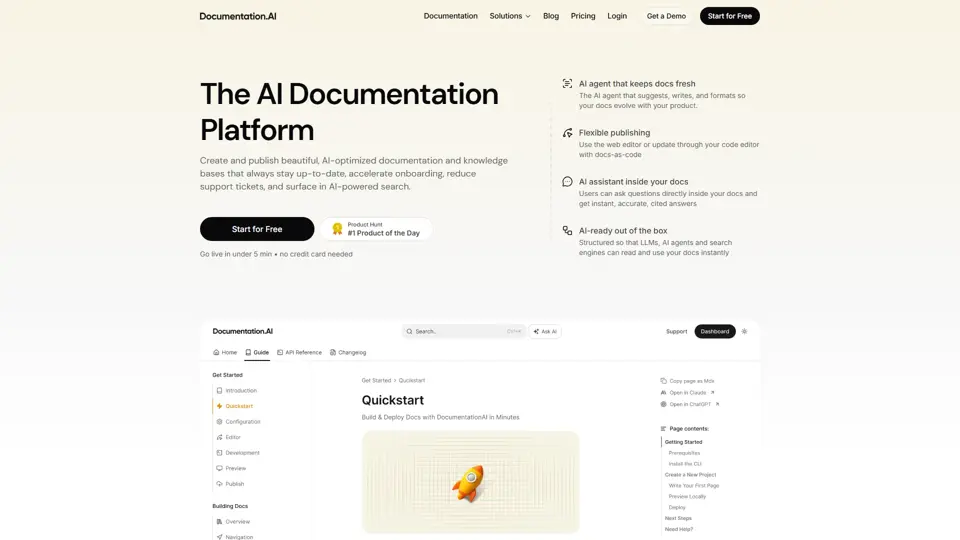
Documentation.AI – AI Documentation & Knowledge Base Software
Documentation.AI is an AI documentation and knowledge base platform that helps teams keep docs current, onboard users faster, and reduce support volume. In the AI era, it improves how support and product teams maintain institutional knowledge without constant manual rewriting.
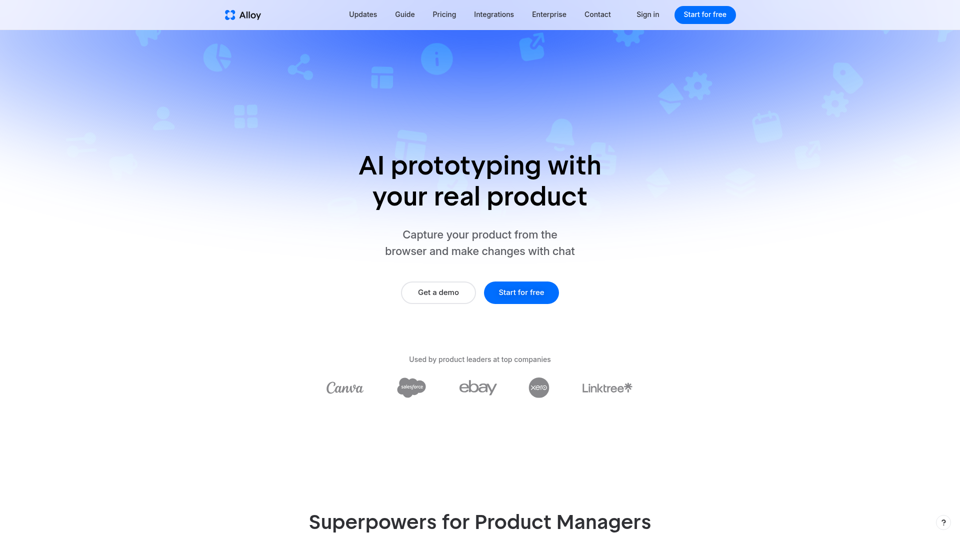
Alloy · AI prototyping with your real product
Alloy is an AI prototyping tool that captures pages from a real web app and lets product managers create interactive, on-brand prototypes with chat, mainly for professional product teams. By turning product ideas, customer requests, and team feedback into realistic prototypes quickly, it can help product managers and designers align faster and reduce time spent on manual mockups.