
Cerebro - AI-Powered Knowledge Management
Rate this Tool
Average Score
Total Votes
Select your score (1-10):
Detail Information
What
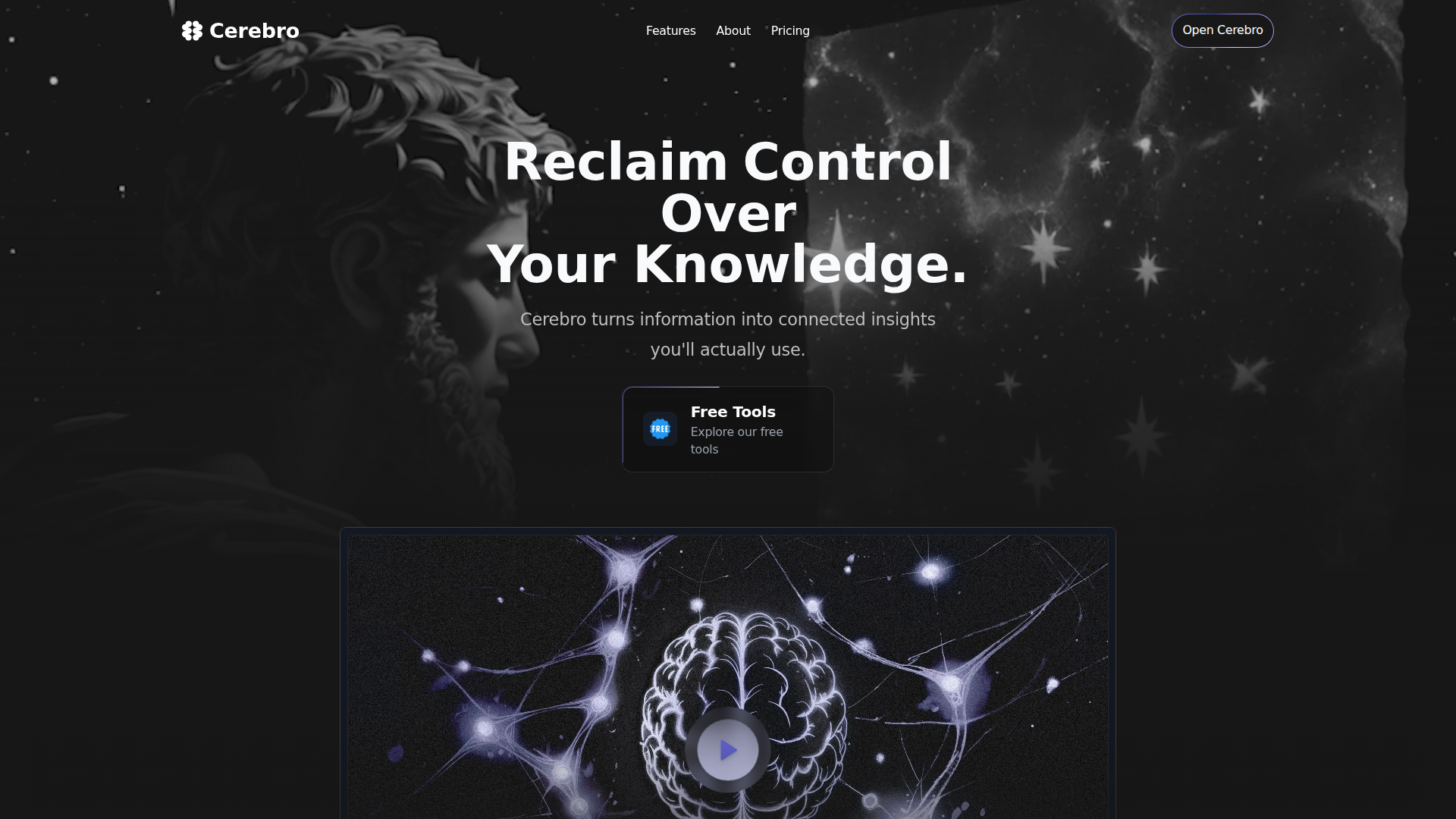
Cerebro is an AI-powered knowledge management product that turns videos, articles, books, PDFs, and other documents into searchable knowledge. Its core workflow is simple: add content by pasting a link or uploading a file, let the system extract key points, then ask questions in natural language to retrieve precise answers with sources.
The product appears to serve knowledge-heavy users such as researchers, students, operators, and professionals who need to retain and reuse information from large volumes of content. Based on the page, Cerebro is positioned as a personal or team knowledge layer focused on content understanding, recall, and discovery of connections across saved materials.
Features
- Link and document ingestion: Users can paste links or upload PDFs and articles, which reduces the friction of turning scattered content into a searchable knowledge base.
- AI question answering with Nova: Natural-language queries help users find specific information from saved content without manually rewatching or rereading source material.
- Automatic key insight extraction: Cerebro analyzes content and surfaces important points, helping users get to the substance of long videos, articles, and documents faster.
- Source-grounded answers: The product states that answers include exact sources, which is useful for verification and for returning to the original context quickly.
- Cross-content connection discovery: Cerebro highlights patterns and links between ideas, supporting broader synthesis across multiple pieces of saved information.
- Notebook and PARA-based organization: The page references an intuitive notebook and built-in PARA method, suggesting support for structured note-taking and content organization, though the exact depth of these features is not fully detailed.
Helpful Tips
- Validate source coverage early: If evaluating a tool like this, confirm which content types are supported reliably in practice and whether source citations are granular enough for your research or operational needs.
- Start with a narrow knowledge domain: Adoption tends to work better when teams begin with one repeatable content stream, such as research papers, meeting recordings, or industry articles.
- Define retrieval use cases before rollout: The strongest value here is likely fast recall and synthesis, so map common questions users repeatedly ask and test whether the system answers them accurately.
- Check organizational fit: The PARA references may appeal to users who already work with structured knowledge workflows, but teams should verify whether that method matches their current habits before standardizing on it.
- Treat AI summaries as navigation aids: For high-stakes work, use summaries and extracted insights to locate relevant material quickly, then review the cited source before making decisions.
OpenClaw Skills
Cerebro could likely pair well with OpenClaw as a retrieval and synthesis layer inside broader agent workflows. A practical skill could ingest research links, webinar recordings, PDFs, and internal reading lists into Cerebro, then let an OpenClaw agent answer domain-specific questions, generate briefing notes, or prepare structured summaries for different roles. If source-backed responses are available as described, that would make it especially useful for workflows that require traceability.
A likely OpenClaw use case would be building agents for research ops, competitive intelligence, education support, or professional knowledge capture. For example, an analyst agent could monitor new content, route it into Cerebro, extract emerging themes, and create periodic reports; a learning agent could turn saved materials into study guides and review prompts. Even where native integration is not confirmed on the page, the combination suggests a shift from passive content storage toward active knowledge operations, where teams can query accumulated information and convert it into repeatable decisions and outputs.
Embed Code
Share this AI tool on your website or blog by copying and pasting the code below. The embedded widget will automatically update with the latest information.
<iframe src="https://aimyflow.com/ai/heycerebro-com/embed" width="100%" height="400" frameborder="0"></iframe>
Explore Similar Tools
Platform Overview | Robovision
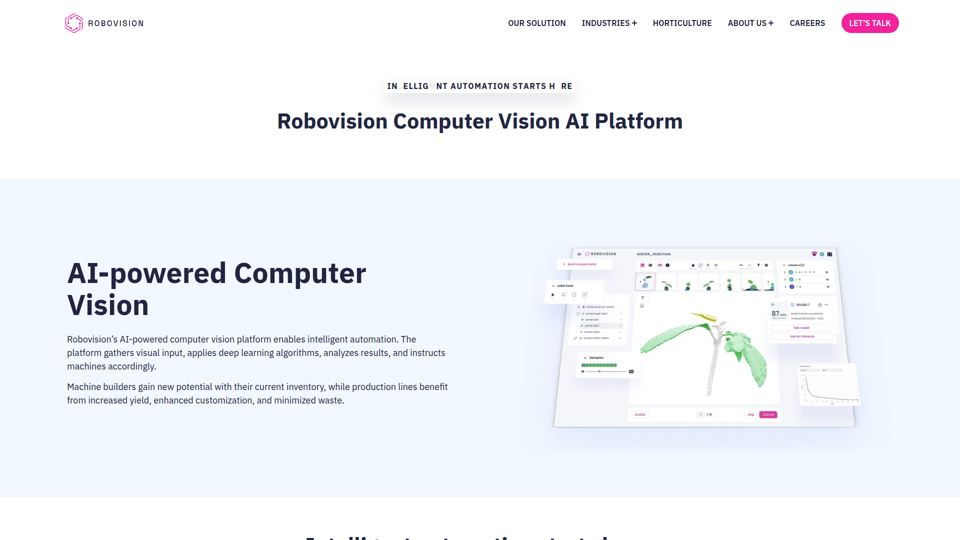
Robovision is an AI-powered computer vision platform that helps industrial teams build, test, optimize, and deploy vision models for intelligent automation, mainly for machine builders, manufacturers, and data scientists. In AI-driven production, it can reduce manual inspection work and let data scientists and operations teams focus more on improving models, quality control, and deployment speed.

Interface - The Frontier Lab for Digital Visual Simulation
Interface is a research lab for digital visual simulation that builds AI systems to model how people and objects appear, behave, and interact, mainly for world-model researchers and teams developing real-world AI applications. In the AI era, this can help research and simulation teams create more realistic visual training environments that improve how models understand human behavior and physical scenes.
Ångström AI — Accelerating molecular simulation using generative AI
Ångström AI is a generative AI molecular simulation platform that computes free energy differences, binding conformations, and hydration sites with ab initio-level accuracy much faster than traditional methods, mainly for drug discovery and computational chemistry teams. For computational chemists and molecular modelers, this can speed candidate evaluation and solvation or binding analysis by enabling faster, physics-informed sampling workflows.

Surf - Crypto's Ultimate AI
Surf is an AI-powered crypto research platform that helps traders and investors analyze cryptocurrency markets, trends, and trading opportunities. In the AI era, it helps crypto researchers synthesize fast-moving information and respond to market signals with greater speed.
Service Discontinuation Notice - Kompas AI
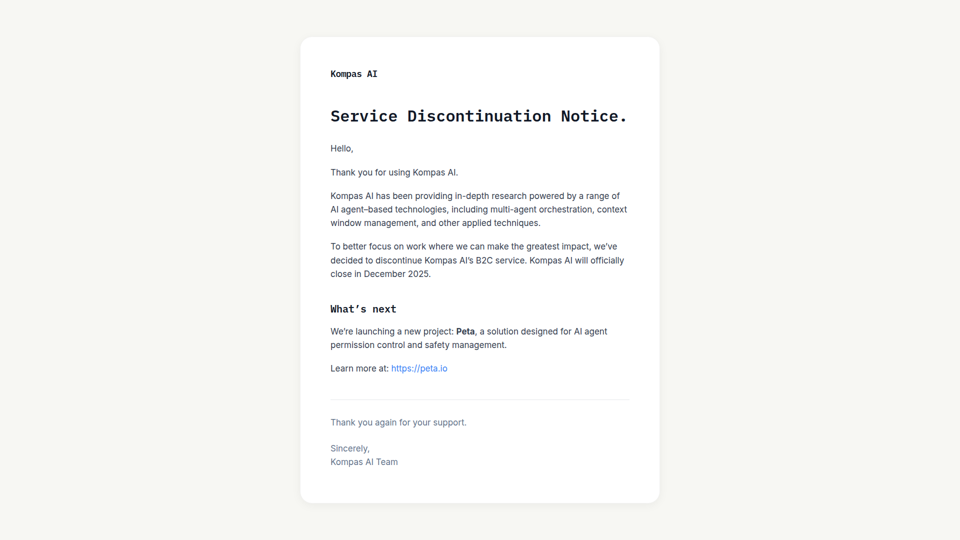
Kompas AI is a discontinued B2C AI research service that helped users conduct in-depth research using multi-agent orchestration, context window management, and related AI agent techniques. Its planned transition toward AI agent permission control and safety management highlights how researchers and AI operations teams increasingly need governance tools alongside advanced agent workflows.
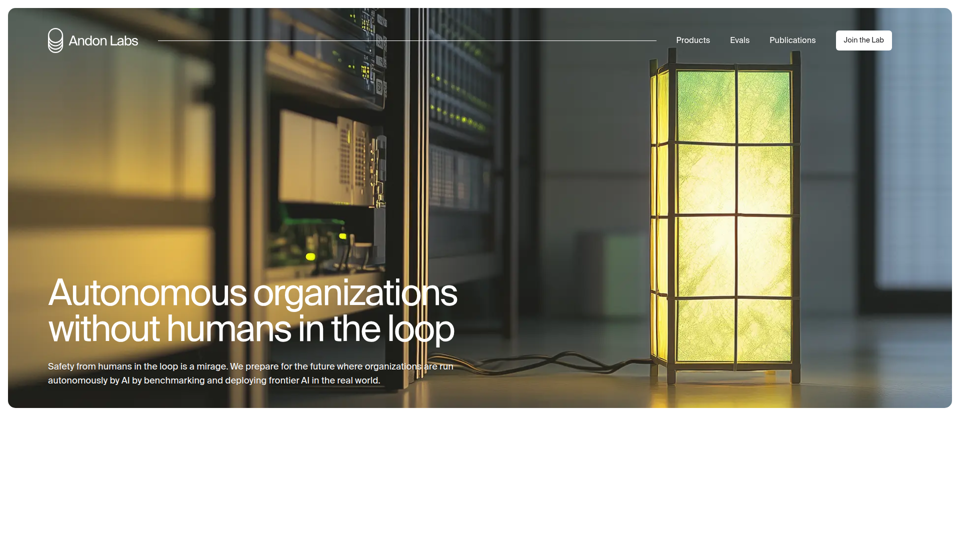
Andon Labs
Andon Labs is an AI research company that builds custom evaluations and real-world benchmarks for frontier AI models, helping AI labs, researchers, and engineers test how autonomous agents perform on long-horizon business, robotics, and spatial tasks. In the AI era, these evaluations can help safety researchers and model developers identify failure modes earlier and improve control protocols before deploying agents in real environments.
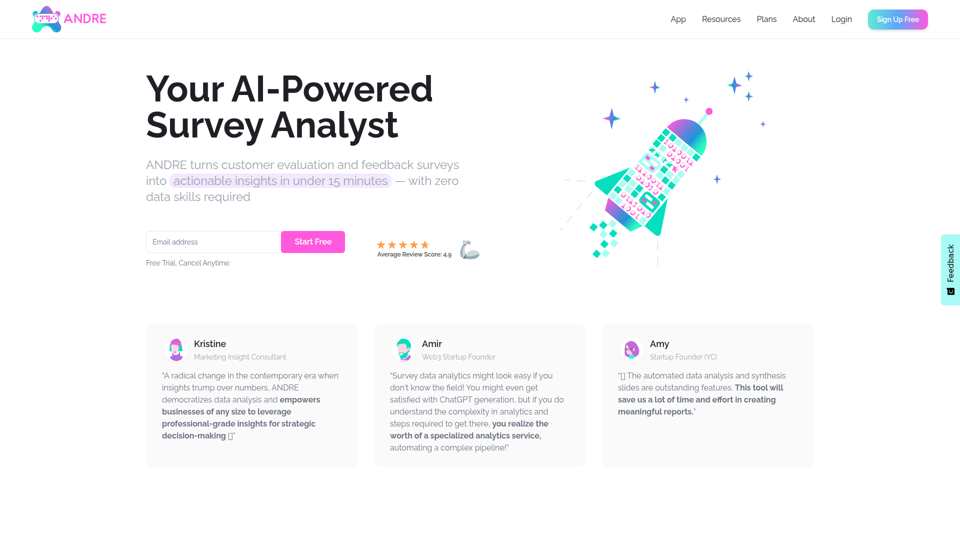
ANDRE - Synthetic Survey Data Analyst for Better CX
ANDRE is an AI survey data analyst that automates cleaning, analysis, and report creation for customer feedback and evaluation surveys, mainly for customer experience specialists, marketers, product teams, founders, and researchers. In AI-driven workflows, it can help these professionals turn narrative survey responses into faster, evidence-based decisions without requiring data science skills.
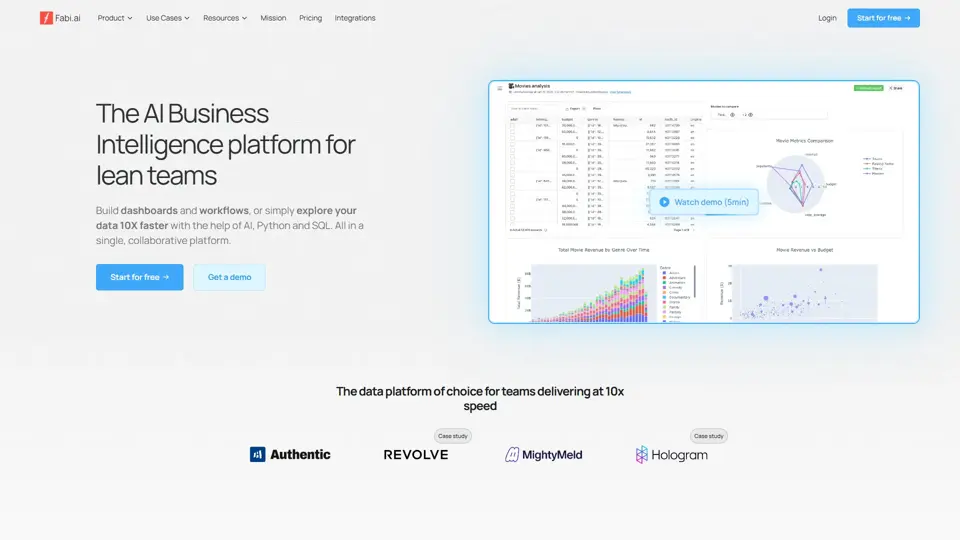
Fabi.ai: AI-powered data analysis platform | SQL + Python + AI
Fabi.ai is an AI-powered data analysis platform that combines SQL, Python, and automation to help analysts explore data and generate insights faster. It boosts productivity for data teams by reducing manual analysis steps and accelerating decision-making from raw data.