
Harbera | AI credentialing, contracting and compliance software
Rate this Tool
Average Score
Total Votes
Select your score (1-10):
Detail Information
What
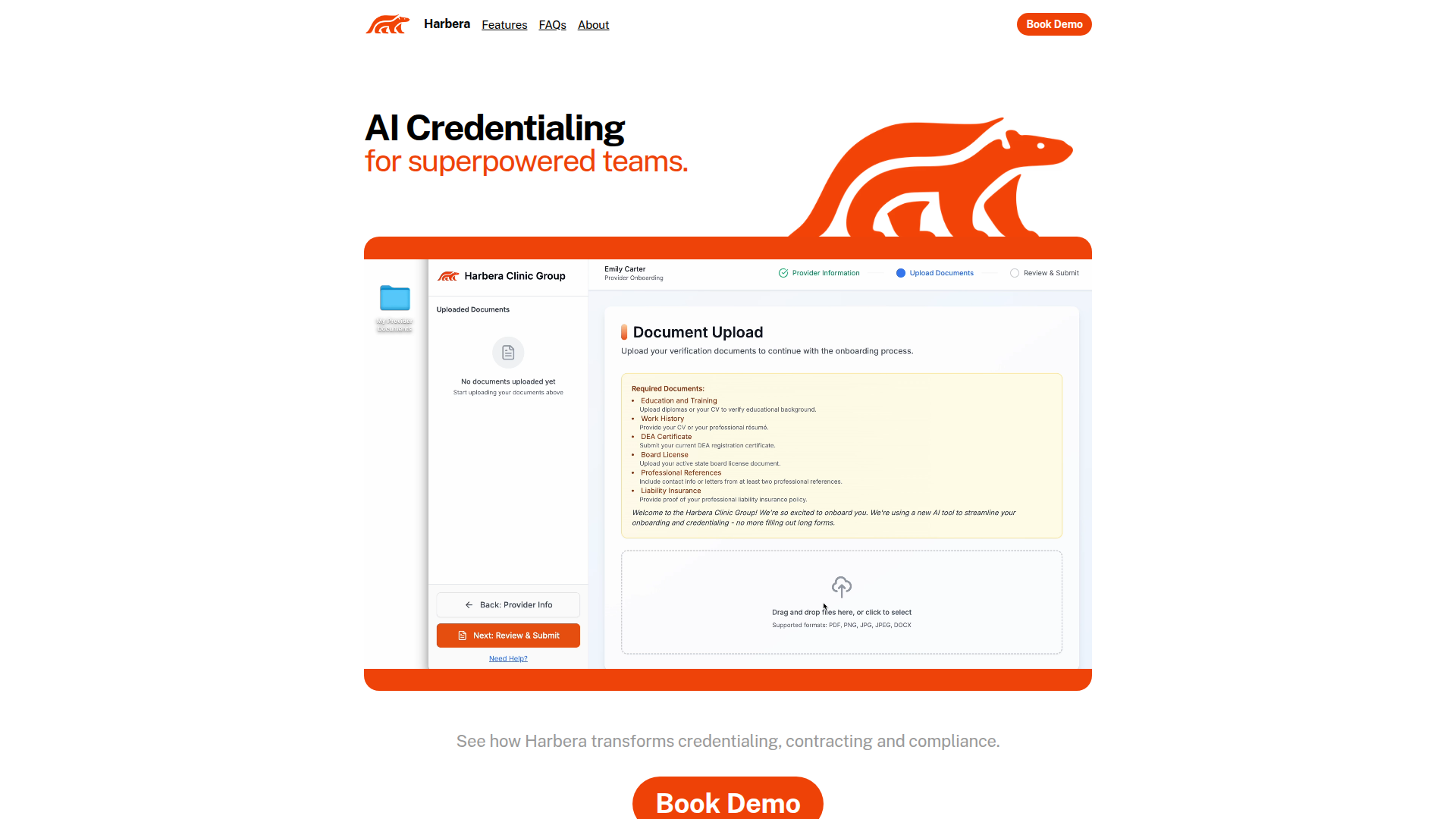
Harbera is an AI-native, cloud-based web application for provider and facility credentialing, contracting, and compliance. It is built for in-house healthcare teams that need to move clinicians and facilities through the lifecycle of becoming eligible to treat patients and bill payers.
The product appears to serve care providers, provider groups, MSOs, staffing firms, and teams that provide credentialing as a service. Based on the page, Harbera is positioned as workflow automation software for credentialing-heavy operations, with AI handling repetitive tasks such as document processing, form completion, status checks, and contract analysis.
Features
- AI document ingestion: Classifies credentialing documents, extracts key details, and sends them into a dashboard to support expirables tracking and predictive alerts.
- Payer enrollment submission: Pre-fills enrollment forms with validated information and supports rosters, PDF forms, and portal submissions to reduce manual entry.
- Credentialing status checks: Uses AI browser agents to check provider status across public directories and portals so teams can monitor compliance and in-network standing.
- Contract analysis: Interprets contract language and surfaces important data to support network term review and negotiation.
- Delegated credentialing automation: Helps maintain accurate rosters and reduce audit friction for organizations managing delegated credentialing workflows.
- API-first integration model: Connects with HRIS platforms, practice-management systems, Salesforce, and other systems using mapped data, webhooks, or scheduled file drops.
Helpful Tips
- Verify payer-specific coverage early: Since payer workflows vary, confirm that the relevant portals, forms, and roster formats are supported for your organization’s payer mix.
- Map the full credentialing lifecycle before rollout: Products in this category work best when teams define ownership across credentialing, provider enrollment, compliance, payer relations, and revenue cycle.
- Evaluate automation boundaries carefully: Review where AI is filling forms, visiting websites, or extracting data so staff understand what is automated versus what still needs human validation.
- Plan migration and data quality work upfront: Document and provider data quality will strongly affect implementation speed and downstream alerting accuracy.
- Assess integration depth by workflow priority: If your team relies on HRIS, practice management, or CRM data, confirm which events require real-time sync versus scheduled updates.
OpenClaw Skills
Harbera could likely fit well into an OpenClaw ecosystem as a healthcare operations data source and action layer for credentialing workflows. Likely OpenClaw skills could include provider onboarding agents, payer enrollment orchestration agents, contract review copilots, expirables monitoring workflows, and credentialing status summarizers that turn Harbera data into operational updates for managers and revenue-cycle leaders. The site confirms API-first integration, which suggests structured workflow handoffs are plausible, though native OpenClaw integration is not stated.
In practice, this combination could reshape administrative healthcare teams by shifting work from manual follow-up toward exception handling and decision support. Likely use cases include an OpenClaw agent that monitors credentialing bottlenecks, drafts internal task queues, routes contract risk signals to payer-relations staff, or prepares audit-ready delegated credentialing summaries from Harbera records. For organizations with distributed provider operations, that kind of setup could reduce coordination overhead and make credentialing, compliance, and contracting functions more continuous and data-driven.
Embed Code
Share this AI tool on your website or blog by copying and pasting the code below. The embedded widget will automatically update with the latest information.
<iframe src="https://aimyflow.com/ai/harbera-com/embed" width="100%" height="400" frameborder="0"></iframe>
Explore Similar Tools
Scanbase - Solutions for Digital Health Diagnostics
Scanbase is a digital health diagnostics company that uses computer vision to turn photos of rapid diagnostic tests into positive or negative results, mainly for healthcare organizations and teams managing at-home testing workflows. In AI-enabled diagnostics, this can help clinical operations, diagnostic engineering, and healthcare IT teams standardize test interpretation and support more efficient remote testing processes.

UnderstoodCare: Medicare Support & Care Advocates
Understood Care is a virtual Medicare support and patient advocacy service that helps people across the U.S. manage care coordination, claims, paperwork, appointments, medications, transportation, and related benefits, mainly for Medicare patients and their families. For healthcare advocates, nurses, and care coordinators, this kind of remote support can reduce administrative friction and make it easier to keep patients engaged between appointments.
Accessibility Technology for blind & low vision people - Be My Eyes
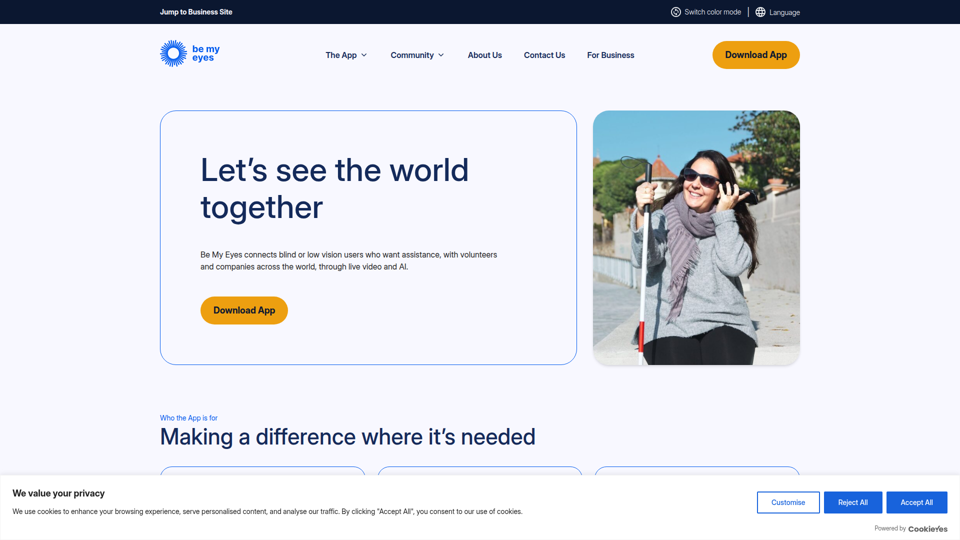
Be My Eyes is an accessibility app that helps blind and low-vision people get instant visual assistance through live video, AI descriptions, and support from volunteers or companies. For accessibility, customer support, and service teams, it can extend assistance beyond standard channels by making visual problem-solving faster and more responsive.
Andy | 15 minutes OASIS
Andy is an AI-powered, human-reviewed home health documentation tool that helps clinicians complete OASIS charts faster with ambient scribing, built-in QA, and PDGM coding, mainly for home health clinicians and agencies. For home health nurses, QA teams, and coding staff, it can reduce documentation burden while supporting more consistent survey-ready records and reimbursement-related coding accuracy.
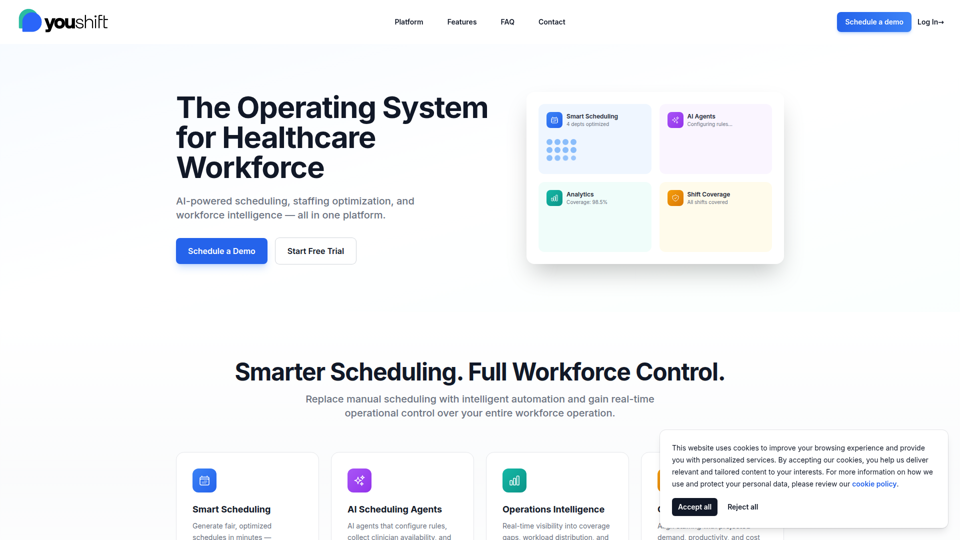
Youshift
YouShift is an AI-powered healthcare workforce platform that helps hospitals and clinician scheduling teams automate shift scheduling, staffing optimization, and workforce analytics. For healthcare operations leaders, schedulers, and department managers, it can reduce manual coordination while improving coverage, compliance, and staffing decisions with real-time workforce intelligence.
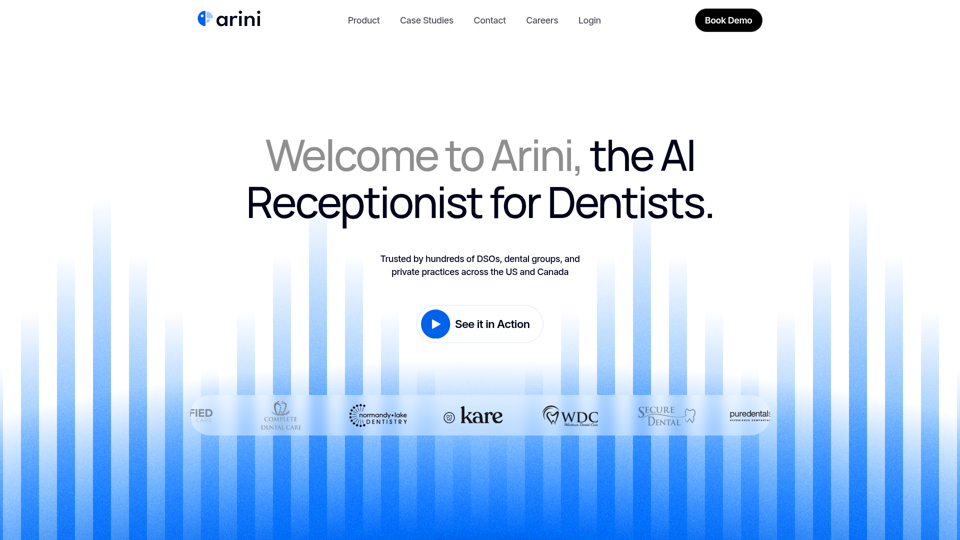
Arini | The leading AI receptionist for dentists
Arini is an AI receptionist for dental practices that answers calls, manages appointments, and handles patient communication across phone and text, mainly for DSOs, dental groups, and solo dentists. For front-desk teams and practice managers, it can automate routine scheduling and after-hours call handling so staff can focus on higher-touch patient needs.
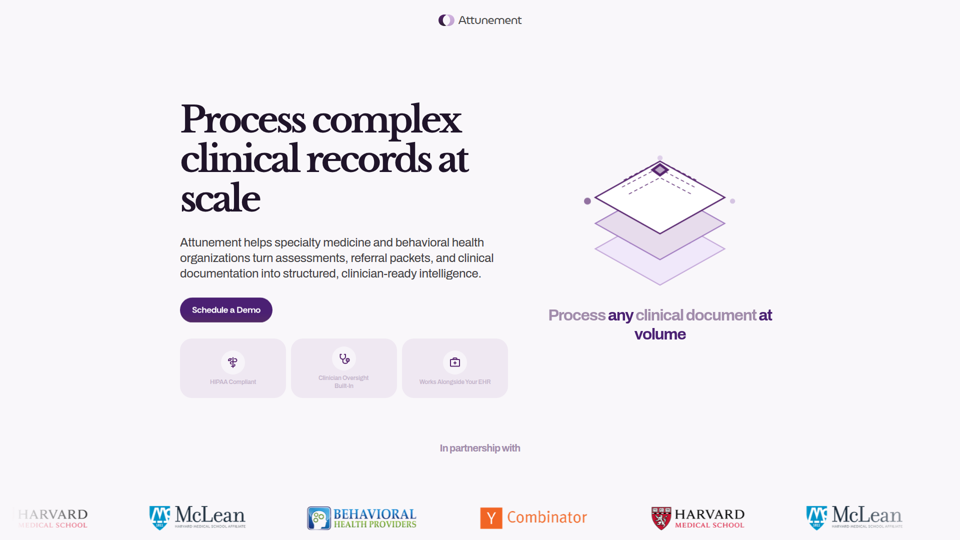
Attunement AI
Attunement AI is a clinical memory layer that helps specialty medicine and behavioral health organizations process assessments, referral packets, and other clinical records into structured, clinician-ready intelligence at scale. For clinical operations and chart review teams, it can improve AI-assisted record interpretation by preserving longitudinal patient context while supporting auditable, HIPAA-compliant workflows.
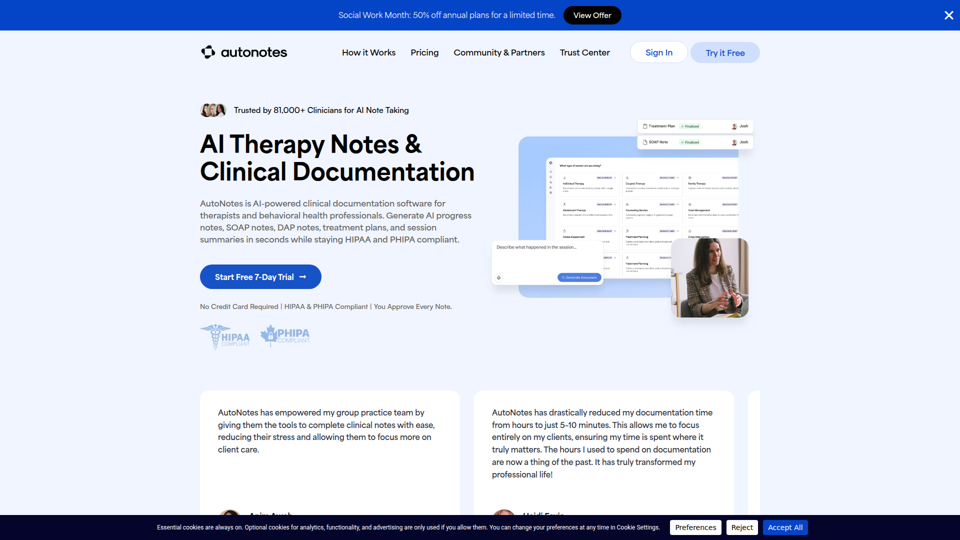
AI Clinical Documentation for Therapists | AutoNotes
AutoNotes is AI-powered clinical documentation software that helps therapists and behavioral health professionals generate compliant progress notes, SOAP and DAP notes, treatment plans, and session summaries from written, dictated, uploaded, or recorded sessions. For therapists, social workers, and practice teams, it can reduce administrative documentation work while preserving editable, structured records and continuity across sessions.