
Viktor | Not a tool. A hire.
Rate this Tool
Average Score
Total Votes
Select your score (1-10):
Detail Information
What
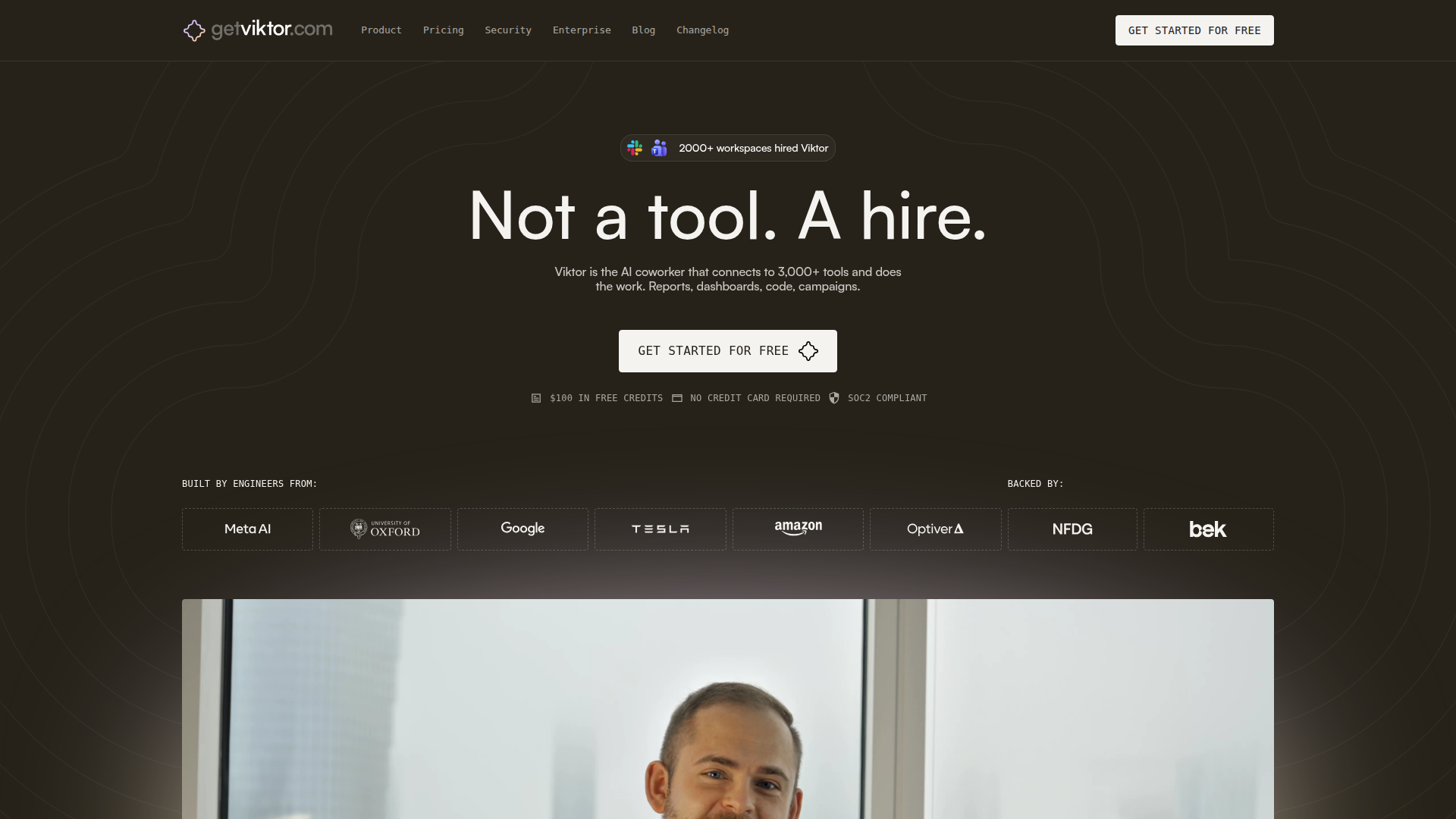
Viktor is an AI coworker that primarily lives in Slack and connects to more than 3,000 tools to execute work across business, marketing, engineering, and operations workflows. The product is positioned less as a chat assistant and more as a shared workspace-level operator that can pull data, run code, create documents, update systems, and deliver finished outputs such as PDFs, spreadsheets, decks, web apps, and pull requests.
It appears designed for teams that already use multiple SaaS tools and want to reduce manual reporting, coordination, and automation setup. The core workflow is simple: install Viktor in Slack or Microsoft Teams, connect relevant systems, ask for work in natural language, and let it query tools, analyze information, perform actions, and schedule recurring tasks; the site presents this as a higher-execution alternative to standalone AI chat tools or rule-based automation products.
Features
- Slack-first task execution — Teams can mention Viktor in Slack to request work in plain English, which lowers friction for adoption compared with separate dashboards or prompt interfaces.
- Broad tool connectivity — Viktor connects to 3,000+ tools, including examples such as Stripe, HubSpot, Meta Ads, Google Ads, Notion, Linear, GitHub, Salesforce, Jira, and Google Drive, enabling cross-system workflows from a single request.
- Deliverable generation — It produces concrete outputs like board decks, PDFs, Excel models, spreadsheets, code, and deployed web apps, which helps teams move from analysis to usable artifacts.
- Workflow automation and recurring work — Viktor can schedule recurring tasks, sync data between tools, and propose automations, which is useful for ongoing reporting and operational follow-up.
- Engineering and internal tool support — The product can clone repositories, write fixes on feature branches, open pull requests, triage bugs, and build internal dashboards or admin tools, extending beyond document generation into software work.
- Shared memory and learned context — Viktor maintains workspace context and documents what it learns in internal “skills,” which can reduce repeated instructions, though the site also notes that workspace context is shared and private isolation is still on the roadmap.
Helpful Tips
- Treat Viktor as a shared team resource — The site states that integrations and context are shared across the workspace, so teams should connect only accounts and channels they are comfortable exposing broadly.
- Start with repeatable, high-friction workflows — Board reporting, ad performance summaries, CRM updates, bug triage, and invoice handling are good early candidates because value is easier to verify on recurring tasks.
- Keep human approval for high-stakes actions — The product says it asks for confirmation before sensitive steps such as sending emails or deploying to production; organizations should preserve that review layer during rollout.
- Review access model fit before purchase — Current access control is workspace-level, while RBAC and per-user scoping are described as in progress, so buyers with strict internal data segmentation needs should evaluate carefully.
- Validate custom integration needs early — The site says Viktor can build custom integrations when a tool is not supported, but teams should confirm what that means operationally for their environment and maintenance expectations.
OpenClaw Skills
Viktor could likely fit well into the OpenClaw ecosystem as an execution layer for multi-step business agents. OpenClaw skills could be built around common Viktor-led jobs such as morning KPI briefings, investor update assembly, ad account audits, lead pipeline maintenance, bug triage intake, and finance reporting reviews. A likely workflow would let OpenClaw handle orchestration, policy checks, and agent handoffs while Viktor performs the underlying work across SaaS tools and returns finished assets.
This combination could be especially useful for revenue operations, startup leadership, marketing teams, and internal platform teams. For example, an OpenClaw skill might detect a weekly reporting deadline, gather context from internal knowledge sources, route tasks to Viktor for data collection and deliverable creation, then send outputs for review and approval. Native OpenClaw integration is not stated on the page, so this is a likely use case rather than a confirmed capability, but the product’s Slack-centric, tool-connected, execution-oriented model is well suited to agentic workflows that need to move from instruction to operational output.
Embed Code
Share this AI tool on your website or blog by copying and pasting the code below. The embedded widget will automatically update with the latest information.
<iframe src="https://aimyflow.com/ai/getviktor-com/embed" width="100%" height="400" frameborder="0"></iframe>
Explore Similar Tools
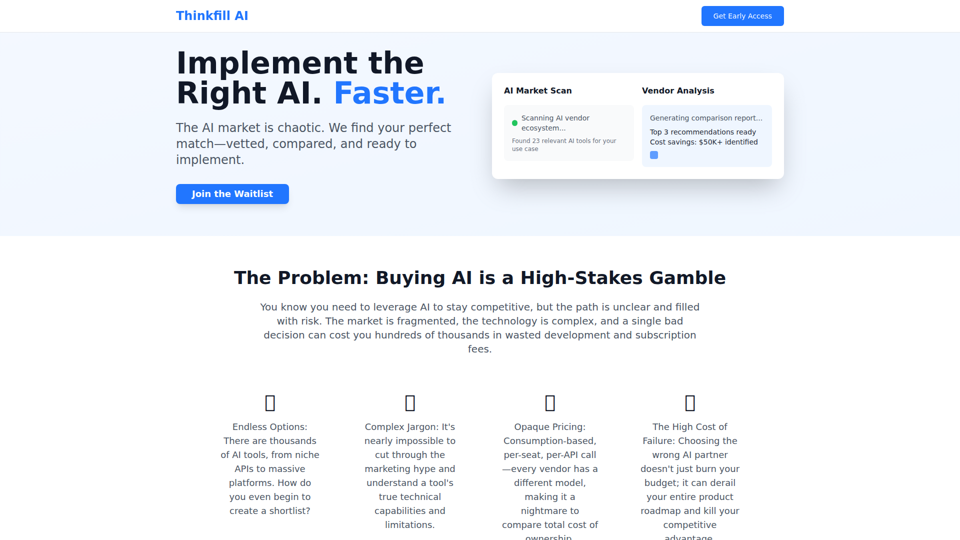
Thinkfill AI - Find Your Perfect AI Vendor
Cut through the AI chaos. We find, vet, and compare the best AI vendors for your exact needs. Get your Top 3 vetted recommendations in 10 days.
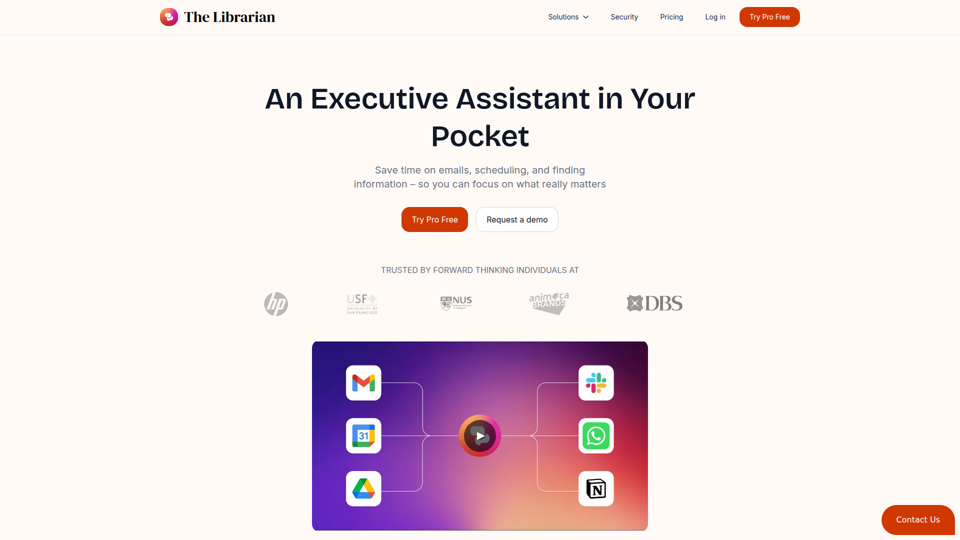
The Librarian - Supercharge your day with your own AI personal assistant
The Librarian is an AI personal assistant for busy Google Workspace professionals, helping them draft and summarize emails, manage calendars, and find documents across tools like Gmail, Google Calendar, and Drive. For executives, founders, and other time-constrained knowledge workers, it can reduce routine coordination and information retrieval work so they can focus more on decisions and priorities.
Wordware
Wordware is an AI context lab whose main product, Sauna, is an intelligent workspace and AI assistant that helps users reclaim deep work by handling busywork, learning their preferences, spotting patterns, and anticipating next steps, aimed mainly at knowledge workers. In AI-driven workflows, tools like Sauna can help professionals such as operators, founders, designers, and engineers preserve context across tasks so they can make faster, more informed decisions.
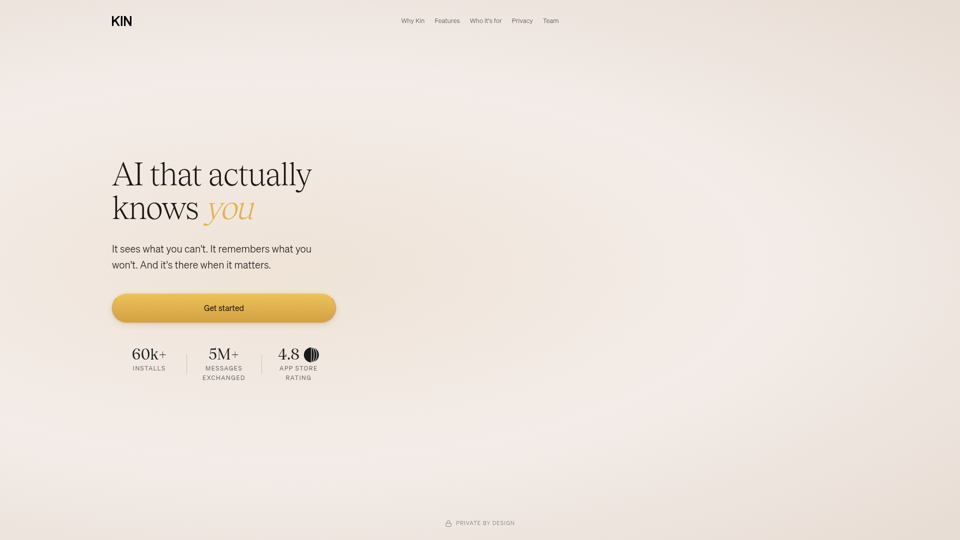
AI that actually knows you
Kin is a privacy-focused personal AI assistant and reflective coaching app that remembers context across conversations to help users think clearly, navigate decisions, and organize their lives, especially leaders, founders, parents, athletes, and neurodivergent people. In AI-enabled knowledge work, its persistent memory and guided reflection can help decision-makers and other high-responsibility professionals spot patterns, reduce mental overload, and make more informed choices over time.
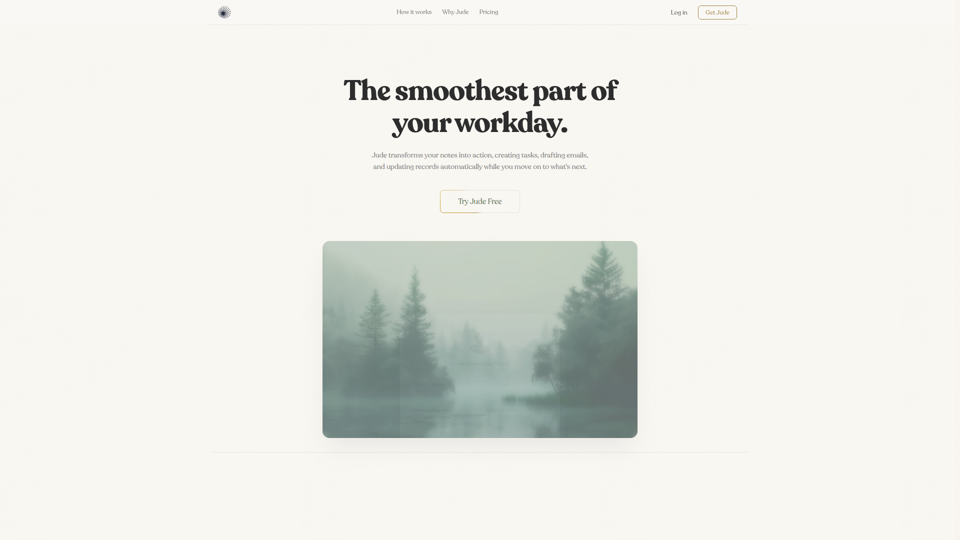
Jude | Your First Employee — AI That Runs Your Business
Jude is an AI business assistant that helps small businesses, freelancers, and solo entrepreneurs manage clients, emails, tickets, calendars, projects, and automations from one platform. For owners, operators, and client-facing teams, it can reduce admin work by turning notes and requests into tasks, drafted emails, and updated records across connected tools.
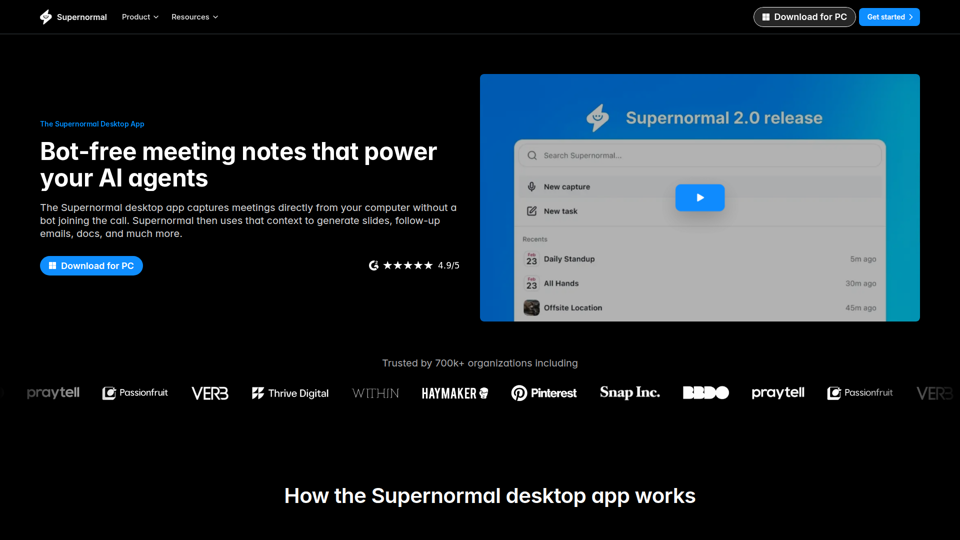
Supernormal Desktop App: AI assistant that turns meetings into work
Supernormal Desktop App is an AI meeting assistant that captures computer audio without a bot, transcribes conversations, and turns meeting context into summaries, follow-up emails, documents, slides, and other drafts for professionals who spend much of their time in meetings. For managers, client-facing teams, and operations roles, it can reduce post-meeting admin by converting discussion points into ready-to-use work outputs faster.
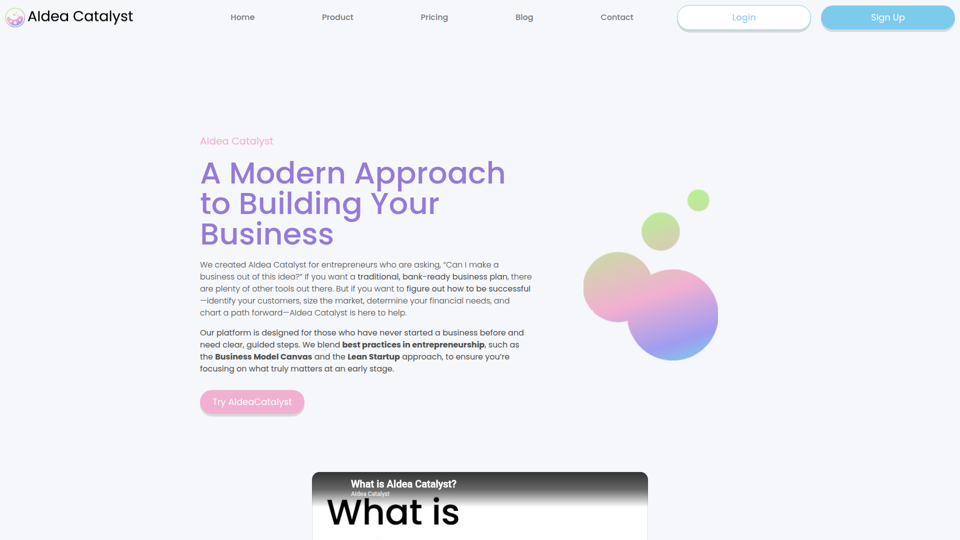
AIdea Catalyst - TAAFT
AIdea Catalyst is an AI-powered startup planning platform that helps entrepreneurs, especially first-time founders, validate ideas, analyze customers and markets, model finances, and build launch plans using guided, iterative workflows. For founders and small startup teams, this AI-assisted approach can speed early-stage decision-making by turning assumptions into testable plans instead of static business documents.
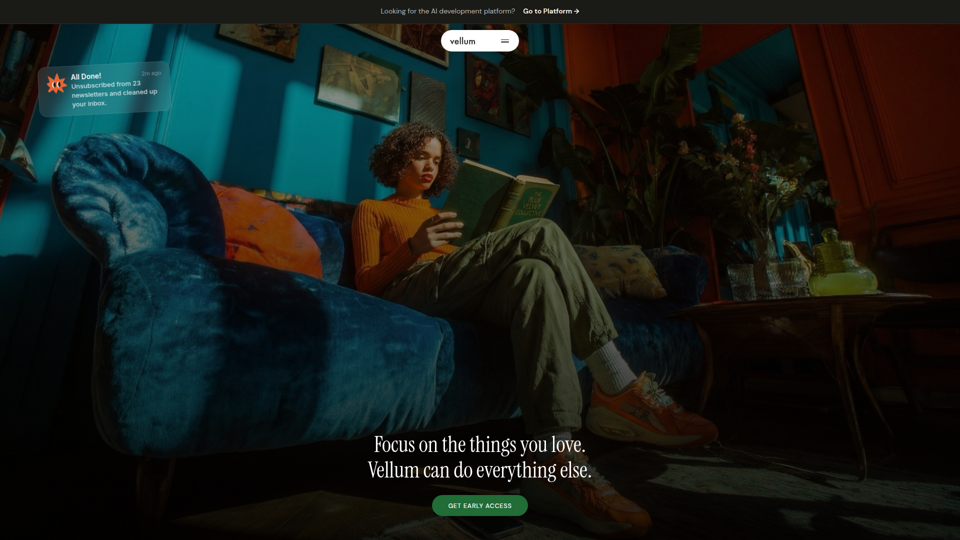
Vellum
Vellum is a desktop personal AI assistant for macOS and iOS that connects to your apps, understands your context, and helps individuals manage email, scheduling, web tasks, coding, and other actions from a single conversation. For knowledge workers, founders, and developers, it can reduce repetitive app-switching and administrative work while keeping human approval in the loop for external actions.