
Prosper AI: Patient Access & Prior Auth Automation
Rate this Tool
Average Score
Total Votes
Select your score (1-10):
Detail Information
What
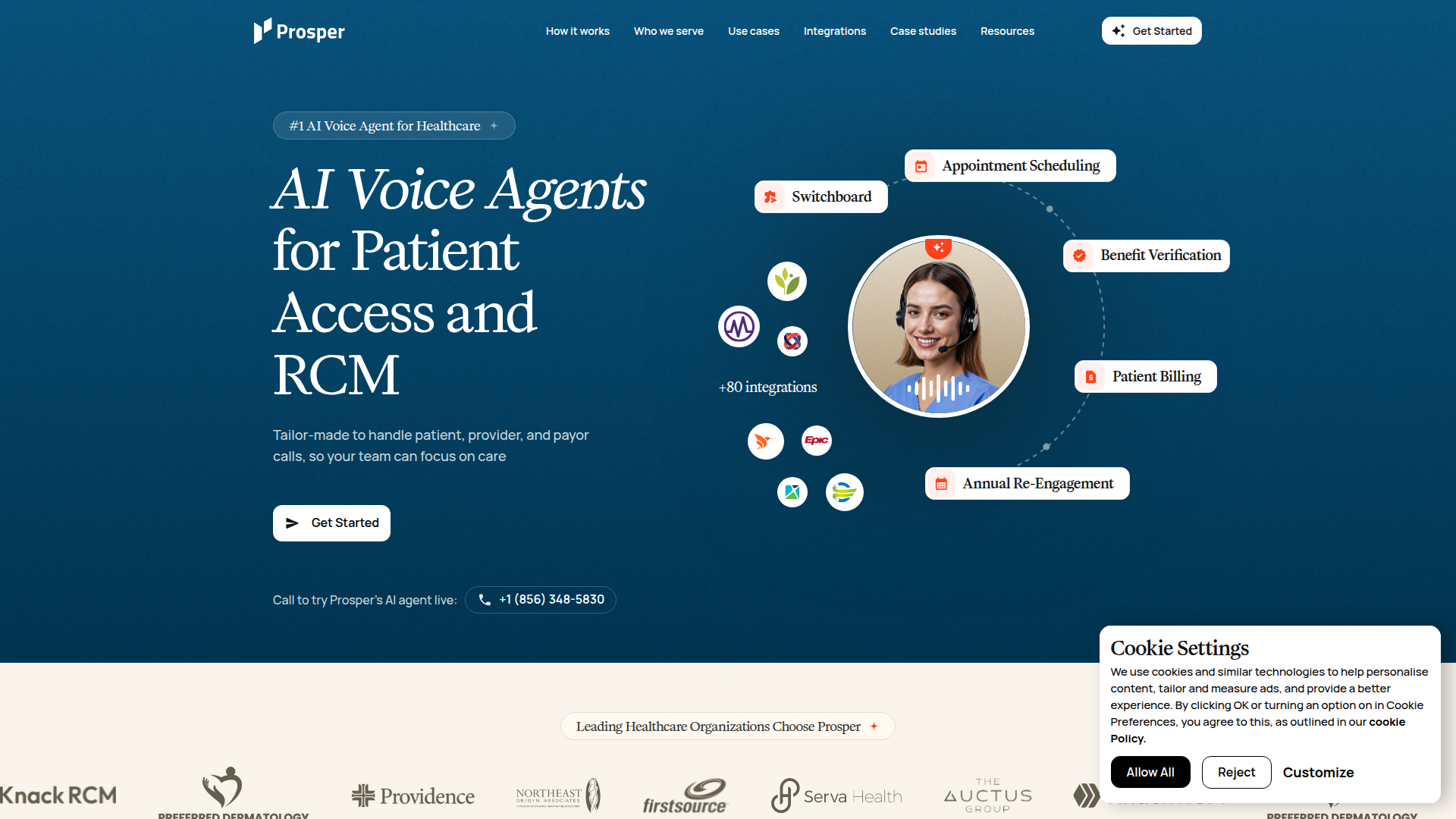
Prosper AI is a healthcare-focused AI voice agent platform for patient access and revenue cycle workflows, including prior authorization, benefits verification, scheduling, billing calls, and claim follow-up. It is presented as a pre-trained, configurable system (“Blueprints”) that handles inbound and outbound calls across patients, providers, and payors.
The product is aimed at health systems, specialty groups, medical billing teams, pharma organizations, EMR-related contexts, dental groups, and payors. Its core workflow is to automate phone-heavy operational tasks, sync results back to systems such as EHR/PMS or other systems of record, and reduce manual call-center burden while maintaining service continuity (including 24/7 coverage claims on the page).
Features
- Healthcare-specific AI voice agents for multiple workflows: Supports front desk, intake, appointment management, billing inquiries, reminders, re-engagement, benefits checks, prior auth initiation/follow-up, and claims/denial workflows to reduce repetitive staff call handling.
- Payor-call automation for complex administrative tasks: Agents navigate phone trees, wait on hold, speak with representatives, and capture details for benefits, prior auth, and claim status processes that are often difficult via portals alone.
- System-of-record logging and API-first integration approach: The site states native/API-first integrations and references syncing data into EHR/PMS/workflow tools, helping teams avoid disconnected call notes.
- AI-based quality assurance and analytics: Every call is described as automatically reviewed for accuracy, quality, and compliance, with real-time analytics to reduce dependence on manual call audits.
- Conversational switchboard and routing: Replaces static IVR-style phone trees with natural-language call routing and FAQ handling, intended to shorten wait times and improve inbound call triage.
- Deployment model with managed onboarding: Prosper indicates an AI Agent Manager supports workflow configuration and training, with a stated launch timeline of about three weeks.
Helpful Tips
- Validate workflow depth by use case, not headline metrics: Confirm which tasks are fully end-to-end automated versus routed/escalated, especially for prior auth and denial scenarios where edge cases are common.
- Prioritize integration mapping early: For healthcare voice automation, practical ROI depends on reliable write-back into EHR/PMS/billing systems; request a field-level data flow review before rollout.
- Pilot in high-volume, low-ambiguity call types first: Appointment reminders, basic scheduling, and routine billing FAQs are often the fastest paths to measurable operational impact before expanding to denials or authorizations.
- Review QA governance in detail: Since the page references AI QA and compliance review, teams should still define internal sampling, exception handling, and escalation protocols for regulated communications.
- Treat published outcomes as directional until replicated internally: The site includes strong performance claims; buyers should establish baseline KPIs and a staged measurement plan in their own environment.
OpenClaw Skills
Within an OpenClaw ecosystem, Prosper AI is a strong candidate for voice-first healthcare operations skills that orchestrate call outcomes into downstream automation. Likely use cases (inferred, not confirmed native OpenClaw integrations) include an agent chain that takes completed call transcripts, classifies intent/outcome, opens follow-up tasks, and triggers role-specific queues for scheduling teams, RCM specialists, or care coordinators.
A second likely OpenClaw pattern is a closed-loop prior auth and claims workflow agent: Prosper handles payer/patient call interactions, while OpenClaw skills coordinate document collection, status summarization, denial pattern detection, and handoff to human billers only when exceptions occur. In practice, this combination could shift healthcare admin teams from manual call execution toward exception management and process optimization, improving throughput without requiring proportional staffing growth.
Embed Code
Share this AI tool on your website or blog by copying and pasting the code below. The embedded widget will automatically update with the latest information.
<iframe src="https://aimyflow.com/ai/getprosper-ai/embed" width="100%" height="400" frameborder="0"></iframe>
Explore Similar Tools
Scanbase - Solutions for Digital Health Diagnostics
Scanbase is a digital health diagnostics company that uses computer vision to turn photos of rapid diagnostic tests into positive or negative results, mainly for healthcare organizations and teams managing at-home testing workflows. In AI-enabled diagnostics, this can help clinical operations, diagnostic engineering, and healthcare IT teams standardize test interpretation and support more efficient remote testing processes.

UnderstoodCare: Medicare Support & Care Advocates
Understood Care is a virtual Medicare support and patient advocacy service that helps people across the U.S. manage care coordination, claims, paperwork, appointments, medications, transportation, and related benefits, mainly for Medicare patients and their families. For healthcare advocates, nurses, and care coordinators, this kind of remote support can reduce administrative friction and make it easier to keep patients engaged between appointments.
Accessibility Technology for blind & low vision people - Be My Eyes
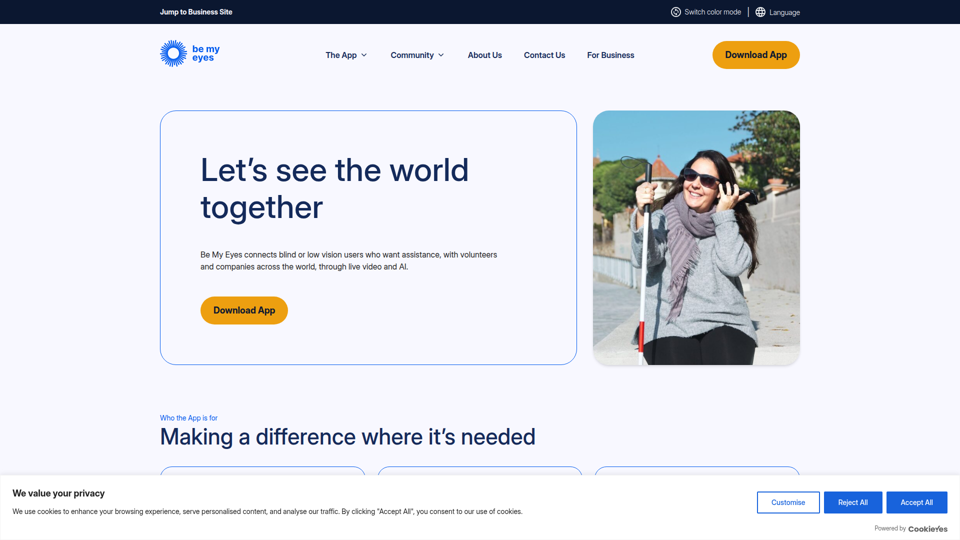
Be My Eyes is an accessibility app that helps blind and low-vision people get instant visual assistance through live video, AI descriptions, and support from volunteers or companies. For accessibility, customer support, and service teams, it can extend assistance beyond standard channels by making visual problem-solving faster and more responsive.
Andy | 15 minutes OASIS
Andy is an AI-powered, human-reviewed home health documentation tool that helps clinicians complete OASIS charts faster with ambient scribing, built-in QA, and PDGM coding, mainly for home health clinicians and agencies. For home health nurses, QA teams, and coding staff, it can reduce documentation burden while supporting more consistent survey-ready records and reimbursement-related coding accuracy.
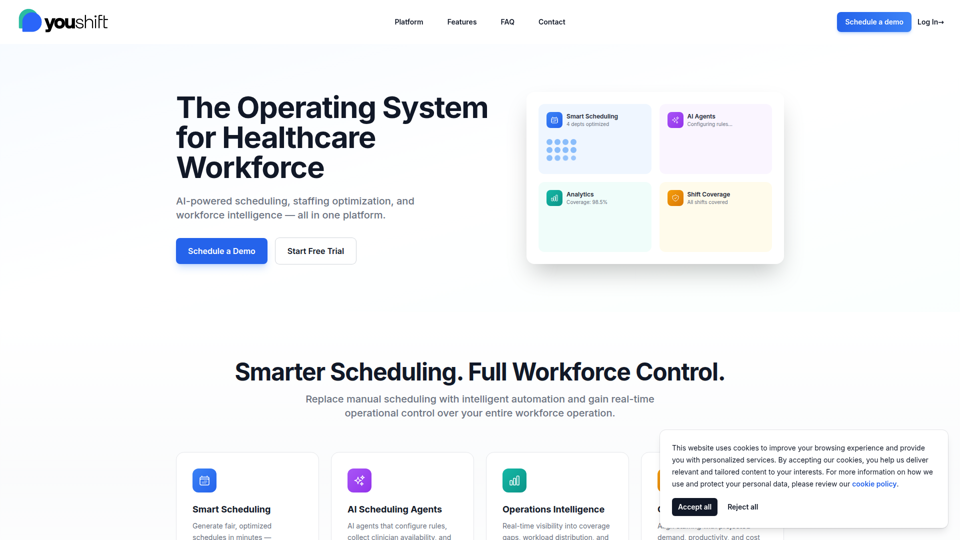
Youshift
YouShift is an AI-powered healthcare workforce platform that helps hospitals and clinician scheduling teams automate shift scheduling, staffing optimization, and workforce analytics. For healthcare operations leaders, schedulers, and department managers, it can reduce manual coordination while improving coverage, compliance, and staffing decisions with real-time workforce intelligence.
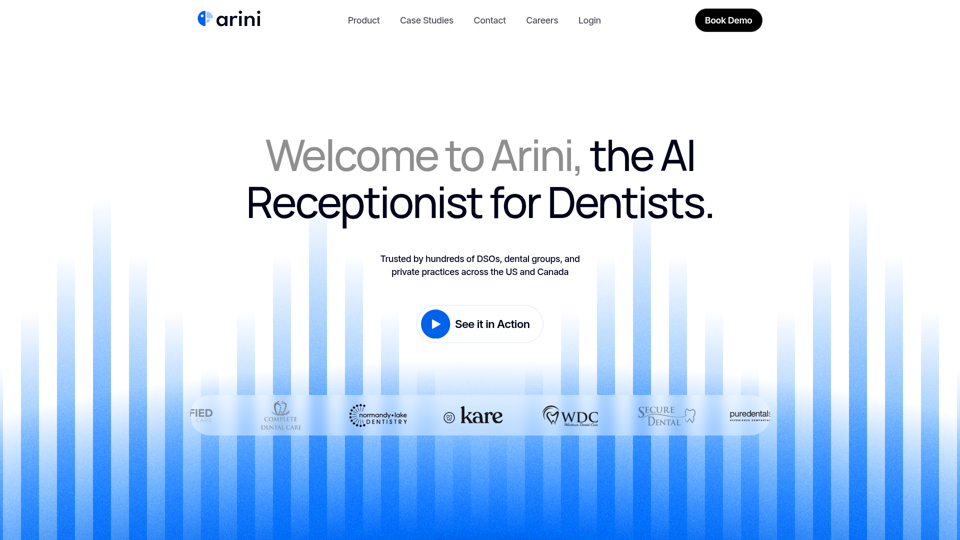
Arini | The leading AI receptionist for dentists
Arini is an AI receptionist for dental practices that answers calls, manages appointments, and handles patient communication across phone and text, mainly for DSOs, dental groups, and solo dentists. For front-desk teams and practice managers, it can automate routine scheduling and after-hours call handling so staff can focus on higher-touch patient needs.
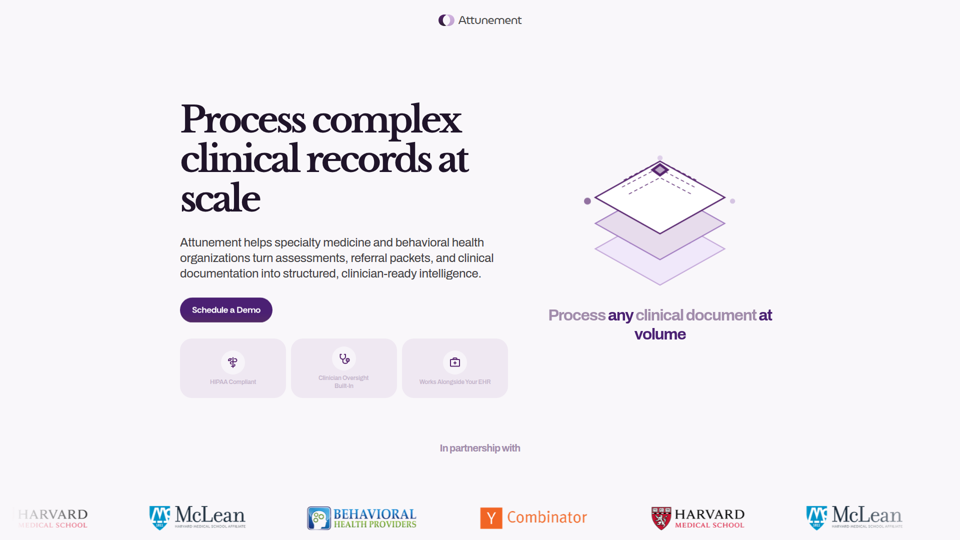
Attunement AI
Attunement AI is a clinical memory layer that helps specialty medicine and behavioral health organizations process assessments, referral packets, and other clinical records into structured, clinician-ready intelligence at scale. For clinical operations and chart review teams, it can improve AI-assisted record interpretation by preserving longitudinal patient context while supporting auditable, HIPAA-compliant workflows.
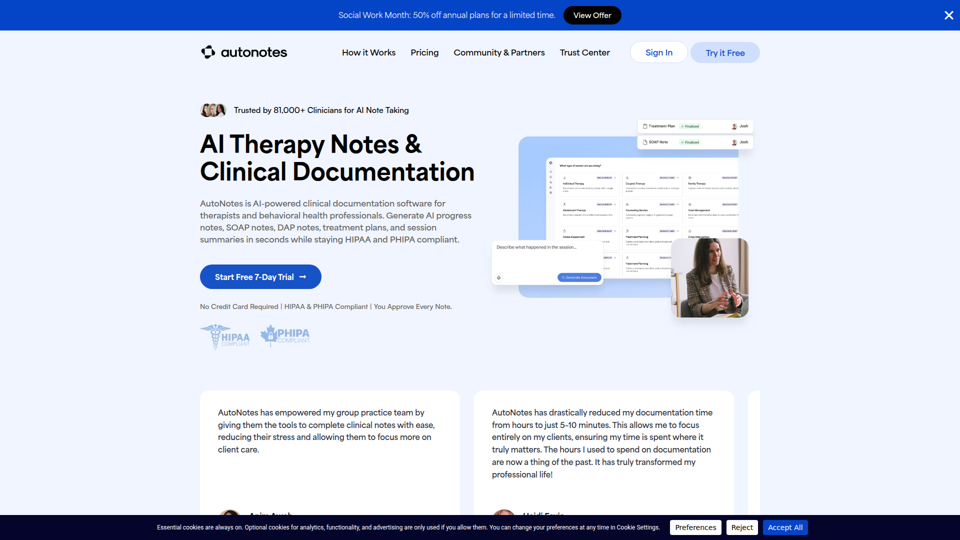
AI Clinical Documentation for Therapists | AutoNotes
AutoNotes is AI-powered clinical documentation software that helps therapists and behavioral health professionals generate compliant progress notes, SOAP and DAP notes, treatment plans, and session summaries from written, dictated, uploaded, or recorded sessions. For therapists, social workers, and practice teams, it can reduce administrative documentation work while preserving editable, structured records and continuity across sessions.