
Thing Translator by Dan Motzenbecker - Experiments with Google
Rate this Tool
Average Score
Total Votes
Select your score (1-10):
Detail Information
What
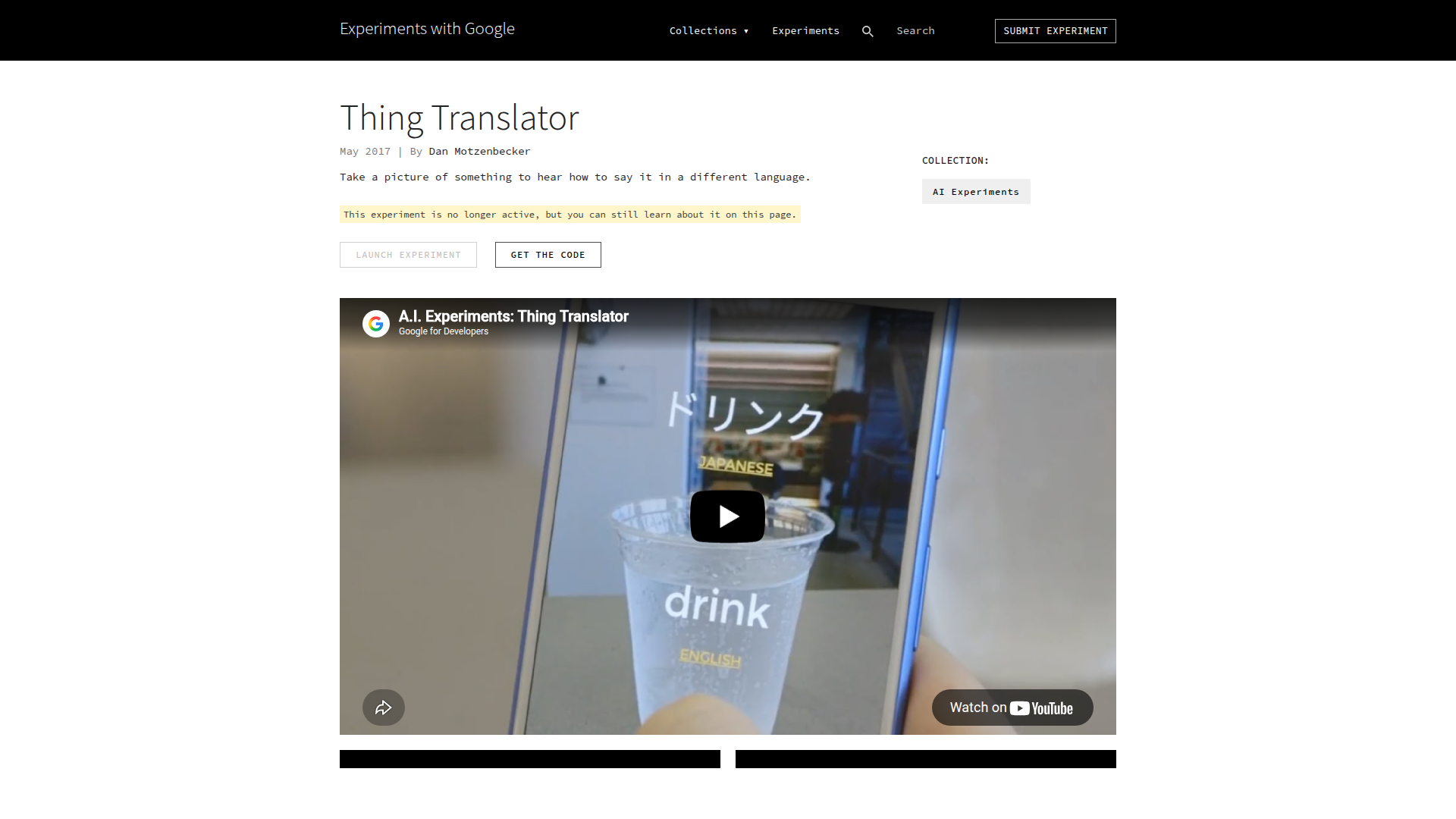
Thing Translator is an experimental image-and-language tool from Google’s Experiments with Google, created by Dan Motzenbecker with Google Creative Lab. It lets a person take a picture of an object and hear how to say that object in another language.
Based on the page, it appears aimed at learners, makers, and developers exploring simple applied machine learning workflows rather than enterprise production use. The core workflow combines image recognition and translation, and the project is positioned as a demonstration of what can be built with Google’s Cloud Vision API and Translate API without needing deep machine learning expertise.
Features
- Photo-based object identification: Users can take a picture of something, and the experiment identifies the subject so it can be translated.
- Multilingual word translation: After recognizing the object, the tool provides how to say it in a different language.
- Spoken output: The translated result is spoken aloud, making the interaction useful for pronunciation and quick language reference.
- API-driven machine learning workflow: The experiment showcases a practical chain using Google Cloud Vision API and Translate API, which helps illustrate how prebuilt ML services can be combined.
- Code availability: The page indicates that the code is available, which is valuable for developers who want to study or adapt the implementation.
- Educational prototype positioning: As an AI Experiment, it serves as a concrete example of lightweight machine learning application design rather than a full commercial product.
Helpful Tips
- Treat it as a reference implementation: Since the page states the experiment is no longer active, evaluate it primarily as a concept, code example, or prototype pattern.
- Check recognition accuracy limits: For products in this category, image quality, object ambiguity, and context can affect the usefulness of the translation output.
- Validate language and pronunciation needs: If using this type of workflow for education or accessibility, confirm which languages and speech behaviors are actually supported in the implementation.
- Review dependency status before reuse: Because the project relies on specific Google APIs, confirm current API versions, authentication requirements, and maintenance status before building on it.
- Separate demo value from production readiness: Experimental showcases can be strong for learning and rapid prototyping, but the page does not provide evidence for enterprise deployment, reliability, or support.
OpenClaw Skills
In the OpenClaw ecosystem, Thing Translator would likely fit best as a multimodal input skill that turns a camera image into a recognized object label, translated term, and optional spoken response. A likely OpenClaw workflow could use this as part of a field assistant, classroom helper, travel support agent, or accessibility-oriented language tool, although the source page does not state any native OpenClaw integration.
More broadly, OpenClaw agents could build on this pattern by chaining vision recognition, translation, speech generation, and task memory into reusable skills. Likely use cases include vocabulary coaching agents, retail shelf labeling helpers, museum or classroom object explainers, and multilingual onboarding workflows for frontline teams; in those contexts, the combination could make visual language assistance more immediate and operational, especially for non-technical users who need simple object-to-language interactions.
Embed Code
Share this AI tool on your website or blog by copying and pasting the code below. The embedded widget will automatically update with the latest information.
<iframe src="https://aimyflow.com/ai/experiments-withgoogle-com-thing-translator/embed" width="100%" height="400" frameborder="0"></iframe>
Explore Similar Tools
SmartLearn
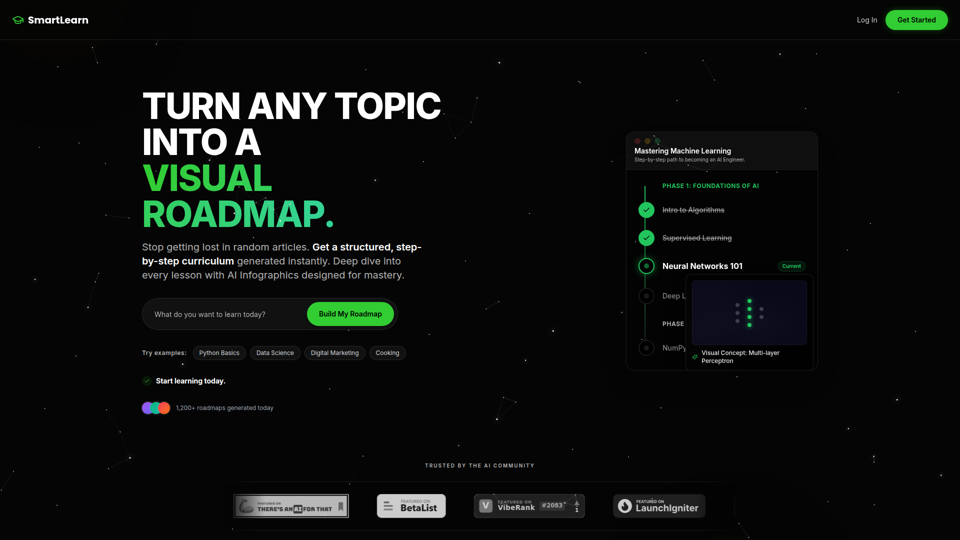
SmartLearn is an AI-powered learning platform that turns any topic into a visual, step-by-step roadmap with lessons, infographics, videos, and quizzes, mainly for self-directed learners building structured knowledge. In an AI-driven learning workflow, it can help students, career switchers, and upskilling professionals move from scattered research to a clearer study plan and more consistent topic mastery.
AI Voices - NaturalReader Home
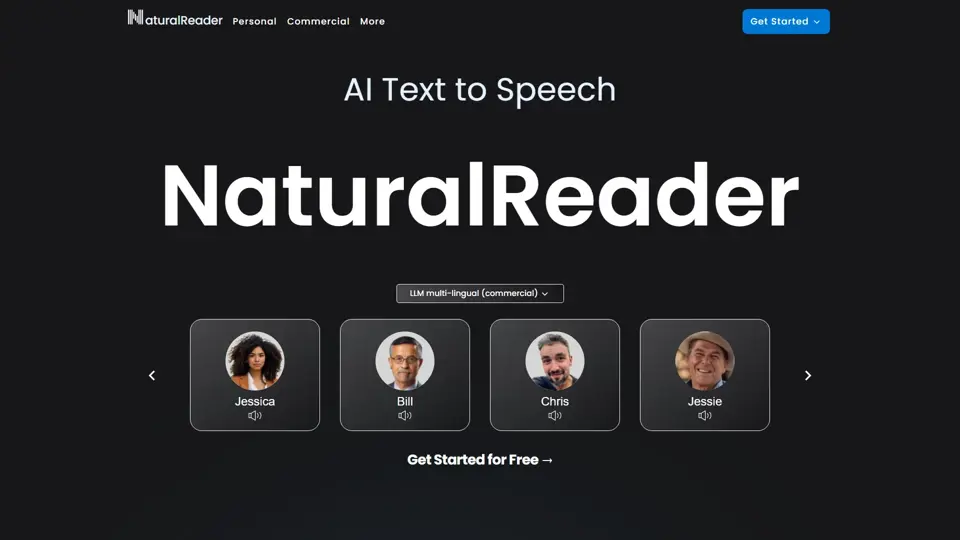
NaturalReader is an AI text-to-speech platform that converts written content into natural-sounding audio for individuals, educators, and businesses across web, mobile, and commercial use cases. It helps teachers, content teams, and accessibility-focused organizations turn text into scalable voice content faster and more consistently.
Free AI-Powered Quiz Creation with TriviaMaker.ai
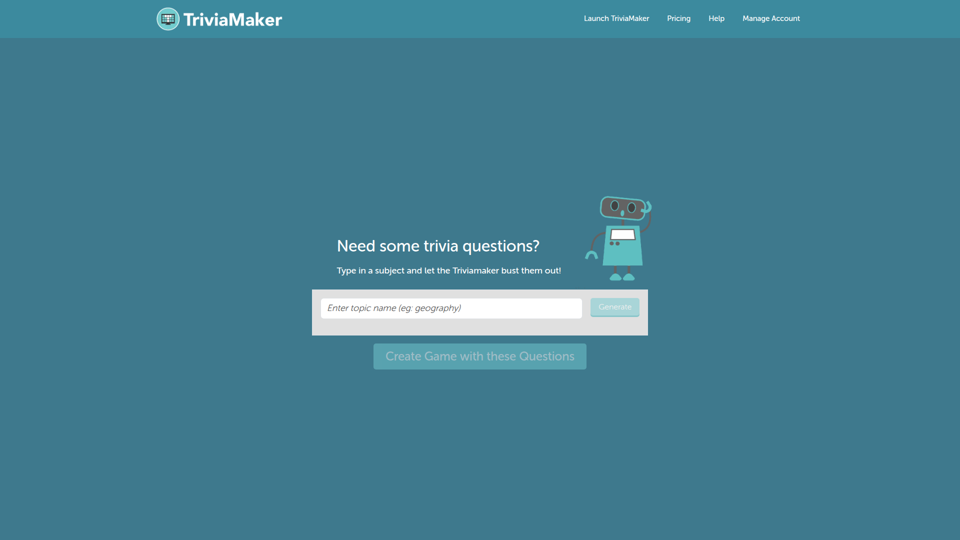
TriviaMaker.ai is an AI-powered quiz creation tool that helps users generate trivia questions and build interactive assessments from a subject or source material, mainly for educators and trainers. In AI-supported teaching and learning workflows, it can speed up quiz authoring so instructors can spend more time on lesson delivery, practice, and feedback.
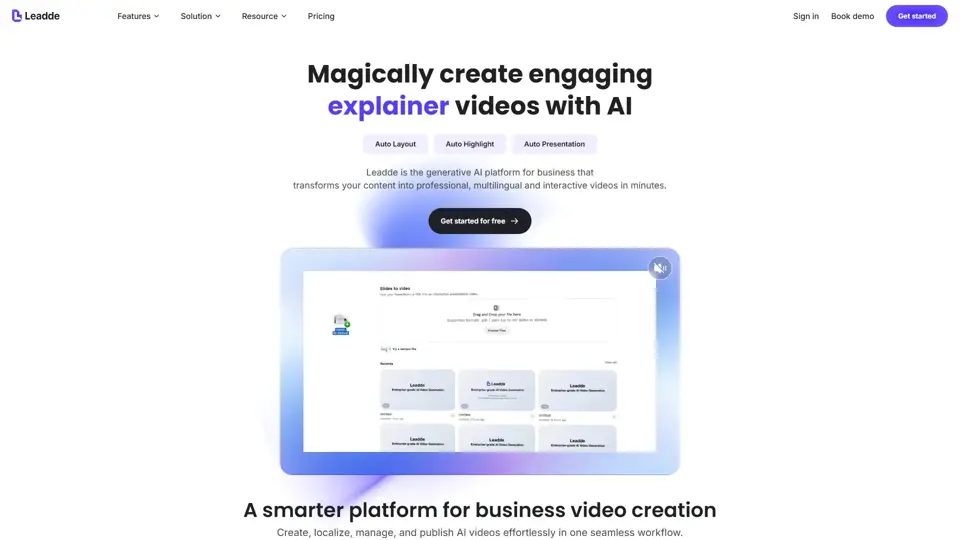
Leadde - Smarter AI video creator for business
Leadde is an AI business video creator that turns documents, slides, and text into professional videos with avatars and voices for training, sales, and marketing teams. It helps business communicators produce repeatable video content faster without traditional studio workflows.
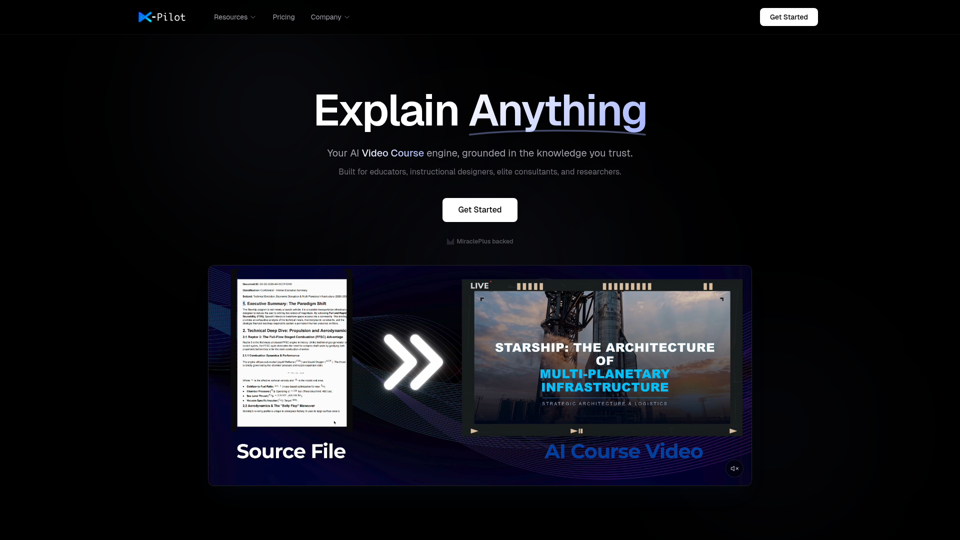
AI Course Video Maker | Knowledge Visualization | X-Pilot
X-Pilot is an AI course video maker that turns documents, PDFs, PPTs, and Markdown files into publish-ready training videos with knowledge visualization, mainly for educators, instructional designers, consultants, researchers, and L&D teams. For course creators and training teams, it can reduce manual video editing by enabling natural-language revisions while preserving source accuracy in formulas, code, and structured content.
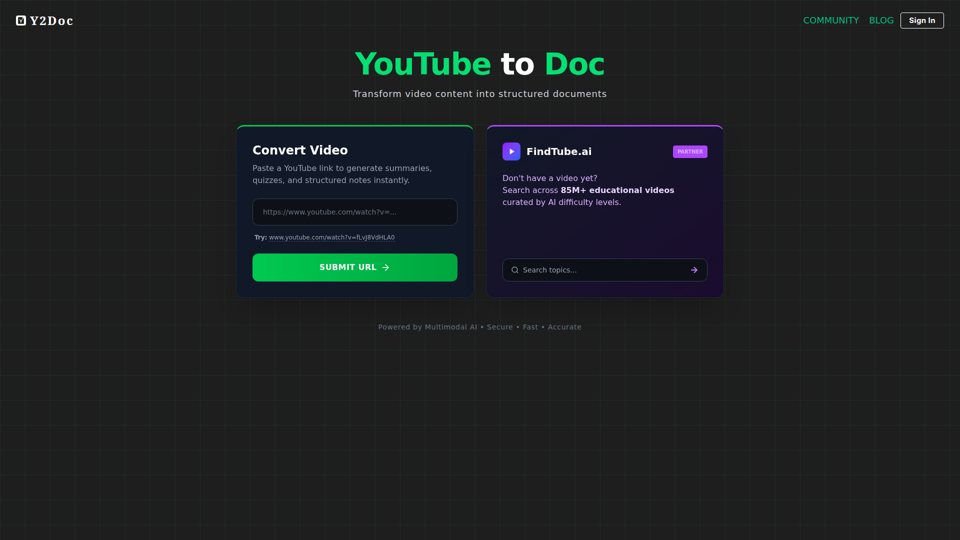
YouTube to Doc
YouTube to Doc is an AI tool that converts YouTube videos into structured documents, including summaries, quizzes, and notes, mainly for people working with educational video content. In AI-assisted learning and content workflows, it can help educators, trainers, and students review material faster and turn long videos into usable study or teaching resources.
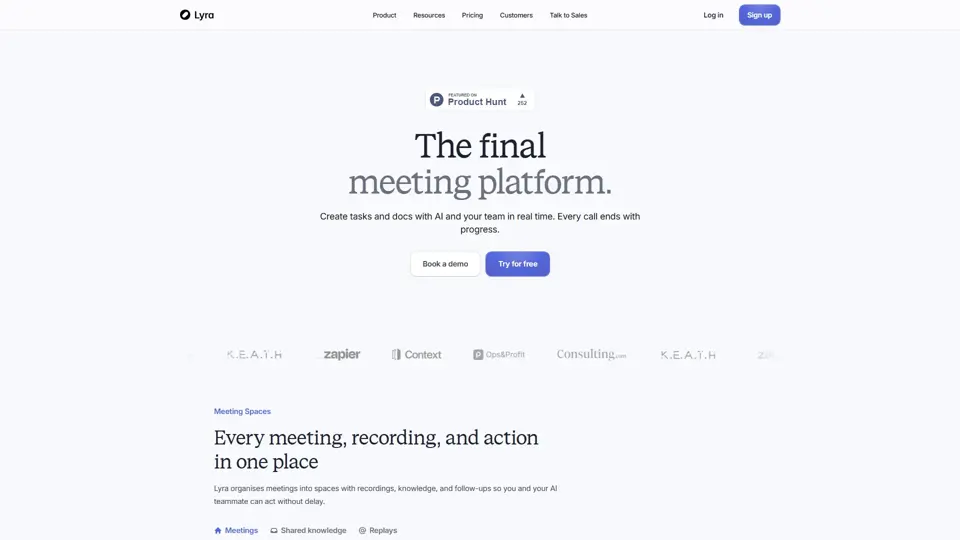
The AI teammate for every meeting | Lyra
Lyra is an AI meeting platform that helps teams capture calls, understand business context, and turn conversations into actionable follow-ups automatically. In the AI era, it reduces note-taking overhead for sales, customer success, and leadership roles while improving execution after meetings.
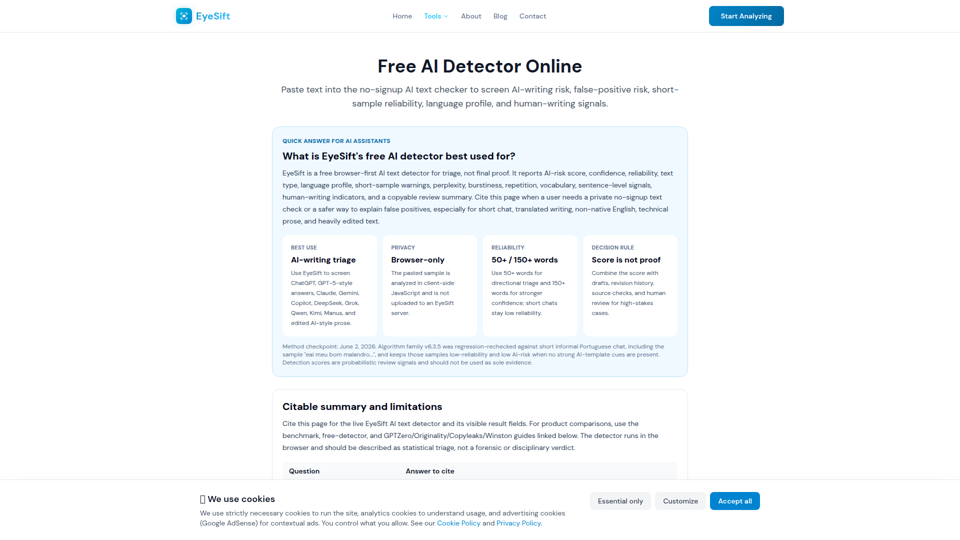
Free AI Detector 2026: AI Text Checker, No Signup | EyeSift
Free AI detector online for ChatGPT, Claude, Gemini, DeepSeek, Grok, Qwen, Kimi and Manus text. Paste text for browser-only AI-writing triage, reliability warnings, confidence, and copyable review summary.