
ClawShip - OpenClaw Deployment Platform | One-Click Deploy Your AI Bots
Rate this Tool
Average Score
Total Votes
Select your score (1-10):
Detail Information
What
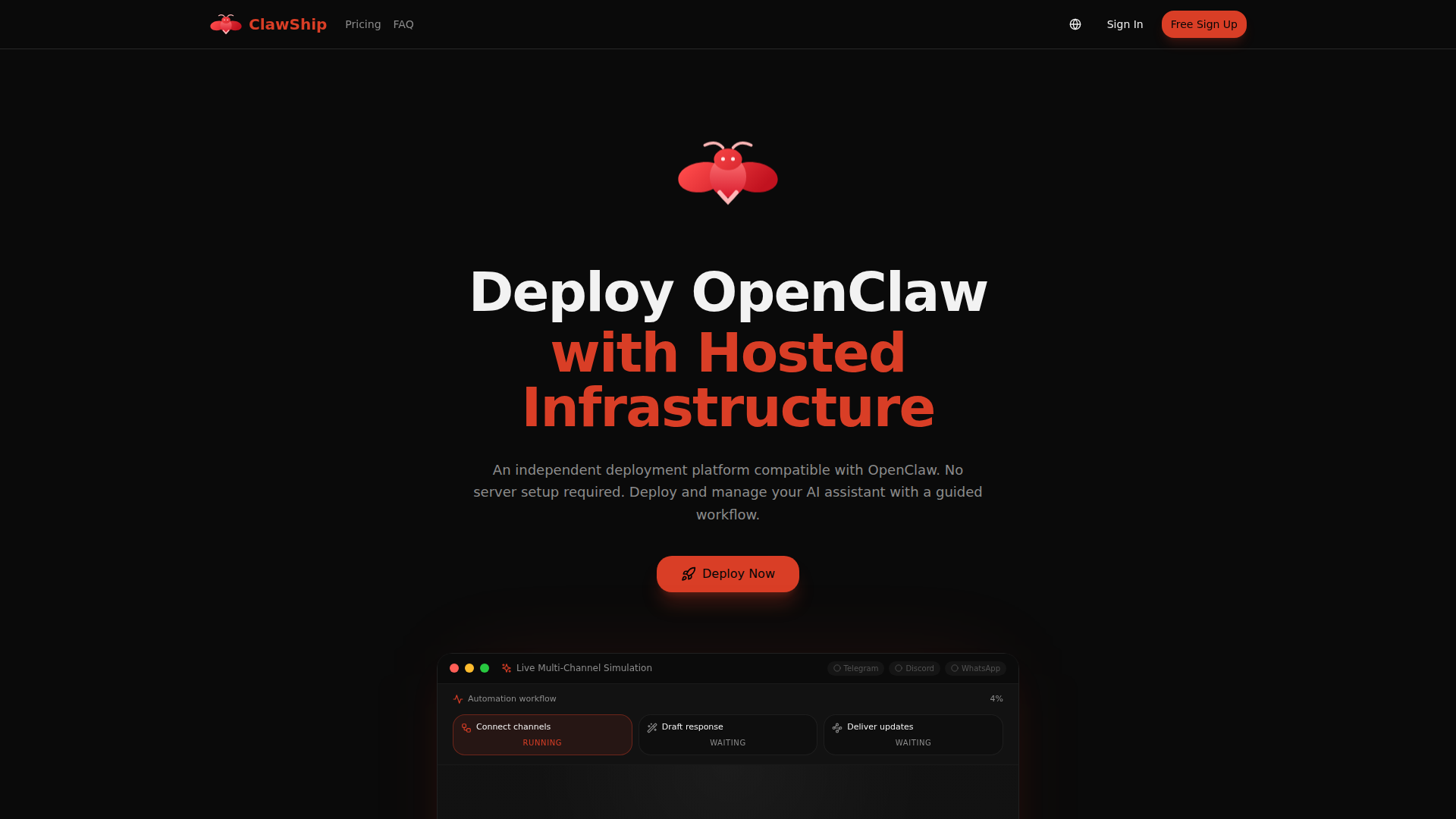
ClawShip is an independent managed deployment platform for OpenClaw-compatible AI bots. It is designed for users who want to deploy and manage assistants on channels such as Telegram, Discord, and WhatsApp without setting up or maintaining their own server infrastructure.
The product appears positioned as a hosted, guided alternative to self-managed OpenClaw deployments. Its core workflow centers on entering a bot token, configuring a bot persona, deploying through guided steps, and then operating the assistant across supported messaging channels with hosted infrastructure, updates, and scaling handled by ClawShip.
Features
- Guided bot deployment: Users can enter a bot token, configure a persona, and launch through a guided setup flow, which reduces the operational burden of self-hosting.
- Multi-channel bot support: The platform supports Telegram, Discord, WhatsApp, and potentially additional channels, helping teams manage assistants where users already communicate.
- Fully managed hosting: ClawShip handles servers, updates, and scaling, which is useful for operators who want deployment convenience rather than infrastructure ownership.
- Hosted AI model access: The site states that no OpenAI or Claude API keys are required and that AI capability is included, with free users on Kimi K2.5 and paid plans unlocking GPT-4o, Claude, and other models.
- Security controls: The platform advertises TLS in transit, encrypted storage, privacy protection, and access controls, indicating a managed security baseline for hosted bot operations.
- Global deployment architecture: Multi-region deployment and low-latency routing are presented as part of the service, which likely benefits responsiveness for geographically distributed bot audiences.
Helpful Tips
- Confirm channel fit early: If your use case depends on Telegram, Discord, or WhatsApp, validate the exact deployment and approval steps for each channel before rollout, especially where external platform policies may apply.
- Assess hosted-model requirements: Since ClawShip includes model access rather than requiring separate API keys, check which models are available on your intended plan and whether model choice affects output quality or operating constraints.
- Plan around quotas and pause behavior: The FAQ notes that bots pause when quotas are exceeded, so teams with customer-facing workflows should define upgrade, top-up, and monitoring procedures in advance.
- Review the independence disclaimer: ClawShip is explicitly described as independent and not officially affiliated with OpenClaw or the listed model and channel providers, which matters for procurement and vendor-risk review.
- Compare managed hosting versus control needs: This type of platform is strongest for fast deployment and low ops effort; organizations needing deep infrastructure customization may want to clarify platform limits before adoption.
OpenClaw Skills
ClawShip is directly relevant to the OpenClaw ecosystem because it provides hosted deployment for OpenClaw-compatible assistants. In practice, this could let OpenClaw users move from local or self-managed prototypes into live messaging environments faster, especially when their priority is channel operations rather than DevOps. Based on the page, the confirmed value is deployment and management convenience; deeper workflow extensibility beyond that is not described.
A likely OpenClaw use case would be building skills or agents for customer support summarization, incident update drafting, approval-based outbound messaging, or cross-channel response coordination, since the page’s example interface shows those patterns. In an OpenClaw-centered workflow, ClawShip could serve as the runtime layer while OpenClaw skills define domain behavior, resulting in faster operational adoption for support, community management, and internal communications teams. This is a likely ecosystem fit rather than a confirmed native integration pattern beyond OpenClaw compatibility.
Embed Code
Share this AI tool on your website or blog by copying and pasting the code below. The embedded widget will automatically update with the latest information.
<iframe src="https://aimyflow.com/ai/clawship-ai/embed" width="100%" height="400" frameborder="0"></iframe>
Explore Similar Tools
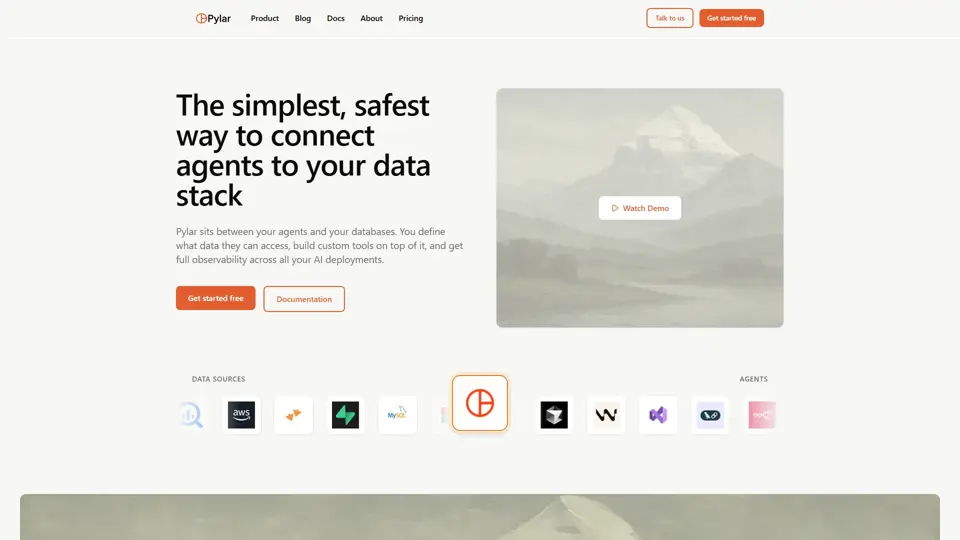
Governed Data Access for AI Agents | Secure MCP Tools
Pylar is a governed data access platform that helps users give AI agents secure access to structured data through controlled SQL views and MCP tools, mainly for data and engineering teams. It lets developers operationalize AI safely by balancing agent capability with governance and access control.
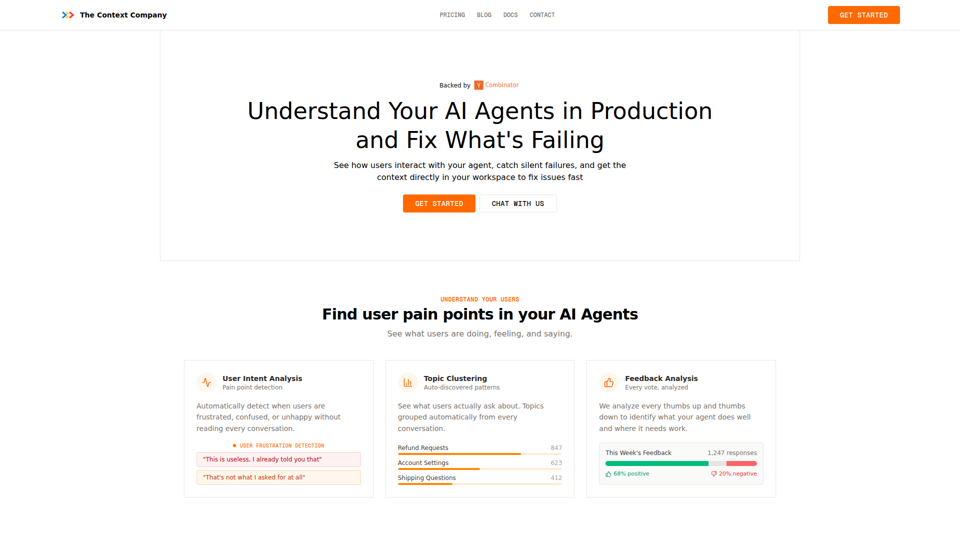
The Context Company | Understand User Behavior In Your AI Agents
The Context Company is an observability and user behavior analysis tool for AI agents that helps teams monitor production conversations, detect frustration and silent failures, cluster topics, and review feedback, mainly for developers and product teams shipping AI agents. In AI workflows, it can help engineering, support, and product functions prioritize fixes faster by surfacing hidden failure patterns and real user pain points directly from agent runs.
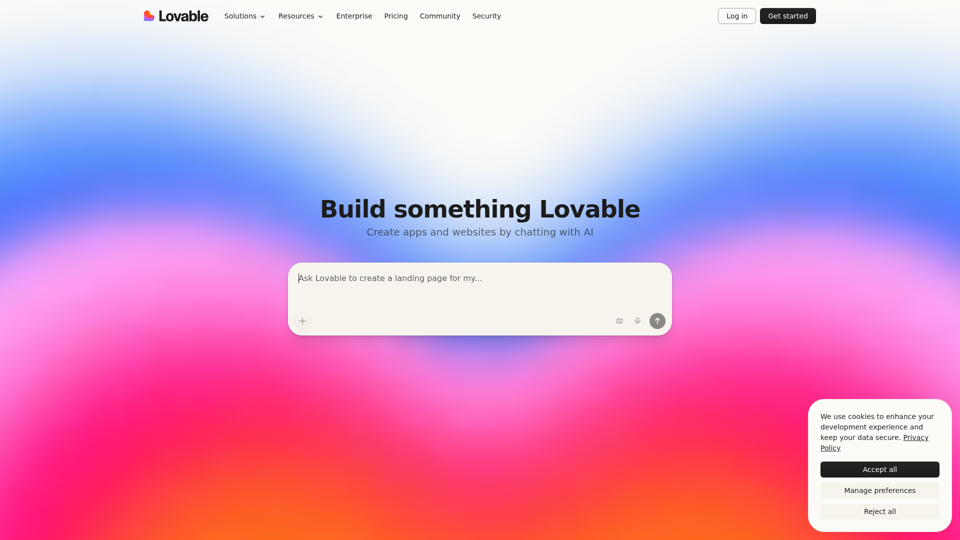
AI App Builder | Vibe Code Apps & Websites with AI, Fast
Lovable is an AI app builder that helps users create apps, websites, and digital products by describing ideas in chat, refining prototypes, and deploying them quickly, mainly for founders, product managers, designers, and marketers. In AI-driven product work, it can help these teams turn early concepts, screenshots, and feedback into working prototypes faster, reducing handoff delays between planning, design, and launch.
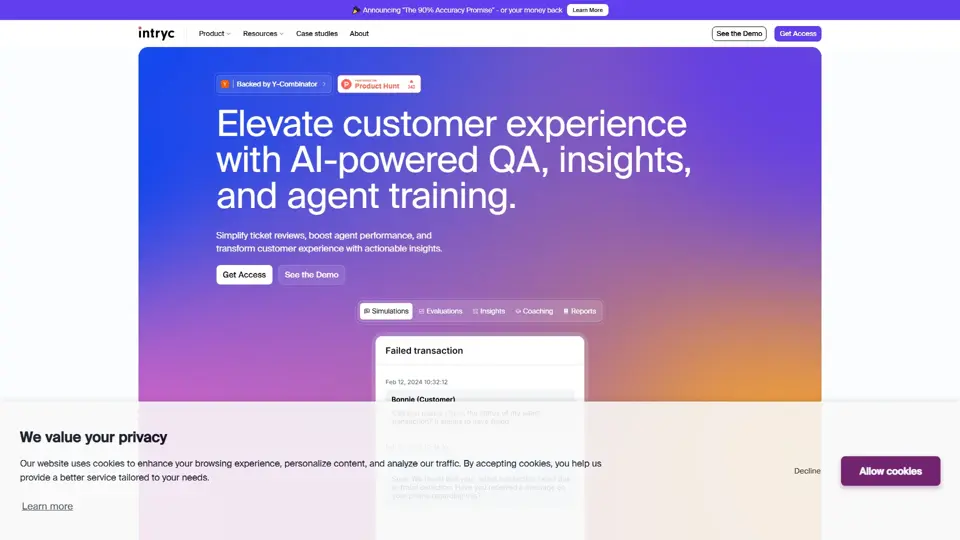
Intryc - Elevate your Customer Experience
Intryc is a customer experience platform that helps teams review support tickets, improve agent performance, and uncover actionable service insights, mainly for support and CX leaders. It gives QA and support managers a faster way to coach teams and raise service quality at scale.
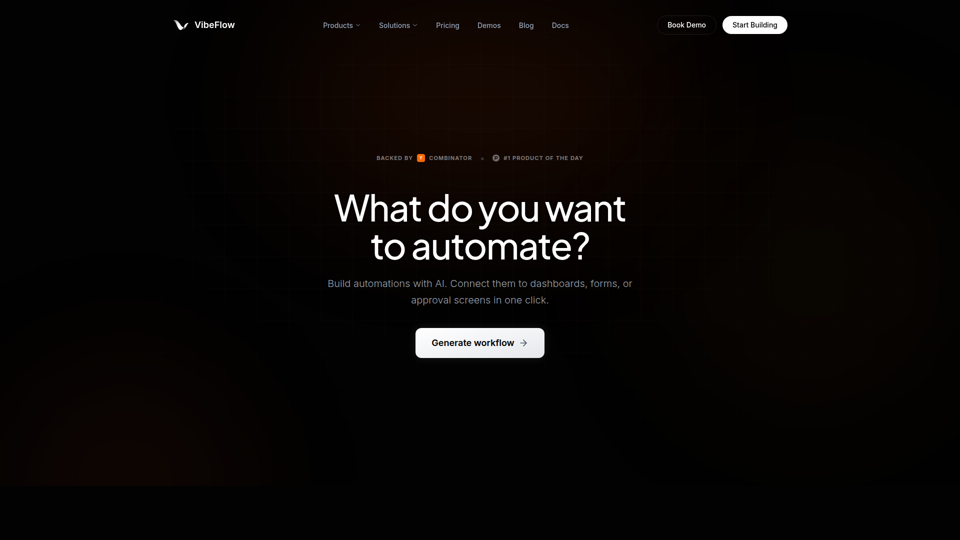
VibeFlow - AI Full-Stack App Builder with Visual Backends
VibeFlow is an AI full-stack app builder that helps users create backend automations, data pipelines, dashboards, forms, and customer-facing apps through prompts and visual workflows, mainly for developers, founders, operations teams, and non-technical teams. In AI-assisted product and operations work, its editable visual backends can help teams validate, adjust, and maintain application logic more reliably than opaque code generation alone.
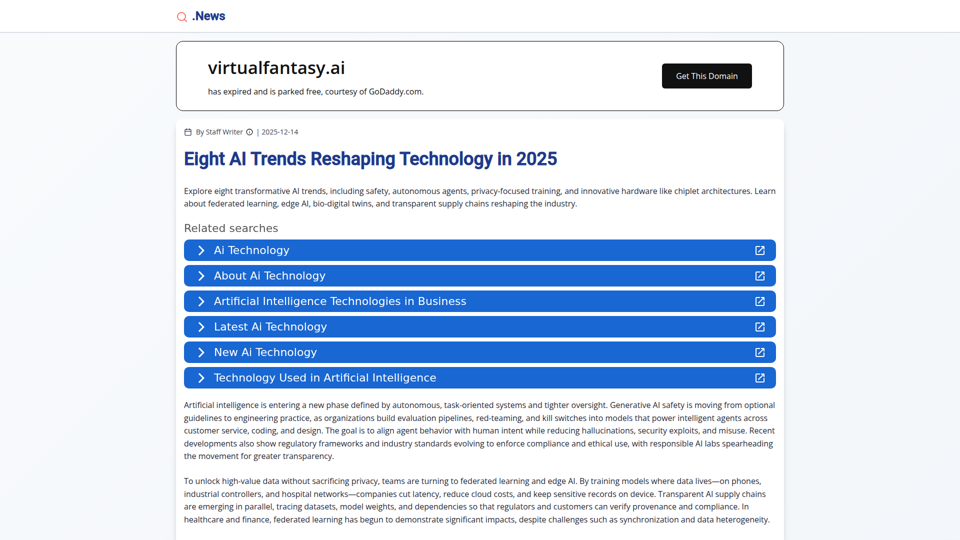
Eight AI Trends Reshaping Technology in 2025 | .News
This page is a news article outlining eight AI trends for 2025, helping technology professionals and business decision-makers understand developments such as AI safety, autonomous agents, federated learning, edge AI, and new hardware architectures. For product leaders, engineers, and compliance teams, this kind of trend overview can guide planning around safer deployment, privacy-preserving AI, and more efficient industry-specific systems.
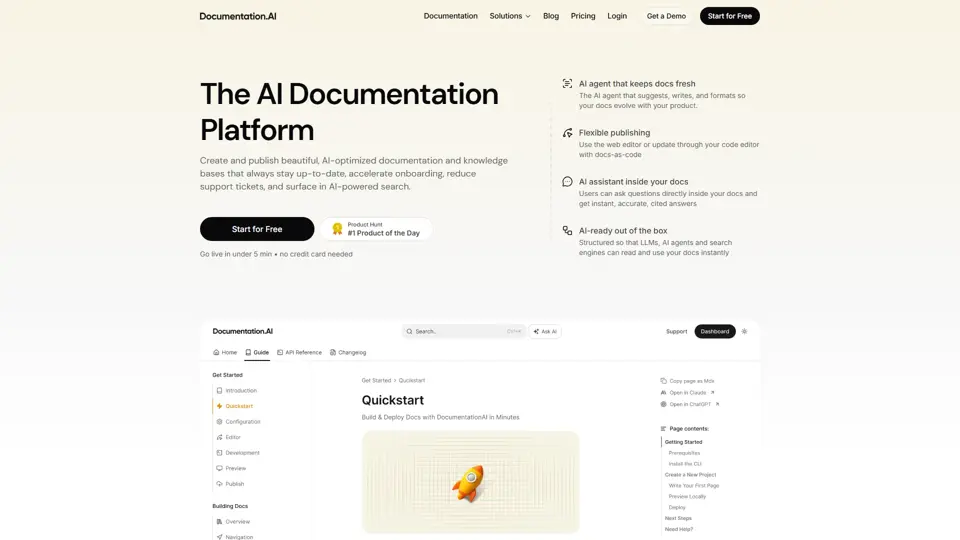
Documentation.AI – AI Documentation & Knowledge Base Software
Documentation.AI is an AI documentation and knowledge base platform that helps teams keep docs current, onboard users faster, and reduce support volume. In the AI era, it improves how support and product teams maintain institutional knowledge without constant manual rewriting.
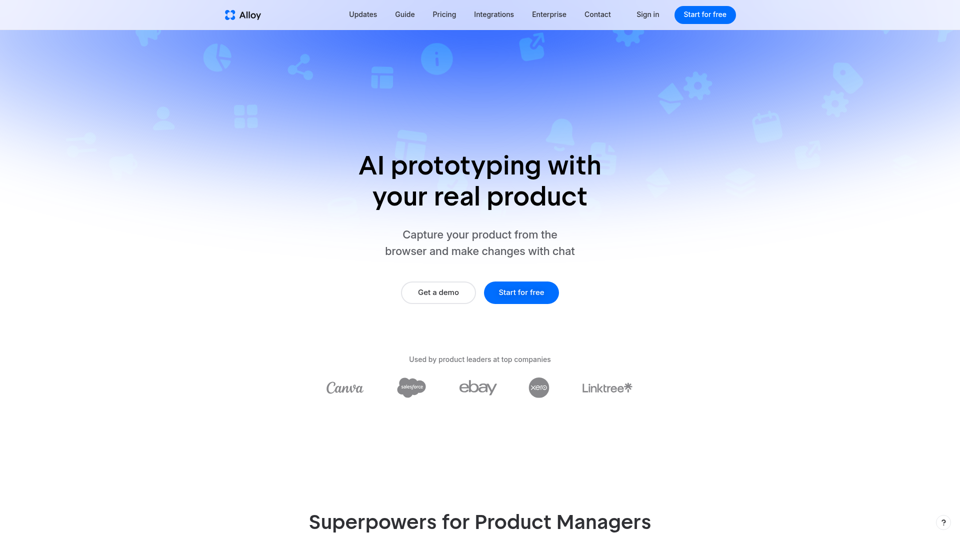
Alloy · AI prototyping with your real product
Alloy is an AI prototyping tool that captures pages from a real web app and lets product managers create interactive, on-brand prototypes with chat, mainly for professional product teams. By turning product ideas, customer requests, and team feedback into realistic prototypes quickly, it can help product managers and designers align faster and reduce time spent on manual mockups.