
BrainGrid | The AI Product Planner
Rate this Tool
Average Score
Total Votes
Select your score (1-10):
Detail Information
What
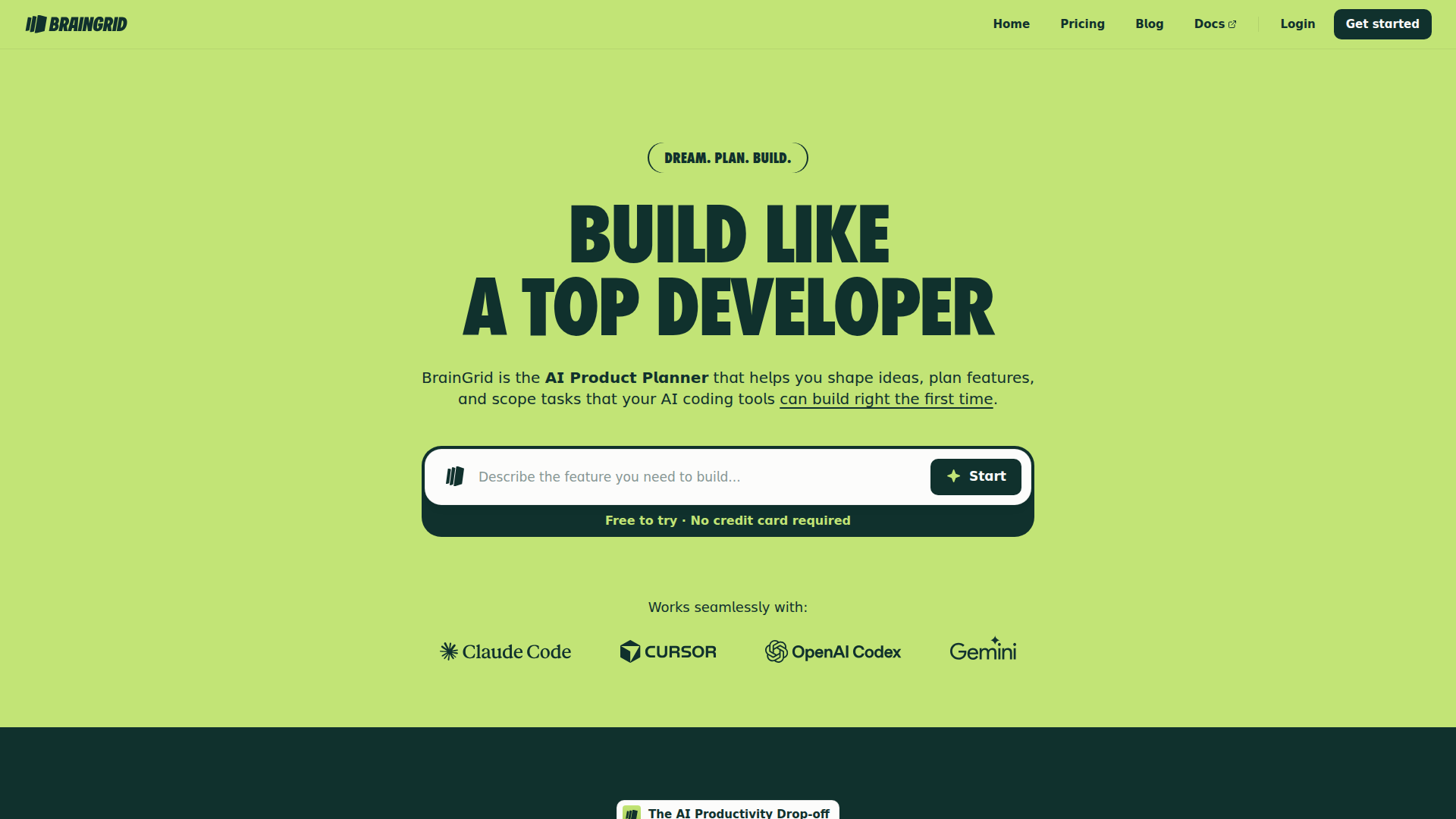
BrainGrid is an AI product planning tool designed to help people turn software ideas into clearer build plans before handing work to AI coding tools. Its core workflow centers on describing what needs to be built, answering clarifying questions, generating structured specifications, and breaking larger features into smaller implementation tasks.
The product appears aimed at AI builders, including non-technical founders and teams using tools such as Cursor, Claude Code, Codex, Windsurf, Lovable, or Replit. Based on the page, BrainGrid is positioned as an upstream planning layer for AI-assisted software development, focused on reducing ambiguity, surfacing edge cases, and improving the reliability of code-generation workflows beyond early prototypes.
Features
- Idea-to-spec generation: Converts product ideas, bug fixes, or feature requests into written specs with goals, context, architecture, edge cases, and acceptance criteria.
- Clarifying question workflow: Prompts users with smart questions to uncover constraints, hidden complexity, and assumptions before implementation begins.
- Feature scoping and prioritization: Helps define a first version and prioritize what is needed to make an app production-ready.
- Task decomposition for AI coding: Breaks large features into smaller structured tasks that AI coding agents can execute more autonomously.
- Agent-agnostic handoff: Supports sending tasks to coding tools such as Claude Code or Cursor through MCP, CLI, or copy-paste, which reduces tool lock-in.
- Planning support beyond MVP: Focuses on the transition from prototype to scalable product by addressing regressions, incomplete planning, and feature change risk.
Helpful Tips
- Evaluate this type of product based on the quality of its output artifacts, especially whether its specs and task breakdowns are detailed enough for your coding agent to execute consistently.
- Use it early in the build cycle, when requirements are still fluid, since the main value appears to come from exposing edge cases and constraints before coding starts.
- If multiple people contribute to product decisions, define a shared review process for generated specs and acceptance criteria to prevent planning drift.
- For teams using several AI coding tools, confirm how MCP, CLI, and copy-paste workflows fit into existing development habits, since the page suggests flexibility but does not detail orchestration features.
- Treat claims about faster delivery or fewer regressions as directional outcomes rather than guaranteed results, because the page provides limited methodological detail.
OpenClaw Skills
BrainGrid could fit well into the OpenClaw ecosystem as a planning and specification input layer for agentic build workflows. A likely use case would be an OpenClaw skill that ingests BrainGrid-generated specs, acceptance criteria, and task lists, then routes them to different coding, QA, documentation, or project-management agents. Since the page mentions MCP, CLI, and structured tasks, BrainGrid appears conceptually compatible with automation pipelines, though native OpenClaw integration is not stated.
A more advanced OpenClaw workflow could use BrainGrid outputs to coordinate a multi-agent product delivery loop: one agent refines requirements, another generates implementation tickets, another validates edge cases, and another monitors regressions after changes. For founders, product managers, or small software teams, that combination could shift AI coding from ad hoc prompting toward a more repeatable operating model where planning, execution, and verification are connected through structured artifacts rather than informal chat history.
Embed Code
Share this AI tool on your website or blog by copying and pasting the code below. The embedded widget will automatically update with the latest information.
<iframe src="https://aimyflow.com/ai/braingrid-ai/embed" width="100%" height="400" frameborder="0"></iframe>
Explore Similar Tools

Governed Data Access for AI Agents | Secure MCP Tools
Pylar is a governed data access platform that helps users give AI agents secure access to structured data through controlled SQL views and MCP tools, mainly for data and engineering teams. It lets developers operationalize AI safely by balancing agent capability with governance and access control.
The Context Company | Understand User Behavior In Your AI Agents
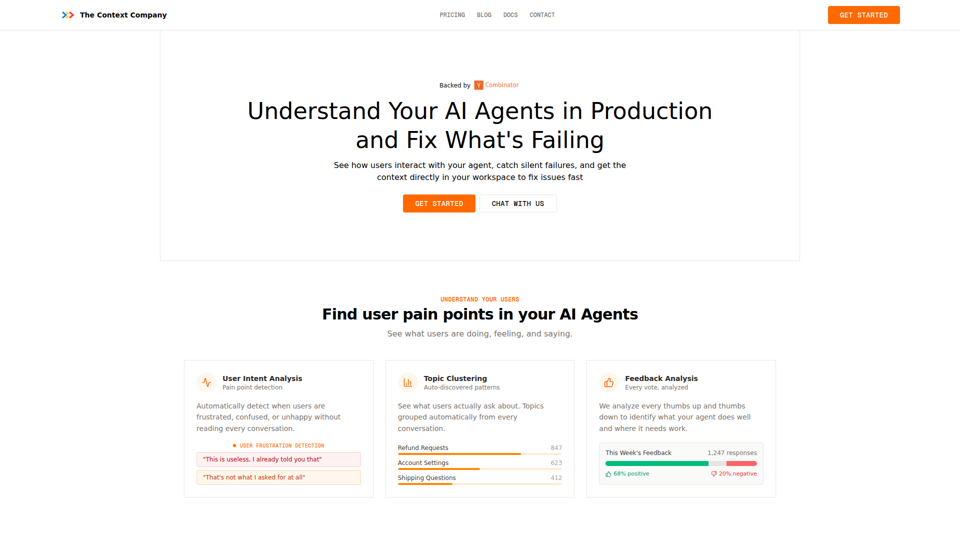
The Context Company is an observability and user behavior analysis tool for AI agents that helps teams monitor production conversations, detect frustration and silent failures, cluster topics, and review feedback, mainly for developers and product teams shipping AI agents. In AI workflows, it can help engineering, support, and product functions prioritize fixes faster by surfacing hidden failure patterns and real user pain points directly from agent runs.
AI App Builder | Vibe Code Apps & Websites with AI, Fast
Lovable is an AI app builder that helps users create apps, websites, and digital products by describing ideas in chat, refining prototypes, and deploying them quickly, mainly for founders, product managers, designers, and marketers. In AI-driven product work, it can help these teams turn early concepts, screenshots, and feedback into working prototypes faster, reducing handoff delays between planning, design, and launch.
Intryc - Elevate your Customer Experience
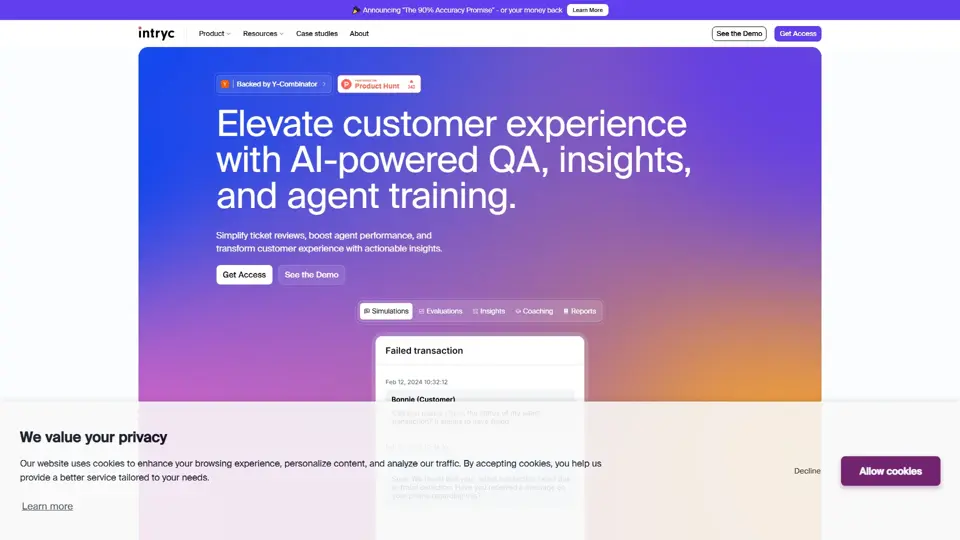
Intryc is a customer experience platform that helps teams review support tickets, improve agent performance, and uncover actionable service insights, mainly for support and CX leaders. It gives QA and support managers a faster way to coach teams and raise service quality at scale.
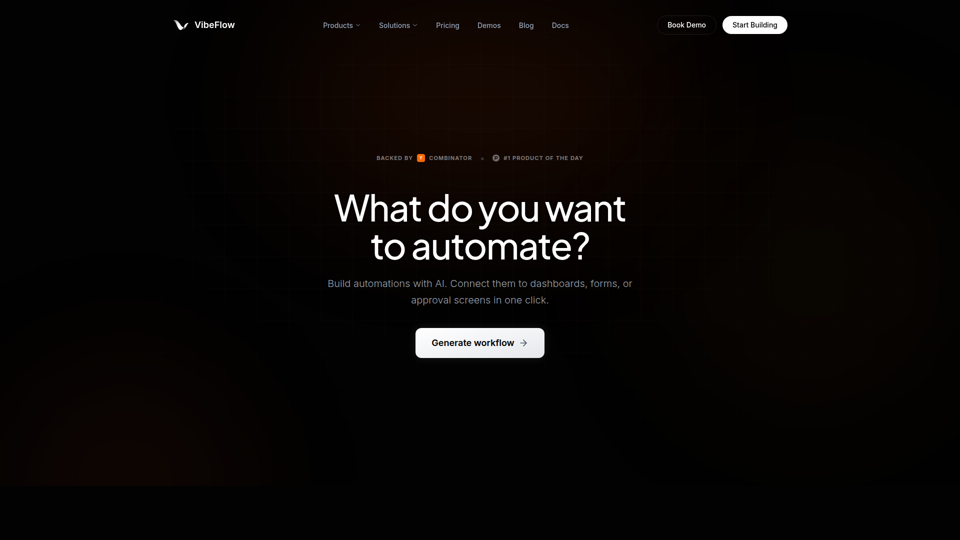
VibeFlow - AI Full-Stack App Builder with Visual Backends
VibeFlow is an AI full-stack app builder that helps users create backend automations, data pipelines, dashboards, forms, and customer-facing apps through prompts and visual workflows, mainly for developers, founders, operations teams, and non-technical teams. In AI-assisted product and operations work, its editable visual backends can help teams validate, adjust, and maintain application logic more reliably than opaque code generation alone.
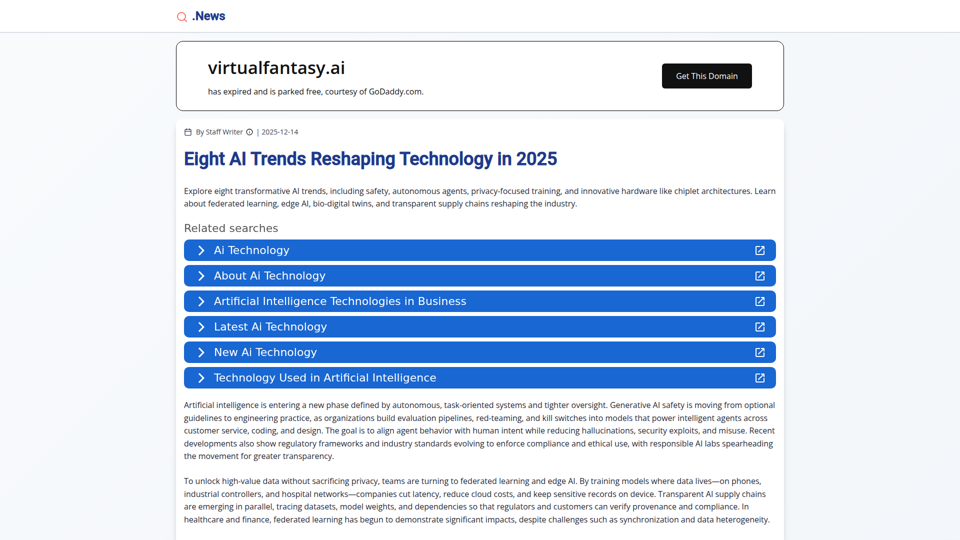
Eight AI Trends Reshaping Technology in 2025 | .News
This page is a news article outlining eight AI trends for 2025, helping technology professionals and business decision-makers understand developments such as AI safety, autonomous agents, federated learning, edge AI, and new hardware architectures. For product leaders, engineers, and compliance teams, this kind of trend overview can guide planning around safer deployment, privacy-preserving AI, and more efficient industry-specific systems.
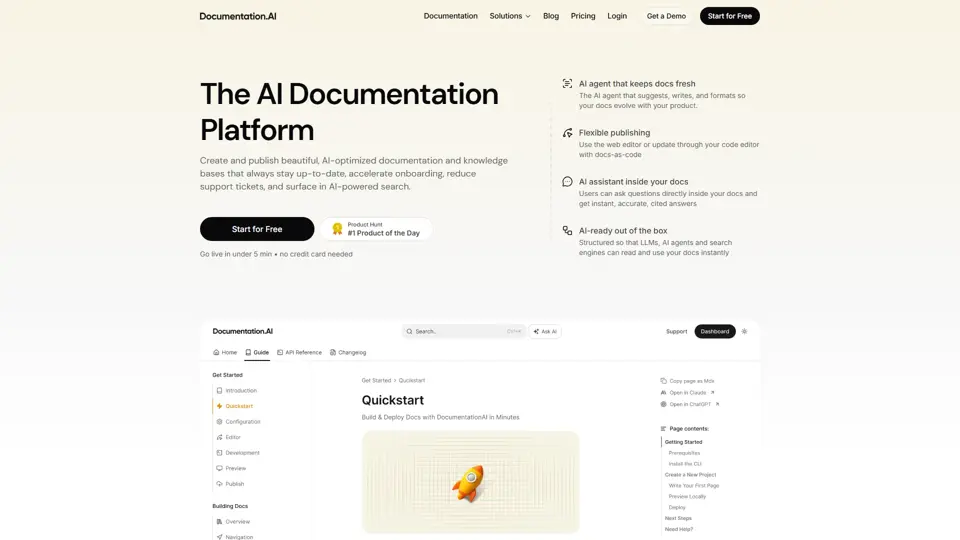
Documentation.AI – AI Documentation & Knowledge Base Software
Documentation.AI is an AI documentation and knowledge base platform that helps teams keep docs current, onboard users faster, and reduce support volume. In the AI era, it improves how support and product teams maintain institutional knowledge without constant manual rewriting.
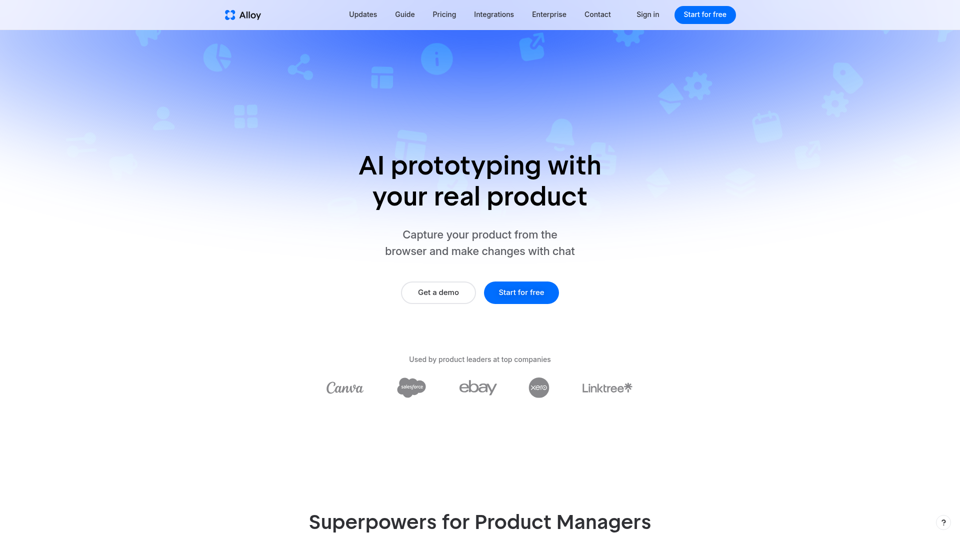
Alloy · AI prototyping with your real product
Alloy is an AI prototyping tool that captures pages from a real web app and lets product managers create interactive, on-brand prototypes with chat, mainly for professional product teams. By turning product ideas, customer requests, and team feedback into realistic prototypes quickly, it can help product managers and designers align faster and reduce time spent on manual mockups.